Side Effect Information Resource Finder
Find the best resource for side effect information based on what you need to know.
Select what you need to know to see the best resource.
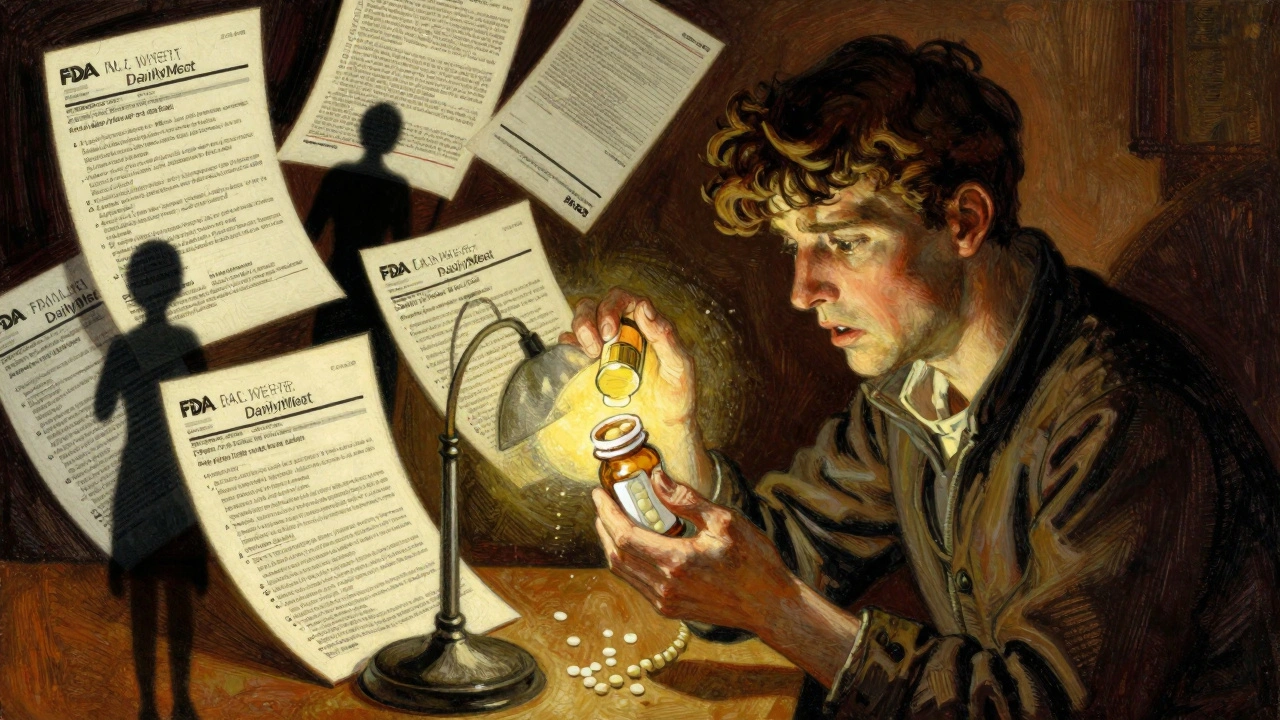
Knowing what side effects a medication might cause isn’t just helpful-it’s essential for your safety. But where do you go when you need real, detailed, up-to-date information? Not every website gives you the full picture. Some oversimplify. Others are outdated. And a few are hidden behind paywalls. If you’re trying to understand what could happen when you take a pill, injection, or cream, you need sources that are accurate, current, and trustworthy. The good news? There are several authoritative places to find this information-and knowing which ones to use can make all the difference.
Start with the FDA’s FDALabel Database
The most official source for side effect details is the FDA’s FDALabel database. This is where drug manufacturers submit their official labeling after FDA approval. Every prescription and over-the-counter medication sold in the U.S. must have its label published here. It’s not marketing material. It’s the legal document that tells doctors and pharmacists exactly what’s known about the drug’s risks.
To find it, go to the FDA’s website and search for your medication by brand or generic name. Once you open the label, scroll to section 6: Adverse Reactions. That’s where you’ll find the most comprehensive list of side effects reported during clinical trials. It includes how often they happened-common, occasional, rare-and sometimes even the severity. For example, if you’re looking up metformin, you’ll see that diarrhea affects about 25% of users, while lactic acidosis is listed as rare but serious.
But here’s the catch: this data only reflects what was seen in trials before the drug hit the market. It doesn’t include side effects that show up years later, or ones that only happen in people with certain genetic traits or when mixed with other drugs. That’s why you shouldn’t stop here.
Use DailyMed for the Full Label Text
DailyMed, run by the National Library of Medicine, is the public face of the FDA’s drug labeling system. It pulls the same labels as FDALabel but organizes them in a cleaner, easier-to-read format. You’ll find the same detailed sections-Warnings, Dosage, Adverse Reactions-but without the clutter of regulatory jargon.
One big advantage? DailyMed updates within 24 hours of any label change. If the FDA adds a new warning about liver damage for a drug in January, you’ll see it on DailyMed by February. This makes it the most current public source for on-label side effects. Pharmacists use it daily for patient counseling. If you’re reading a label and something feels unclear, DailyMed is the best place to double-check.
Try MedlinePlus for Plain-Language Explanations
Not everyone wants to read a 50-page drug label. If you’re a patient looking for something easier to understand, MedlinePlus is your best bet. It’s run by the National Institutes of Health and translates complex medical info into everyday language.
For example, instead of saying “gastrointestinal disturbances occurred in 18% of subjects,” MedlinePlus might say: “Many people experience stomach upset, nausea, or diarrhea when starting this medication.” It also includes what to do if you experience side effects, when to call your doctor, and how to store the drug safely.
A 2023 survey of nearly 3,000 users found that 87% found MedlinePlus easier to understand than official FDA labels. It’s not as detailed, but it’s perfect for quick, clear answers without the overwhelm.
Explore OnSIDES for Off-Label and Real-World Side Effects
Here’s something most people don’t know: the side effects listed on your prescription label only scratch the surface. Many reactions only appear after thousands or millions of people start taking the drug. That’s where OnSIDES comes in.
Launched in 2023, OnSIDES uses artificial intelligence to scan over 46,000 drug labels from around the world-including the U.S., EU, UK, and Japan. It pulls out side effects that aren’t on the official label but have been reported in real-world use. As of late 2023, it contained over 3.6 million drug-side effect pairs. That’s more than seven times the number found in older databases.
For example, a drug might list “headache” as a rare side effect on its label. OnSIDES might show that it’s actually linked to insomnia, weight gain, or even mood changes in thousands of real users. These are called “off-label” side effects-not officially approved by the FDA, but still real.
OnSIDES is free to use at nSIDES.io. You can search by drug name and see a ranked list of side effects with confidence scores. It’s especially useful if you’ve had an unexpected reaction and want to know if others have experienced the same thing.

Check VigiAccess for Global Reporting Data
If you want to know how often a side effect has been reported around the world, VigiAccess is the place to go. It’s run by the World Health Organization’s Uppsala Monitoring Centre and pulls data from VigiBase-the largest global database of individual patient reports of adverse reactions. As of early 2024, it contained over 35 million reports.
Let’s say you’re taking a blood pressure medication and notice unusual fatigue. You can search VigiAccess for that drug and see how many people globally reported fatigue, dizziness, or low blood pressure. It won’t tell you if it’s common or rare in the general population, but it does show you how many cases have been flagged by doctors and patients worldwide.
One limitation? VigiAccess doesn’t tell you how many people took the drug in total. So if 500 people reported nausea out of 10 million users, it’s probably rare. But if only 1,000 people took it and 500 reported nausea-that’s a red flag. You need context. Still, it’s invaluable for spotting patterns that might not show up in clinical trials.
Why SIDER and Offsides Are Outdated (and What to Do Instead)
You might come across older databases like SIDER and Offsides in search results. SIDER, created by the European Molecular Biology Laboratory, had data from 2015. Offsides, from Columbia University, was built around the same time. Both were groundbreaking back then.
But here’s the problem: SIDER’s website says outright, “The data in SIDER is from 2015 and therefore out of date!” And Offsides hasn’t been updated since 2017. That means they’re missing hundreds of new drugs approved since then-and all the side effects discovered in the last decade.
Don’t use them as your primary source. They’re useful only for historical research. For anything current, stick with OnSIDES, DailyMed, or VigiAccess.
What About PDR.net and Other Paid Services?
PDR.net has been around since 1947 and is still used by some doctors. But it’s now a subscription service costing nearly $50 a year. And according to the American Medical Association, it has been criticized for possible industry influence in what gets included.
There’s no reason to pay for side effect info when free, updated, and more transparent resources exist. Save your money. Use DailyMed or OnSIDES instead.
How to Use These Tools Together
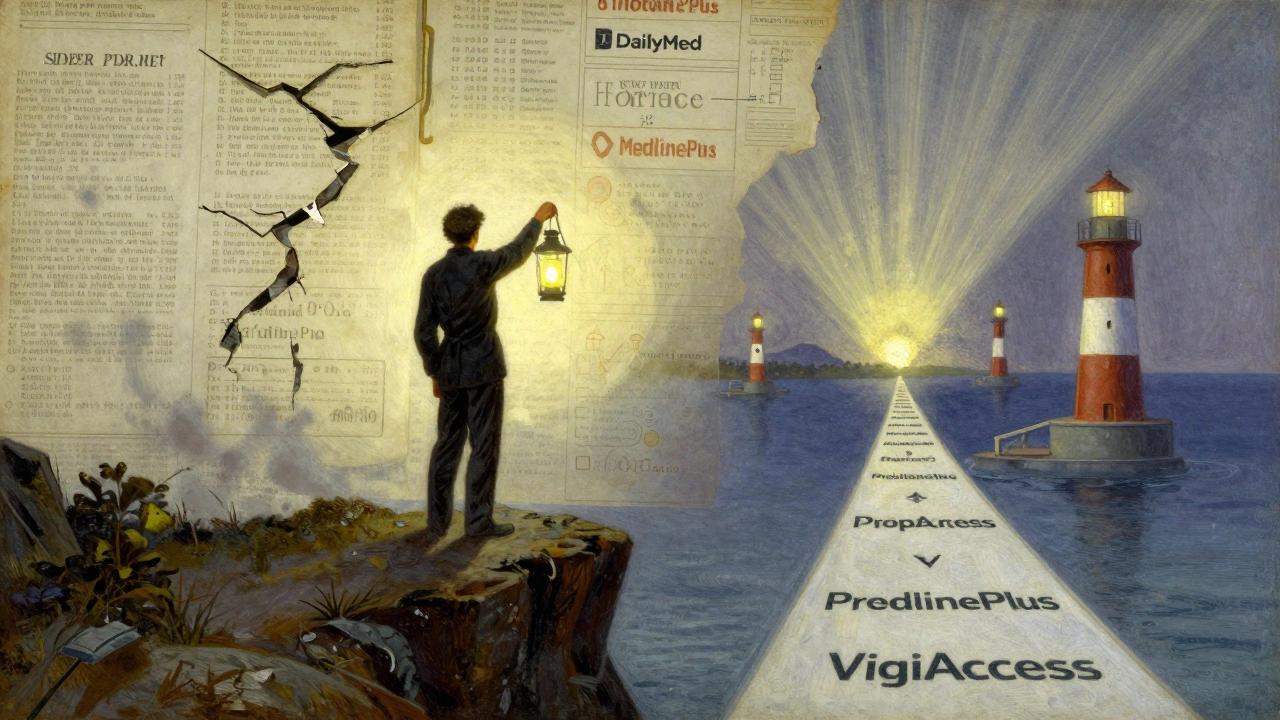
Here’s a simple way to get the full picture:
- Start with MedlinePlus for a clear, easy-to-read summary.
- Go to DailyMed to read the official label and see exact numbers and warnings.
- Search OnSIDES to find side effects that aren’t on the label but are reported in real life.
- Use VigiAccess to see if others worldwide have had the same reaction.
That’s it. You don’t need to be a scientist. You don’t need to pay. You just need to know where to look.
What You Shouldn’t Do
Don’t rely on drug company websites-they’re designed to sell, not warn. Don’t trust random blogs or Reddit threads as your only source. And don’t assume that if a side effect isn’t listed, it won’t happen.
The FDA itself says that most serious side effects are discovered after a drug is already on the market. That’s why real-world data matters. The more sources you cross-check, the better your understanding-and the safer you’ll be.
What’s Coming Next
The FDA is moving toward digital labeling by 2026. That means drug labels will be easier to search, link to, and update automatically. AI tools like OnSIDES are getting better at spotting patterns across millions of reports. In the next five years, you might even get personalized side effect predictions based on your health history, genetics, and other medications you take.
For now, though, the best tools are already here. Use them wisely. Your health depends on it.
Where can I find the most accurate side effect information for my prescription drug?
The most accurate information comes from the FDA’s FDALabel database, which is publicly available through DailyMed. This is the official label submitted by the drug manufacturer and approved by the FDA. It includes side effects observed in clinical trials, with details on frequency and severity. Always start here for reliable, authoritative data.
Are side effects listed on the drug label the only ones I should worry about?
No. Drug labels only include side effects seen during clinical trials, which involve a limited number of people over a short time. Many side effects-especially rare ones, long-term effects, or those caused by interactions with other drugs-only appear after the drug is used by millions of people. Databases like OnSIDES and VigiAccess capture these real-world reactions that aren’t on the label.
Is SIDER still a good resource for side effect data?
No. The SIDER database hasn’t been updated since 2015, and its creators explicitly state that the data is outdated. While it was useful in the past, it misses hundreds of drugs approved since then and doesn’t reflect current safety profiles. Avoid using SIDER for any current medication decisions.
Can I trust information from drug company websites?
Be cautious. Drug company websites often highlight benefits and downplay risks. They may not list all side effects or may bury them in fine print. The FDA’s FDALabel and DailyMed are legally required to be complete and unbiased. Always cross-check with these official sources before trusting company-provided information.
Why do some side effects show up in OnSIDES but not on my prescription label?
OnSIDES uses artificial intelligence to analyze drug labels from around the world and identifies side effects reported in real-world use that aren’t included in the official label. These are called off-label side effects. They’re not necessarily new or dangerous, but they’re not always tested during clinical trials. OnSIDES helps fill this gap by showing what’s actually happening in the broader patient population.
Is VigiAccess useful for individual patients, or just for doctors?
It’s useful for both. Patients can use VigiAccess to see how many people globally have reported a specific side effect with their medication. While it doesn’t tell you the risk percentage, it shows whether others have had similar experiences. This can help you decide whether to discuss a symptom with your doctor. For healthcare providers, it’s a key tool for spotting emerging safety signals.
Should I pay for access to PDR.net for side effect information?
No. PDR.net charges a subscription fee, but all the information it provides is available for free through DailyMed and MedlinePlus. The FDA requires manufacturers to submit their labels publicly, so there’s no reason to pay. Free sources are more transparent, updated more frequently, and free from potential industry bias.
If you’re taking multiple medications, keeping a list of side effects you’ve noticed-along with when they started and how severe they are-can help your doctor spot patterns. Don’t wait for a bad reaction to become serious. Use these tools proactively. Your body will thank you.




Written by Martha Elena
I'm a pharmaceutical research writer focused on drug safety and pharmacology. I support formulary and pharmacovigilance teams with literature reviews and real‑world evidence analyses. In my off-hours, I write evidence-based articles on medication use, disease management, and dietary supplements. My goal is to turn complex research into clear, practical insights for everyday readers.
All posts: Martha Elena