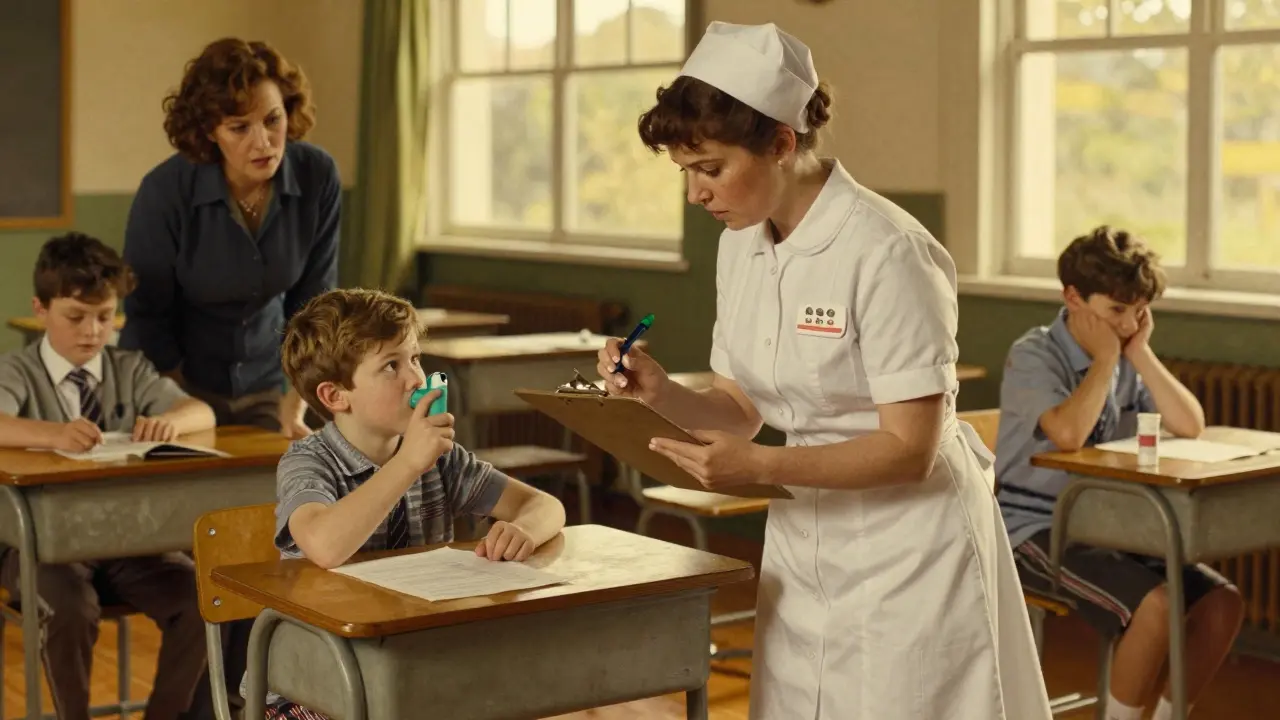
Every morning, hundreds of thousands of children across the U.S. swallow their asthma inhalers, insulin shots, or ADHD pills right in the middle of math class. These aren’t optional treatments-they’re life-sustaining. And someone has to make sure they’re given correctly, safely, and on time. That someone is the school nurse. But coordinating daily pediatric medications in schools isn’t just about handing out pills. It’s a complex system built on rules, training, documentation, and constant communication. Get one step wrong, and the consequences can be serious.
Why School Nurses Are the Linchpin
School nurses don’t just treat scraped knees or fevers. They’re the central hub for managing chronic conditions like diabetes, epilepsy, severe allergies, and behavioral health medications. According to the National Association of School Nurses (NASN), 14.7% of all U.S. students require daily medication during school hours. That’s roughly one in seven kids. And with rising rates of childhood asthma and type 1 diabetes, that number is growing. The nurse doesn’t do this alone. They coordinate with parents, doctors, teachers, and even unlicensed staff. But the nurse is the only one legally responsible for making sure everything follows state and federal rules. The American Academy of Pediatrics says it plainly: “School nurses must assess each child’s needs and the suitability of staff before delegating any medication task.” Skip that step, and you’re risking errors-some of which can be fatal.The Five Rights: Non-Negotiable Rules
There’s one framework that every school nurse follows, no matter the state: the Five Rights of Medication Administration.- Right student - Double-check name, date of birth, ID bracelet if used.
- Right medication - Match the label to the prescription.
- Right dose - Confirm milligrams, milliliters, units. No guessing.
- Right route - Is it oral, inhaled, injected, or topical?
- Right time - Administer within 30 minutes of the prescribed time unless the doctor says otherwise.
Storage and Containers: No Exceptions
Medications must come in their original, pharmacy-labeled containers. No ziplock bags. No pill organizers. No handwritten notes taped to bottles. The federal Food and Drug Administration (21 CFR § 1306.22) requires this for all controlled substances and most prescription drugs. Why? Because pharmacy labels include the child’s name, drug name, dosage, prescriber, and expiration date-all legally required info. If a nurse administers a pill from an unlabeled container, the school could be violating federal drug laws. In Texas, the Department of State Health Services reported that 18% of medication incidents between 2020 and 2023 involved unlabeled containers. Districts that enforced the original-container rule saw a 63% drop in administration errors. Parents need to understand this isn’t bureaucracy-it’s safety.Delegation: When Nurses Can’t Do It All
There’s a reason school nurse-to-student ratios average 1:1,102-far worse than the recommended 1:750 for schools with complex medical needs. That means nurses can’t be in five classrooms at once. So they delegate. But not just anyone can give a child their medicine. Only trained, competent staff can be assigned the task-and only after the nurse assesses both the child’s condition and the staff member’s ability. States vary widely on who can help. In 37 states, unlicensed assistive personnel (UAP)-like teachers, aides, or cafeteria workers-can give medications after completing 4 to 16 hours of training. Virginia requires nurses to personally observe the first dose of any new medication. Texas treats medication administration as an administrative task, not a nursing one-creating legal gray zones that increase liability. The key is training. A 2021 Virginia Department of Health study found districts with mandatory RN review of first doses had 22% fewer adverse events. That’s not luck. It’s protocol.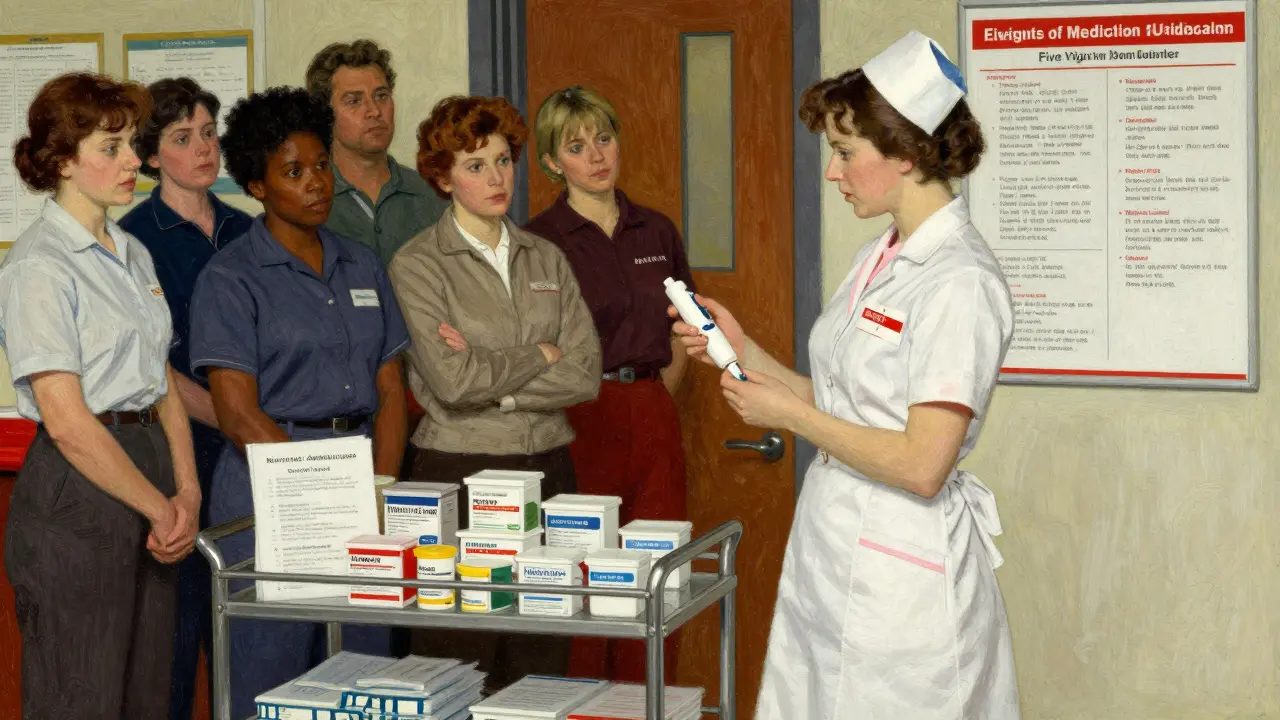
Documentation: The Paper Trail That Protects Everyone
Every time a child gets their medicine, it must be recorded. Immediately. Not later. Not “when I get a minute.” Documentation includes:- Time and date of administration
- Medication name and dose
- Route given
- Student’s response (e.g., “no vomiting,” “alert,” “complained of headache”)
- Signature of person who administered
Individualized Healthcare Plans (IHPs): The Blueprint for Safety
For students with complex needs-diabetes, seizures, severe allergies-a one-size-fits-all approach won’t work. That’s where the Individualized Healthcare Plan (IHP) comes in. An IHP is a written plan, developed with the parent, doctor, and school team, that outlines:- Exact medication schedule
- Signs of adverse reactions
- Emergency steps (e.g., when to call 911 or use an EpiPen)
- Who is authorized to administer
- How and when to communicate with parents
Emergency Medications: Seconds Matter
Anaphylaxis doesn’t wait for the nurse’s office to open. A child with a severe peanut allergy can go into shock in under five minutes. That’s why the CDC recommends all schools have stock epinephrine available-and train staff to use it. As of 2023, 87% of U.S. schools do. But not all staff know how. Training isn’t a one-time event. It needs to happen every year. Schools that practice emergency drills with mock anaphylaxis scenarios reduce response times by 40%. The key? Make it real. Use training kits. Role-play. Let teachers hold the auto-injector. When it’s not theoretical, people act faster.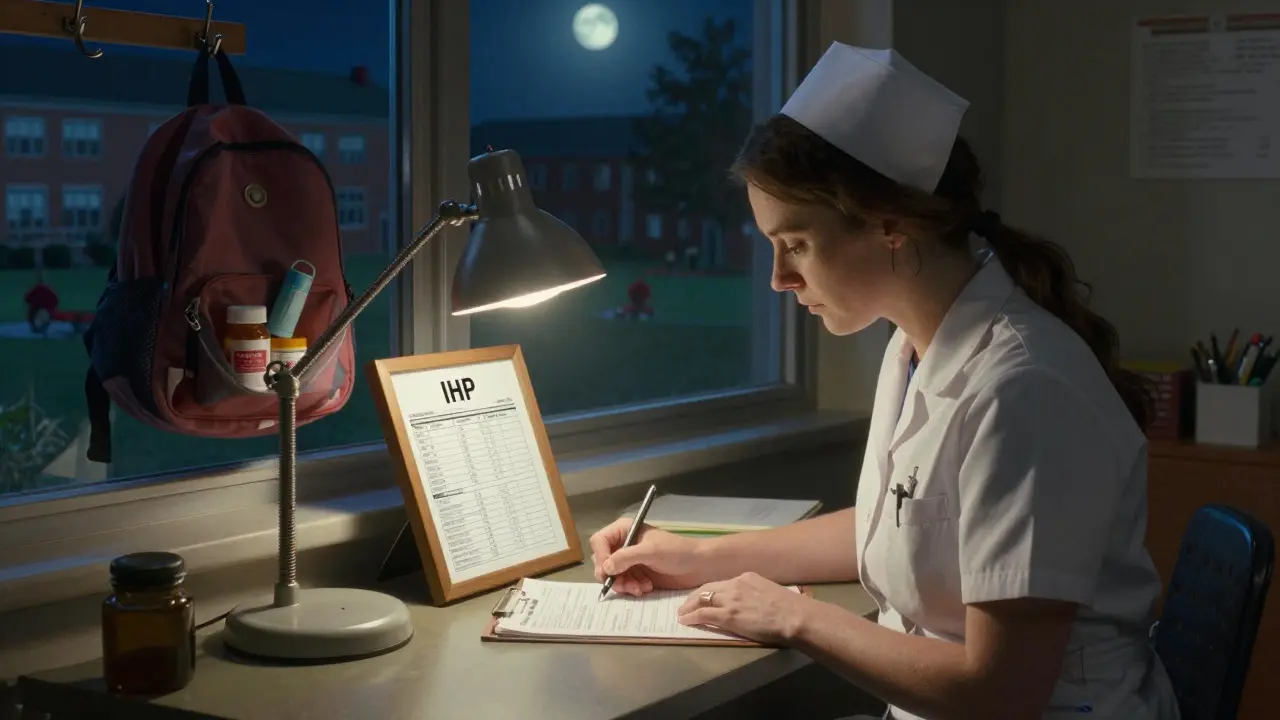
What Goes Wrong-and How to Fix It
The biggest problems aren’t usually about skill. They’re about systems.- Parental non-compliance - 38% of districts report parents bring meds in unlabeled containers. Solution: Mandatory parent orientation with clear handouts. Montgomery County, MD, improved compliance by 52% after requiring a signed agreement.
- Inconsistent state rules - Nurses in Texas say principals override their decisions because the state treats meds as “administrative tasks.” Solution: Push for state-level standardization. The NASN-AAP initiative launched in January 2024 is already adopted in 12 states.
- Documentation overload - Nurses burn out. Solution: Use EHRs with barcode scanning. Some districts now use smartphone apps that let staff scan the pill bottle and student ID to auto-log administration.
- Lack of training - 78% of nurses say they need more help delegating complex meds. Solution: Use NASN’s free 16-hour certification course. It’s online. It’s free. And it’s the gold standard.
What’s Next: Technology and Policy
The future of school medication coordination is digital. By 2024, 63% of districts were piloting smartphone apps that verify the right student, right med, right time-using QR codes and photo logs. These systems reduce errors, cut documentation time, and create real-time alerts if a dose is missed. The NASN and AAP are also pushing for national standardization. Right now, a nurse in New York follows different rules than one in Arizona. That’s dangerous when kids transfer schools or travel. The goal? A model law adopted by 45 states by 2026. But technology alone won’t fix this. What fixes it is having enough nurses. The projected nursing shortage by 2027 is 15%. Without more nurses, or better delegation systems, kids will keep falling through the cracks.What Parents Need to Know
If your child needs daily medication at school:- Bring meds in the original pharmacy container-no exceptions.
- Complete the IHP form fully and meet with the nurse.
- Update the school if dosage, doctor, or condition changes.
- Ask if the school uses electronic records. If not, push for it.
- Know who’s trained to give meds-and ask for a copy of the training certificate if you’re unsure.
Can a teacher give my child their medication?
Yes-but only if the school nurse has assessed your child’s needs, trained the teacher, and documented the delegation properly. In 37 states, unlicensed staff can give meds under nurse supervision. The nurse must ensure the staff member understands the Five Rights, knows how to handle side effects, and has completed required training. Never assume a teacher can give meds unless the school confirms it in writing.
What if my child forgets their medication at home?
Most schools do not keep extra doses of prescription medications on hand. The only exception is stock epinephrine for anaphylaxis or stock albuterol for asthma emergencies. For all other medications, the school cannot administer a dose unless it’s in the original labeled container brought by a parent or guardian. Always have a backup plan-like a spare inhaler or pill at school, if allowed by your doctor and district policy.
Are school nurses required to give medication?
Yes-if the student has a legal IEP or 504 Plan requiring medication during school hours, the school is legally obligated to provide it. This is a civil rights issue under Section 504 of the Rehabilitation Act. If a school refuses, parents can file a complaint with the U.S. Department of Education’s Office for Civil Rights. Nurses are the ones who carry out the plan, but the district is responsible for ensuring it happens.
Can a school refuse to give my child their ADHD medication?
No-if the medication is part of an approved IEP or 504 Plan, the school must administer it. ADHD medication is often essential for a child to access education safely and effectively. Schools cannot refuse based on personal preference, staffing shortages, or inconvenience. If a school says no, ask for the written policy and contact your state’s Department of Education. Federal law protects your child’s right to receive necessary medications during school hours.
How often should medication training be repeated?
Training for unlicensed personnel should happen at least once a year-and immediately when there’s a change in medication, dosage, or student condition. Some states require annual recertification. The best districts do quarterly refreshers, especially before field trips or holidays when routines change. Nurses should also re-evaluate delegation decisions every semester to ensure staff are still competent and comfortable.
What should I do if I suspect a medication error at school?
Contact the school nurse immediately and request a copy of the medication log for that day. Ask if an incident report was filed. Under the “Just Culture” model used by many districts, errors are reviewed without blame to improve systems-not punish people. If the school refuses to investigate or doesn’t have a formal process, file a written complaint with the school district’s health services office. You can also contact your state school nurse association or the National Association of School Nurses for guidance.






Written by Martha Elena
I'm a pharmaceutical research writer focused on drug safety and pharmacology. I support formulary and pharmacovigilance teams with literature reviews and real‑world evidence analyses. In my off-hours, I write evidence-based articles on medication use, disease management, and dietary supplements. My goal is to turn complex research into clear, practical insights for everyday readers.
All posts: Martha Elena