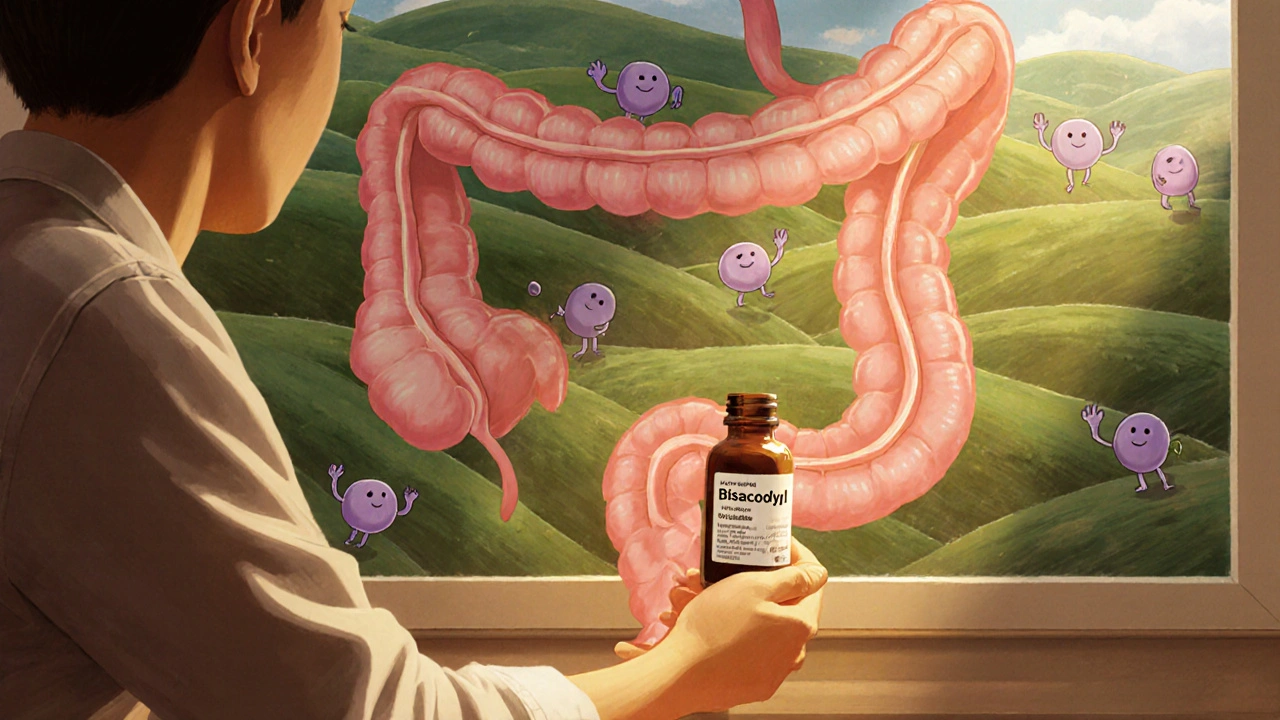
When you reach for a laxative, the last thing on your mind is how it might be reshaping the trillions of microbes living in your gut. Bisacodyl is one of the most common over‑the‑counter options, but recent research shows it can nudge the gut microbiota in surprising ways. This guide breaks down what bisacodyl does, why the microbiome matters, and how you can keep both bowel movements and gut health on track.
Quick Takeaways
- Bisacodyl is a stimulant laxative that activates the colon’s nerves to speed up stool passage.
- Short‑term use has little lasting impact on overall microbiome diversity, but it can temporarily boost certain bacterial families.
- People with Irritable Bowel Syndrome (IBS) or already‑imbalanced microbiota should monitor symptoms closely.
- Alternatives like polyethylene glycol (PEG) tend to be gentler on gut microbes.
- Adding probiotics or high‑fiber foods can help restore balance after a course of bisacodyl.
What Exactly Is Bisacodyl?
Bisacodyl is a synthetic stimulant laxative that has been on pharmacy shelves for more than 70 years. Once ingested, it passes through the stomach unchanged and reaches the colon where it irritates the mucosal lining, prompting nerve fibers to fire more often. The result: stronger peristaltic waves and a softer stool that exits more quickly.
Typical doses range from 5 mg for occasional relief to 10 mg for chronic constipation, taken at night so the effect shows up the next morning. Because it works locally in the large intestine, systemic side effects are rare, but abdominal cramping and electrolyte shifts can occur if the drug is overused.
Gut Microbiota 101: The Tiny Community That Keeps You Healthy
The gut microbiota is a dynamic ecosystem of bacteria, archaea, fungi, and viruses that call the gastrointestinal tract home. The two most abundant bacterial phyla are Bacteroides and Clostridia. Together they help digest fiber, produce short‑chain fatty acids (SCFAs) such as acetate, propionate, and butyrate, and train the immune system.
SCFAs are the bridge between microbes and host health. They fuel colon cells, tighten the gut barrier, and modulate inflammation. Disruptions to microbial balance-often termed dysbiosis-have been linked to IBS, metabolic syndrome, and even mood disorders.

How Bisacodyl Interacts With the Microbiome
Research on bisacodyl’s microbiome impact is still emerging, but a handful of studies give us clues. In a 2022 crossover trial, 20 healthy volunteers took bisacodyl for three days. 16S rRNA sequencing showed a modest increase in the relative abundance of Clostridia species that are known butyrate producers. The rise peaked 24 hours after the last dose and returned to baseline within a week.
Another small study in patients with chronic constipation found that bisacodyl temporarily lowered overall bacterial diversity-measured by Shannon index-likely because of the rapid transit reducing fermentation time. However, the change was not statistically significant after a two‑week washout period.
What does this mean in practice? Short‑term bisacodyl use may tilt the microbial balance toward certain beneficial groups, but it can also reduce the time microbes have to break down fiber, potentially lowering SCFA production during the treatment window.
Practical Implications: Should You Worry?
If you use bisacodyl occasionally (once or twice a month), the microbiome shifts are probably negligible. The bigger concerns arise when the drug is taken daily for weeks or months. Prolonged stimulation can lead to:
- Reduced microbial diversity, which is a risk factor for IBS flare‑ups.
- Electrolyte imbalances that indirectly affect bacterial growth.
- Dependence on stimulant laxatives, making natural bowel movements harder.
Patients with existing dysbiosis-such as those on antibiotics, following a low‑fiber diet, or diagnosed with IBS-should discuss alternatives with their clinician. Adding a probiotic that contains Lactobacillus and Bifidobacterium strains can help replenish lost microbes after a bisacodyl course.
Bisacodyl vs. Other Laxatives: A Quick Comparison
| Feature | Bisacodyl | Polyethylene Glycol (PEG) | Senna |
|---|---|---|---|
| Mechanism | Stimulates colonic nerves | Osmotic agent draws water into lumen | Plant‑derived stimulant |
| Onset | 6‑12 hours | 1‑3 days | 6‑12 hours |
| Effect on Microbiota | Transient shift; possible short‑term diversity dip | Minimal; maintains fermentation time | Similar to bisacodyl, but stronger cramps |
| Common Side Effects | Cramping, urgency | Bloating, nausea | Abdominal pain, electrolyte loss |
| Best For | Quick relief, occasional constipation | Chronic constipation, gentle on microbiome | People preferring herbal options |

Tips to Protect Your Microbiome While Using Bisacodyl
- Limit use to the shortest effective duration-typically 1‑3 days.
- Consume a fiber‑rich meal (whole grains, fruits, vegetables) the day you take bisacodyl to give microbes substrate for fermentation.
- Stay hydrated; water helps both stool softening and bacterial metabolism.
- Consider a probiotic containing Lactobacillus rhamnosus or Bifidobacterium longum during and after treatment.
- If you need daily relief, talk to a doctor about switching to an osmotic laxative like PEG, which is gentler on microbial diversity.
Frequently Asked Questions
Can bisacodyl cause permanent changes to my gut bacteria?
Short‑term use (a few days) typically results in only temporary shifts. Long‑term, daily use may reduce diversity, but stopping the drug usually allows the microbiome to bounce back within weeks.
Is it safe to combine bisacodyl with a probiotic?
Yes. Probiotics can help repopulate beneficial strains after a bisacodyl course. Just start the probiotic at the same time or right after finishing the laxative.
What should I do if I experience severe cramping?
Stop the medication and drink plenty of water. If cramping persists for more than 24 hours or is accompanied by vomiting, seek medical advice.
How does bisacodyl compare to polyethylene glycol for microbiome health?
PEG is an osmotic laxative that draws water into the colon without stimulating nerves. Studies show PEG has minimal impact on bacterial diversity, making it a better choice for people concerned about gut microbes.
Can I use bisacodyl while on antibiotics?
Antibiotics already disturb the microbiome, so adding a stimulant laxative can compound the effect. Talk to your doctor; they may recommend a gentler laxative or a probiotic plan.
Next Steps
If you’ve been using bisacodyl regularly, consider a short break and replace it with a fiber supplement or an osmotic laxative. Track your bowel habits and any gut‑related symptoms in a simple log. When in doubt, schedule a chat with a gastroenterologist or a dietitian who can personalize a gut‑friendly plan.







Written by Martha Elena
I'm a pharmaceutical research writer focused on drug safety and pharmacology. I support formulary and pharmacovigilance teams with literature reviews and real‑world evidence analyses. In my off-hours, I write evidence-based articles on medication use, disease management, and dietary supplements. My goal is to turn complex research into clear, practical insights for everyday readers.
All posts: Martha Elena