How Air Pollution Makes Asthma Worse
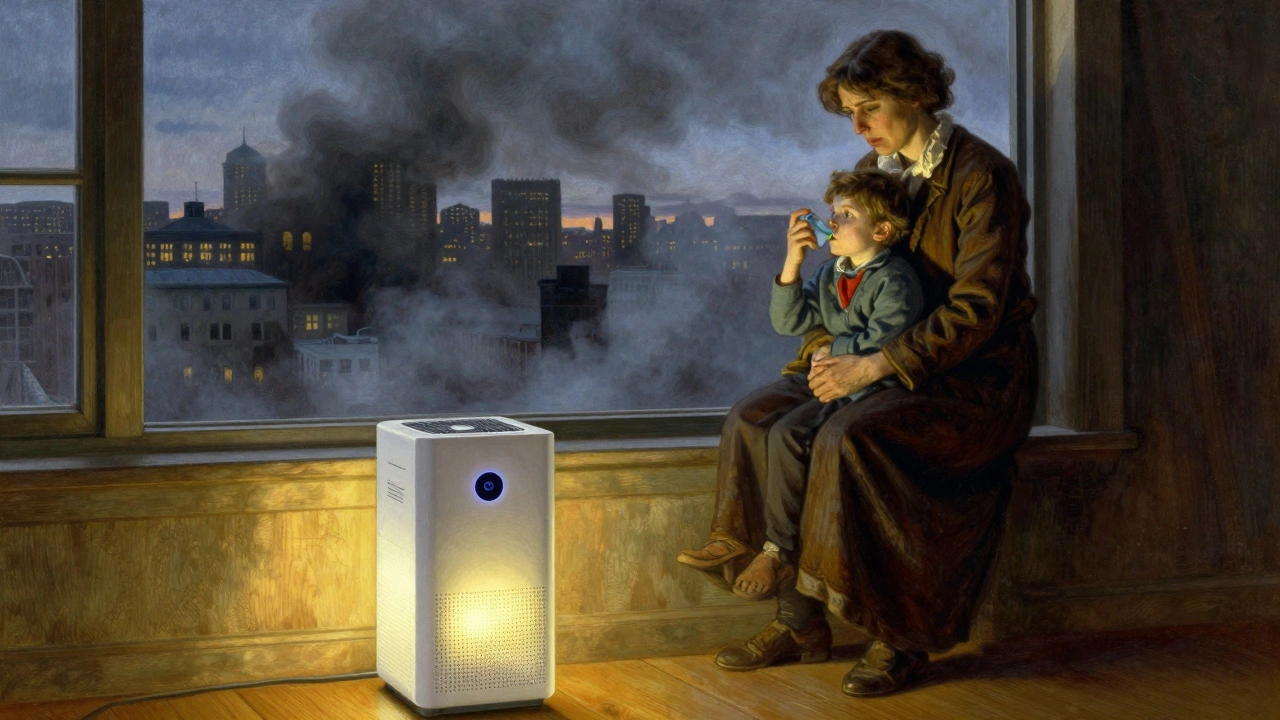
If you or someone you care about has asthma, breathing dirty air isn’t just uncomfortable-it’s dangerous. Every year, air pollution triggers millions of asthma attacks, sends people to the emergency room, and makes daily life harder. The worst offenders are tiny particles called PM2.5, nitrogen dioxide from traffic, ozone on hot days, and smoke from wildfires or burning fuels. These pollutants don’t just irritate your lungs-they cause inflammation, tighten airways, and make your asthma meds less effective.
Studies show that when pollution levels rise, so do asthma-related hospital visits. In one 2024 study, people with asthma saw their symptom control improve significantly during periods of lower pollution, like during pandemic lockdowns. Their Asthma Control Test scores jumped from an average of 17.3 to 19.7 out of 25. That’s not a small change-it means fewer inhaler uses, better sleep, and less missed work or school.
The numbers are stark: air pollution is linked to about 4 million new cases of childhood asthma every year worldwide. And it’s not just kids. Adults with asthma, especially those who live near busy roads or in cities with poor air quality, face daily risks. Even if you take your controller medication, bad air can undo all the progress you’ve made.
Check the Air Quality Index-Before You Step Outside
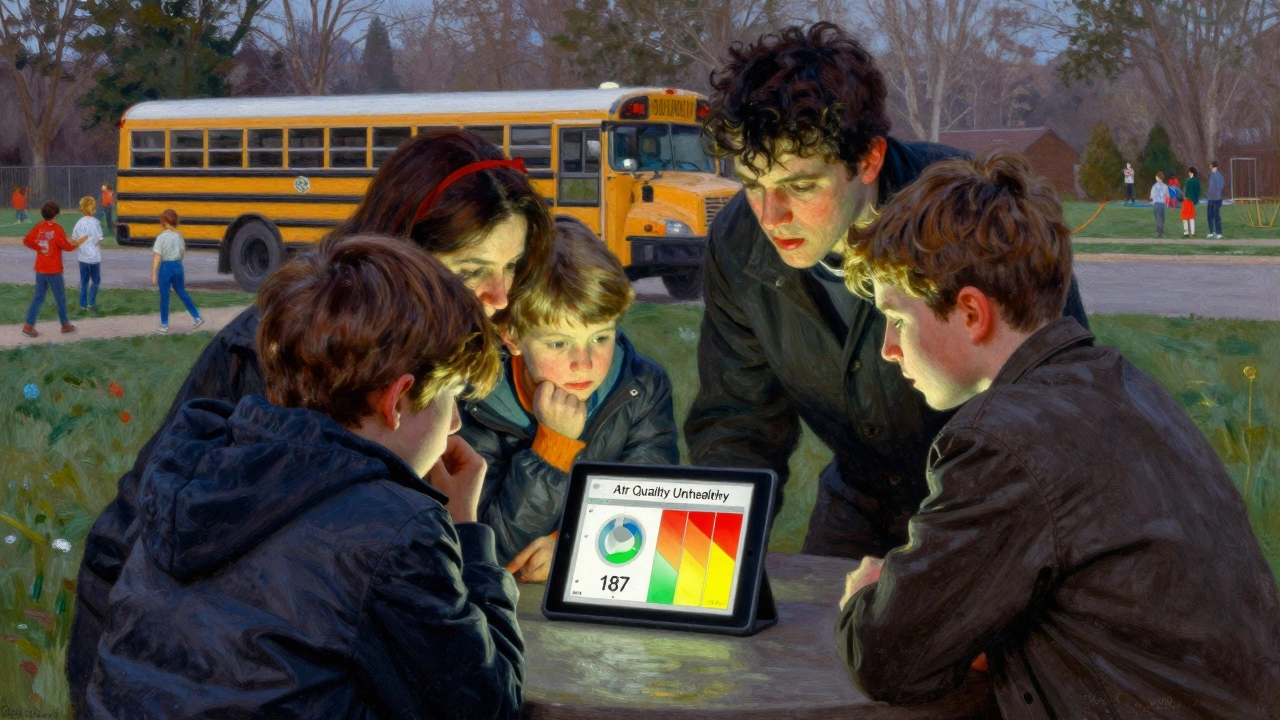
You don’t need to guess whether it’s safe to go for a walk or let your child play outside. The Air Quality Index (AQI) tells you exactly what you’re breathing. It’s a simple scale from 0 to 500, color-coded and easy to read. You can check it for free on the EPA’s AirNow.gov website or through apps like AirVisual or Plume Labs.
Here’s what the numbers mean for asthma:
- AQI 51-100 (Moderate): Sensitive groups-including people with asthma-should cut back on long outdoor activities, especially during peak hours.
- AQI 101-150 (Unhealthy for Sensitive Groups): Everyone with asthma should avoid prolonged outdoor exertion. That means no running, cycling, or sports outside.
- AQI 151-200 (Unhealthy): Avoid all outdoor activity. Even short walks can trigger symptoms.
- AQI 201+ (Very Unhealthy or Hazardous): Stay indoors. Close windows. Turn on your air purifier.
One user, ‘AsthmaMom2020’, shared that using the AirVisual app cut her daughter’s rescue inhaler use in half over six months. That’s the power of simple, daily awareness. The key isn’t just checking the AQI-it’s acting on it. If the index says it’s unsafe, change your plans. It’s not overreacting. It’s protecting your lungs.
Make Your Home a Clean Air Sanctuary
You spend up to 90% of your time indoors. If your home’s air is polluted, your asthma will suffer-even if the outside air looks clear. Indoor pollution comes from cooking fumes, cleaning products, dust mites, mold, and even outdoor air that sneaks in through cracks and open windows.
The most effective way to clean indoor air is with a HEPA filter. These filters capture 99.97% of particles as small as 0.3 microns-including PM2.5, pollen, and pet dander. Look for portable air purifiers with a Clean Air Delivery Rate (CADR) that matches your room size. For a 300-square-foot bedroom, you need a CADR of at least 200. Bigger rooms need bigger units.
Don’t just buy any purifier. Check the label. Avoid models that produce ozone-it’s a lung irritant and makes asthma worse. Stick to true HEPA filters with no ionizers or UV lights unless they’re certified ozone-free.
Studies show that using HEPA filters at home reduces indoor PM2.5 by 55-67%. One user on Reddit reported going from using their inhaler 4-5 times a week to just 1-2 times after installing a Coway Airmega 400. The catch? These units cost $50 to $800, and filters need replacing every 3-6 months at $20-$100 each. But for many, the health payoff is worth it.
Improve Your HVAC System for Cleaner Air
Your home’s heating and cooling system can be a silent pollution source-or a powerful ally. Most standard filters only catch large dust particles. To protect your lungs, upgrade to a MERV 13-16 filter. These are designed to trap fine particles like smoke and allergens without overworking your system.
Make sure your HVAC system is properly sized and maintained. A filter that’s too restrictive can cause your blower to strain. If you’re unsure, ask an HVAC technician to check compatibility. Also, change the filter every 1-3 months, even if it doesn’t look dirty. Dust builds up invisibly.
During wildfire season or high-pollution days, switch your system to recirculation mode. This keeps outdoor air out. But remember: even with recirculation, indoor air can still reach 60-80% of outdoor pollution levels within an hour. That’s why pairing your HVAC upgrade with a portable HEPA unit in your bedroom or living room gives you the best protection.
What About Face Masks?
When pollution spikes, you might think an N95 mask is the answer. And for short outdoor trips-like walking to the car or picking up groceries-it can help. N95 masks filter out 95% of particles when fitted correctly. But here’s the problem: most people wear them wrong.
Children, older adults, and people with breathing difficulties often can’t wear them comfortably or safely. Dr. John Balmes from UCSF warns that masks can create a false sense of security. If you’re not sealing the mask properly, you’re still breathing in polluted air. And if you’re exercising while wearing one, you’re working harder to breathe, which can make asthma worse.
Use masks only as a last resort. They’re not a substitute for staying indoors or using air purifiers. If you must go out, keep the trip short, avoid heavy exertion, and choose routes away from traffic.
Policy Changes Are the Real Game-Changer
Individual actions matter-but they can’t fix everything. If you live near a highway or in a city with high traffic emissions, your home filter won’t fully protect you. Real change happens at the policy level.
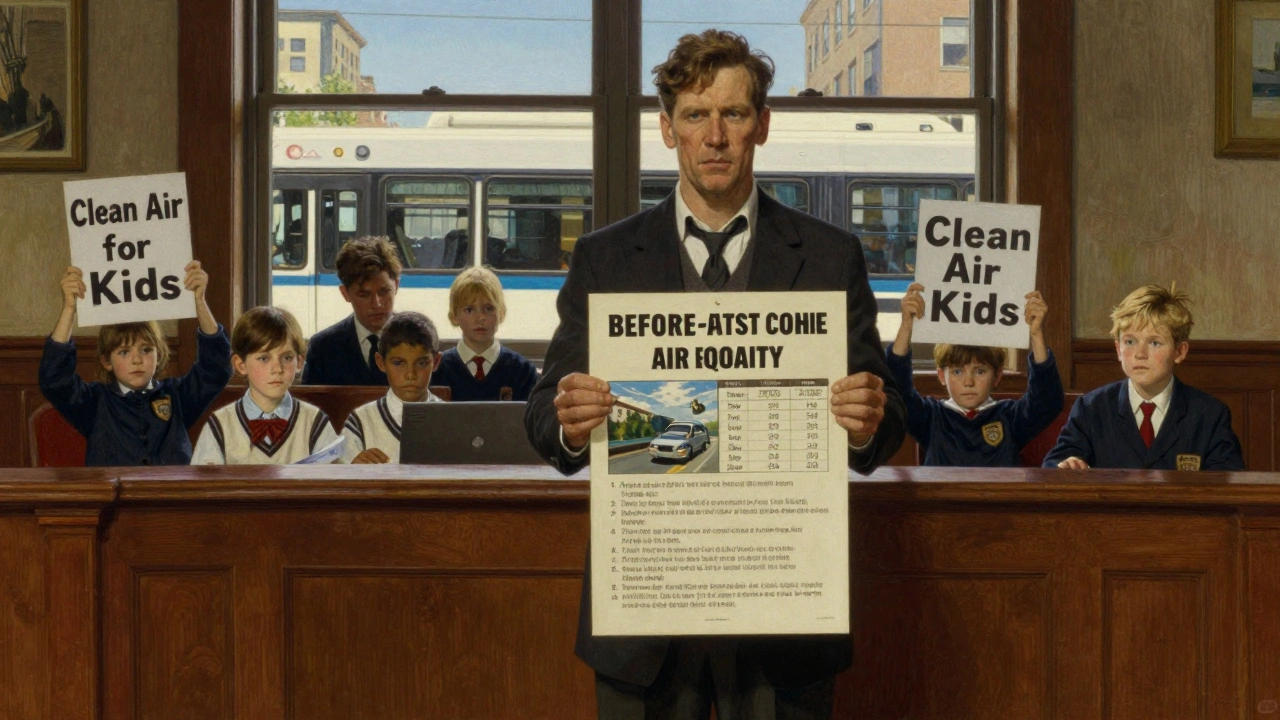
For example, schools that moved bus drop-off zones away from playgrounds and banned idling saw indoor PM2.5 drop by 22-35%. In Massachusetts, parents reported 41% fewer asthma-related school absences after these changes. California is replacing all diesel school buses with electric ones by 2035, which could cut children’s exposure to traffic pollution by up to 60%.
On a national level, the EPA’s current PM2.5 standard is 12 μg/m³ annually. But experts from the American Thoracic Society say it should be 8 μg/m³ to truly protect people with asthma. In January 2024, the EPA proposed tightening the standard to 9-10 μg/m³. That’s progress-but still not enough.
London’s Ultra Low Emission Zone reduced childhood asthma hospitalizations by nearly 12% in just two years. Cities that invest in clean public transit, green spaces, and low-emission zones see real health gains. These aren’t just environmental policies-they’re public health policies.
Barriers to Action-And How to Overcome Them
Knowing what to do doesn’t always mean you can do it. A 2022 survey found that while 68% of asthma patients check air quality, only 32% change their behavior based on it. Why?
- Work obligations: 78% said they couldn’t stay indoors because of their job.
- Childcare: 65% couldn’t skip outdoor activities because they needed to get kids to school or activities.
- Cost: 52% said air purifiers or upgrades were too expensive.
These aren’t excuses-they’re real barriers. But solutions exist. Talk to your employer about flexible hours during high-pollution days. Ask your child’s school if they have an air quality plan. Look for low-cost HEPA filters on sale or through local health programs. Some nonprofits and public health departments offer free or discounted air purifiers to low-income families with asthma.
And if you’re overwhelmed, start small. One change-like using a HEPA filter in your bedroom-can make a big difference in your sleep and morning symptoms. Progress, not perfection, is the goal.
What’s Next? Technology and Health Are Connecting
The future of asthma management is getting smarter. The NIH is funding projects that use wearable sensors to track personal air pollution exposure in real time. These devices sync with apps to send alerts when pollution spikes-just for you.
Some pilot programs are even linking air quality data directly to electronic health records. Imagine your doctor seeing that your last asthma flare-up happened on a day when your neighborhood’s PM2.5 hit 35 μg/m³. That kind of data helps tailor treatment better than ever before.
Electric buses, cleaner factories, and urban green spaces aren’t just good for the planet-they’re medicine. The American Lung Association estimates that reducing emissions could prevent 1.7 million asthma attacks in the U.S. each year. That’s not a distant dream. It’s a policy choice.
Final Thoughts: You Have More Power Than You Think
Asthma doesn’t have to be controlled by the air outside your window. You can take steps-big and small-to protect yourself and your family. Check the AQI. Use a HEPA filter. Talk to your school or workplace. Push for cleaner air policies. You’re not powerless.
Every time you choose to stay indoors on a bad air day, every time you replace a filter, every time you ask your city to move a bus stop-you’re lowering your risk. These actions add up. And they’re backed by science, not just hope.
The goal isn’t perfect air. It’s better control. Fewer attacks. More days where you breathe easy.
Can air pollution cause asthma, or just make it worse?
Air pollution doesn’t just worsen existing asthma-it can actually cause new cases, especially in children. A 2019 study in The Lancet Planetary Health found that air pollution is responsible for about 4 million new pediatric asthma cases worldwide each year. Pollutants like PM2.5 and nitrogen dioxide damage developing lungs and trigger chronic inflammation, leading to asthma where it didn’t exist before.
Do air purifiers really help with asthma?
Yes, when used correctly. True HEPA air purifiers reduce indoor PM2.5 levels by 55-67%, according to Johns Hopkins research. This leads to fewer symptoms, less nighttime waking, and lower inhaler use. But they must match your room size (CADR should be at least two-thirds of the room’s square footage) and be maintained with regular filter changes. They’re not magic, but they’re one of the most effective tools you can use at home.
Is it safe to exercise outdoors with asthma during high pollution?
No. Exercising outdoors when the AQI is above 101 increases your risk of an asthma attack. You breathe deeper and faster during exercise, pulling more pollutants into your lungs. Even if you feel fine, your airways are still getting damaged. Move workouts indoors or reschedule for early morning when pollution is lower. Use your inhaler before activity if your doctor recommends it, but don’t rely on it as a shield against bad air.
What’s the best way to reduce asthma triggers at school?
Schools can make big changes: relocate bus drop-off zones away from playgrounds, ban idling, install HEPA filters in classrooms, and use asthma-friendly cleaning products. Massachusetts schools that did this saw a 22-35% drop in indoor PM2.5 and 41% fewer asthma-related absences. Parents can ask their school district if they follow the Massachusetts Asthma Action Partnership’s 12-step checklist for clean air.
How do I know if my HEPA filter is working?
You won’t see visible changes, but you’ll feel them. Track your symptoms: fewer nighttime coughing, less inhaler use, better sleep. Some air purifiers have built-in sensors that show real-time air quality. If your filter is old, smells musty, or looks clogged, replace it-even if it’s not due yet. Most manufacturers recommend changing HEPA filters every 3-6 months. And never place the unit against a wall-it needs 1-2 feet of space around it to circulate air properly.
Can I rely on my smartphone’s air quality app?
Yes, but choose wisely. Apps like AirVisual, Plume, and the EPA’s AirNow use data from official monitors and are reliable for general trends. Avoid apps that use only estimated or modeled data without real sensor input. Look for apps that show PM2.5 and ozone levels specifically. Use them daily-not just when you feel bad. Prevention is better than reaction.
Are there free or low-cost options for air purifiers?
Yes. Some local health departments, asthma foundations, and nonprofit organizations offer free or discounted HEPA filters to low-income families. Check with your city’s public health office, the Asthma and Allergy Foundation of America, or your insurance provider-some plans cover air purifiers as durable medical equipment if prescribed by a doctor. Even a DIY air purifier made with a box fan and a MERV 13 filter can reduce indoor particles by up to 40%.





Written by Martha Elena
I'm a pharmaceutical research writer focused on drug safety and pharmacology. I support formulary and pharmacovigilance teams with literature reviews and real‑world evidence analyses. In my off-hours, I write evidence-based articles on medication use, disease management, and dietary supplements. My goal is to turn complex research into clear, practical insights for everyday readers.
All posts: Martha Elena