
Methadone QT Prolongation Risk Calculator
Patient Assessment
Risk Assessment
When someone starts methadone for opioid dependence, the focus is often on recovery, reducing cravings, and staying off street drugs. But there’s another layer-hidden, silent, and potentially deadly-that every provider and patient needs to know: methadone can mess with your heart’s rhythm. It doesn’t happen to everyone, but when it does, it can lead to a life-threatening arrhythmia called Torsades de Pointes. And the worst part? Many patients never see it coming.
Why Methadone Affects Your Heart
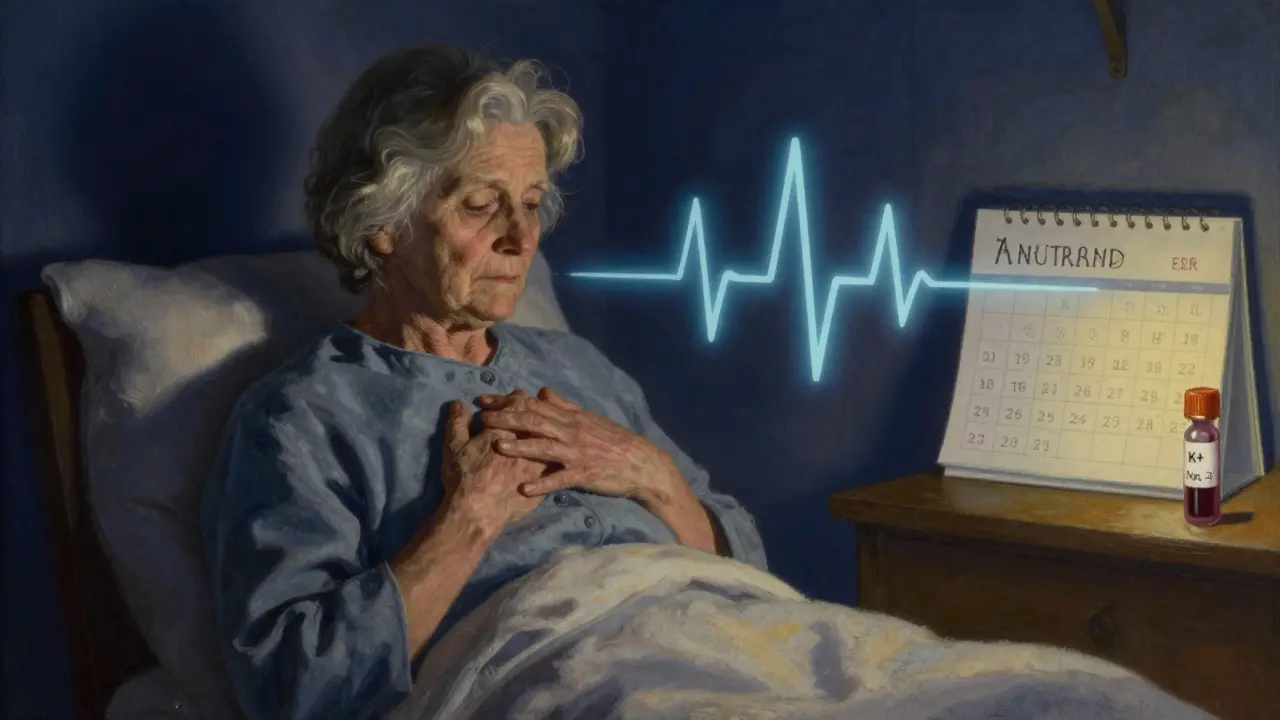
Methadone isn’t just a painkiller or an opioid replacement. It’s a powerful drug that blocks a specific ion channel in your heart called hERG. This channel controls how quickly your heart resets after each beat. When it’s blocked, the electrical recovery phase gets delayed. That delay shows up on an ECG as a longer QT interval-the time between the start of the Q wave and the end of the T wave. A normal QTc (corrected for heart rate) is 430 ms or less for men and 450 ms or less for women. Once it crosses 450 ms in men or 470 ms in women, you’re in the danger zone. At 500 ms or higher, your risk of sudden cardiac death jumps fourfold. Methadone doesn’t always cause this, but the higher the dose, the more likely it becomes. Doses above 100 mg per day are where most of the risk kicks in. Some patients on 400 mg or more have seen QTc intervals stretch past 550 ms.Who’s at Highest Risk?
Not everyone on methadone needs monthly ECGs. But some people are walking a tightrope. Here’s who needs extra attention:- Women-especially over 65. They’re 2.5 times more likely than men to develop QT prolongation.
- People with low potassium (<3.5 mmol/L) or low magnesium (<1.5 mg/dL). These electrolytes keep your heart’s electrical system stable.
- Those with heart disease: heart failure, past heart attack, or ejection fraction under 40%.
- Anyone taking other QT-prolonging drugs: antidepressants like amitriptyline, antipsychotics like haloperidol, or antibiotics like moxifloxacin.
- Patients on drugs that slow methadone breakdown-like fluconazole, voriconazole, or fluvoxamine. These can spike methadone levels by up to 50%.
- People with sleep apnea. About half of methadone patients have it. When breathing stops at night, oxygen drops, and that triggers electrical chaos in the heart.
One study of 127 patients in a Swiss hospital found that nearly 3 out of 10 had QTc over 450 ms. And nearly 9% had it above 500 ms. The biggest predictors? Daily methadone dose over 100 mg, low potassium, and using psychiatric meds at the same time.
When to Get an ECG-The Real-World Rules
You don’t need an ECG every week. But skipping it entirely is dangerous. Here’s what the guidelines actually recommend:- Before you start: Get a baseline ECG. No exceptions. Even if you’re starting at 40 mg, do it. It’s your reference point.
- After a dose change: Wait 2 to 4 weeks for methadone to reach steady state, then repeat the ECG. That’s when levels stabilize and the full effect shows up.
- Regular monitoring:
- Low risk (QTc under 450 ms men, 470 ms women, no other factors): Every 6 months.
- Moderate risk (QTc 450-480 ms men, 470-500 ms women, or 1-2 risk factors): Every 3 months.
- High risk (QTc over 480 ms men, 500 ms women, or 3+ risk factors): Monthly. And consider switching to buprenorphine.
Some clinics skip ECGs for low-dose patients. That’s risky. A 2023 study in JAMA Internal Medicine showed that clinics with structured ECG programs cut serious heart events by 67%. That’s not a small win. That’s life-saving.
What to Do If Your QTc Is Too Long
If your QTc jumps above 500 ms-or goes up more than 60 ms from baseline-you need to act fast:- Check your potassium and magnesium. Fix them. Even if they’re just a little low.
- Review every other medication you’re on. Stop or swap anything that prolongs QT.
- Lower your methadone dose. Even a 10-20% reduction can make a big difference.
- Get a cardiology consult. Don’t wait.
- Consider switching to buprenorphine. It’s just as effective for opioid dependence but carries far less cardiac risk.
There’s no magic number where you have to stop methadone forever. But if your QTc stays above 500 ms despite dose reduction and electrolyte correction, switching is the safest path.
The Silent Danger: Why Deaths Are Misattributed
Here’s the grim truth: many sudden deaths in people on methadone are labeled as “overdose.” But if someone dies quietly in their sleep, with no signs of needle marks or vomiting, it might not be an overdose at all. It could be Torsades de Pointes-a rapid, chaotic heart rhythm that looks like a twisting pattern on an ECG and can turn fatal in seconds. The FDA has recorded 142 confirmed cases of TdP linked to methadone between 2000 and 2022. Experts believe the real number is much higher because deaths are rarely autopsied for cardiac causes in this population. That’s why monitoring isn’t just good practice-it’s ethical.
What Patients Should Ask Their Clinic
If you’re on methadone, don’t wait for them to bring it up. Ask:- “When was my last ECG?”
- “What’s my QTc number?”
- “Am I on any meds that could make this worse?”
- “Do you check potassium and magnesium regularly?”
- “What’s the plan if my QTc gets too long?”
A 2022 survey on Reddit showed that 68% of patients felt monitoring was inconsistent across clinics. But those who got regular ECGs were 35% more likely to feel safe in their treatment. Knowledge isn’t just power-it’s peace of mind.
The Bigger Picture: Balancing Risk and Recovery
Methadone saves lives. People on methadone are 33% less likely to die from overdose. They’re less likely to use heroin, less likely to get HIV, and more likely to hold a job. But that benefit only lasts if you stay alive long enough to see it. The goal isn’t to scare people off methadone. It’s to make sure that when someone chooses recovery, they’re not trading one risk for another. ECG monitoring is simple, cheap, and non-invasive. It’s not optional for high-risk patients. It’s part of the standard of care.Every time you get an ECG, you’re not just checking a box. You’re protecting your heart. And that’s the most important part of staying in recovery.
Can methadone cause sudden death even at low doses?
Yes, but it’s rare. Most cases of life-threatening arrhythmias happen at doses above 100 mg per day, especially when combined with other risk factors like low potassium, heart disease, or other QT-prolonging drugs. Even at low doses, if you have congenital long QT syndrome or take certain medications, the risk exists. That’s why a baseline ECG is recommended for everyone starting methadone.
How often should I get an ECG on methadone?
It depends on your risk level. Low-risk patients (no other health issues, QTc under 450 ms for men or 470 ms for women) should get one every 6 months. Moderate-risk patients (one or two risk factors, QTc between 450-480 ms or 470-500 ms) need one every 3 months. High-risk patients (QTc over 480 ms or 500 ms, or three or more risk factors) need monthly ECGs. Always get one after any dose change, and wait 2-4 weeks for steady-state levels before testing.
Is buprenorphine safer for the heart than methadone?
Yes. Buprenorphine has a much lower risk of QT prolongation. Studies show it rarely causes clinically significant QTc increases, even at high doses. For patients with multiple risk factors-like older women, those with heart disease, or those on other cardiac-risk medications-switching to buprenorphine is often the safest choice without sacrificing treatment effectiveness.
What electrolytes should I check with my blood tests?
You need to monitor potassium and magnesium regularly. Potassium should stay above 4.0 mmol/L, and magnesium above 1.8 mg/dL. Low levels of either can trigger dangerous heart rhythms, especially when combined with methadone. Many clinics only check these once a year-but if you’re on methadone and have risk factors, check them every 3 months.
Can sleep apnea make methadone heart risks worse?
Absolutely. About half of people on methadone have sleep apnea. When you stop breathing at night, your oxygen drops, your heart rate slows, and your body releases stress hormones. This combination can trigger irregular heartbeats, especially if your QT interval is already prolonged. If you snore loudly, feel tired during the day, or your partner says you stop breathing at night, get tested for sleep apnea. Treating it can reduce your cardiac risk significantly.
Do I need to stop methadone if my QTc is high?
Not always. If your QTc is between 480-500 ms and you have no other symptoms, lowering your dose and correcting electrolytes often brings it back down. But if it’s above 500 ms, or if it jumps more than 60 ms from baseline, you need to consider switching to buprenorphine. Staying on methadone with a QTc over 500 ms is like driving with a faulty brake system-it might work for now, but the risk is too high.
Why don’t all clinics do regular ECGs?
Cost, lack of awareness, and outdated protocols. Some clinics still think methadone is only risky for overdose, not arrhythmia. Others don’t have easy access to ECG machines or trained staff. But research shows that clinics with structured monitoring programs reduce cardiac events by two-thirds. Regular ECGs are a low-cost, high-impact safety step that should be standard everywhere.



![Sartel (Telmisartan) Uses, Dosage, Side Effects, Interactions [2025 Guide]](/uploads/2025/08/thumbnail-sartel-telmisartan-uses-dosage-side-effects-interactions-2025-guide.webp)



Written by Martha Elena
I'm a pharmaceutical research writer focused on drug safety and pharmacology. I support formulary and pharmacovigilance teams with literature reviews and real‑world evidence analyses. In my off-hours, I write evidence-based articles on medication use, disease management, and dietary supplements. My goal is to turn complex research into clear, practical insights for everyday readers.
All posts: Martha Elena