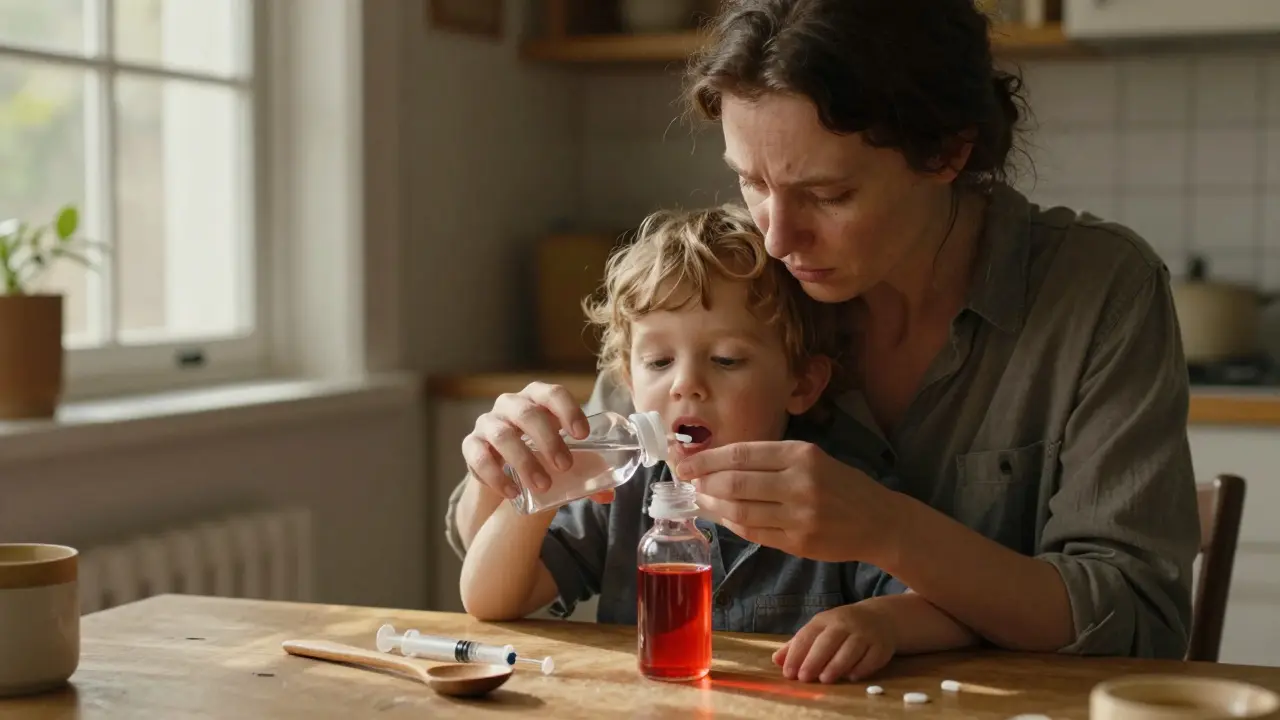
When your child is sick, the last thing you want is a battle over medicine. You’ve got a feverish toddler, a stubborn 5-year-old, and two options: a sweet-tasting liquid or a tiny pill. Which one actually works better? The truth is, the answer isn’t as simple as "liquids are easier." In fact, for many kids, tablets might be the smarter choice - even if they’re younger than you think.
Why Liquids Have Been the Default
For decades, doctors and parents assumed kids couldn’t swallow pills. That made liquid medicine the go-to. It’s easy to measure, easy to adjust dose by weight, and it often comes in flavors like strawberry or grape. But here’s the catch: those flavors don’t always taste like real fruit. Many kids reject them because the "strawberry" flavor is just chemical-sweetened nonsense. One parent on Reddit put it bluntly: "My 4-year-old would rather swallow a mini-tablet than take the 'strawberry' antibiotic that tasted like chemicals." Liquids also come with hidden problems. About 15-20% of parents mismeasure doses because they use kitchen spoons instead of proper oral syringes. The FDA found that incorrect dosing happens more often with liquids than with tablets. And once you open a bottle, it often needs refrigeration and expires in just two to four weeks. That means wasted medicine, extra trips to the pharmacy, and higher costs.Tablets Are Not What You Think Anymore
Modern pediatric tablets aren’t the big, bitter pills your parents crushed into applesauce. Today’s options include mini-tablets as small as 2mm wide - smaller than a pencil eraser. There are orodispersible tablets that melt on the tongue in 30 seconds, no water needed. And many are coated to hide bitter tastes. A 2012 study with 60 children aged 6 months to 6 years found that kids actually preferred swallowing these tiny tablets over liquids, especially babies under one year old. Why? Because liquids can be overwhelming - too much liquid in the mouth, too much swallowing, too much gagging. And the safety myth? Choking on a properly sized pediatric tablet is extremely rare. FDA data from 2010 to 2020 shows choking incidents happen in fewer than 0.002% of cases. That’s less likely than choking on a grape. The real risk comes from crushing tablets meant for slow release - which can cause dangerous spikes in medication levels. If your child needs a pill that’s too big, ask your pharmacist about a tablet that’s already the right size. Don’t crush it.When Liquids Still Make Sense
There are times when liquid is the only real option. Babies under six months often can’t swallow anything solid. For them, liquids are necessary. Also, some medications - like levothyroxine for thyroid issues or warfarin for blood thinning - need exact, tiny doses that are hard to split in tablet form. In those cases, precision matters more than convenience. Another reason to stick with liquids: if your child is vomiting or has trouble keeping anything down, a liquid can sometimes be given in smaller sips over time. But even then, ask if there’s a dissolving tablet version. Some newer medications now come in both forms.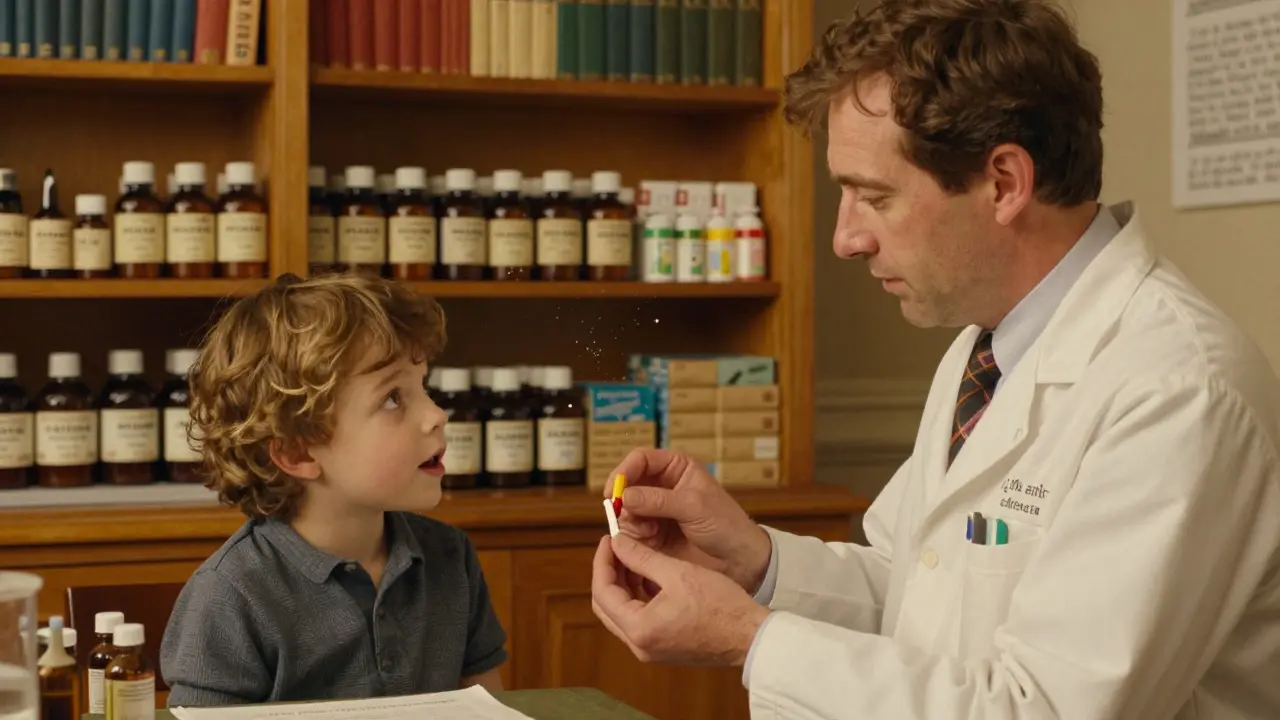
Cost and Waste: The Hidden Advantage of Tablets
Let’s talk money. A 2021 NHS analysis found that switching just 10,000 pediatric prescriptions from liquid to tablet form saved £7,842. For a hospital, that adds up to over £50,000 a year. Why? Liquids are expensive to produce, ship, and store. They need special packaging, refrigeration, and often come in single-use bottles that get thrown away. Tablets are stable at room temperature for two to three years. You buy one bottle, and it lasts. No waste. No refrigeration needed. No expired medicine collecting dust in the back of the fridge. Plus, tablets are easier to carry. No spills in the diaper bag. No leaking bottles in the car seat. No measuring devices to lose. For families traveling, camping, or just running errands, that’s a big win.Can Your Child Really Swallow a Pill?
Yes. And you can teach them. The American Academy of Pediatrics says kids as young as two can start learning. By age three or four, most can swallow a mini-tablet with practice. The trick isn’t force - it’s play. Start with practice. Use mini-marshmallows or tiny pieces of bread. Have your child sit upright. Place the "pill" on the tongue. Have them drink water through a straw - the sucking motion helps push the pill down. Or try the "pop-bottle method": place the tablet on the tongue, close lips around a water bottle, and take a big sip. The suction helps swallow without gagging. A 2023 study from BC Children’s Hospital found that when parents used these techniques, over 90% of kids aged three and up could swallow tablets successfully. The key? Don’t rush. Practice for five minutes a day. Celebrate small wins. Make it a game.
What Doctors Aren’t Telling You
Here’s the uncomfortable truth: many pediatricians still default to liquid prescriptions - even when tablets would work better. A 2021 survey of 500 U.S. pediatricians showed that 62% automatically prescribe liquids for kids under eight, even though evidence says otherwise. Why? Parental preference. Fear of complaints. Lack of training. But that’s changing. The European Medicines Agency has been pushing for solid forms since 2013. The FDA’s 2023 draft guidance now encourages drug makers to develop age-appropriate tablets, not just liquids. Between 2008 and 2022, the EU approved 47 new pediatric tablet formulations - and only 12 new liquid ones. And here’s something most parents don’t know: many common antibiotics, pain relievers, and allergy meds now come in mini-tablet form. Amoxicillin? Available as a 5mm tablet. Ibuprofen? Tiny chewable or dissolving options. Always ask your pharmacist: "Is there a tablet version?"Choosing the Right Option for Your Child
Here’s a simple guide to help you decide:- Under 6 months: Stick with liquid. No solid form is recommended yet.
- 6 months to 2 years: Liquid is usually easier, but ask about dissolving tablets. Some kids take them just fine.
- 2 to 4 years: Start practicing with mini-tablets. Use the pop-bottle method. Many kids adapt quickly.
- 4 to 6 years: Most can swallow mini-tablets reliably. Ask your doctor if a tablet version is available.
- 6+ years: Standard tablets are fine. No need for liquid unless the drug requires precise titration.
Also, check the medication label. If it says "do not crush," don’t. If it’s for a chronic condition like asthma or epilepsy, a tablet with consistent dosing is often safer than a liquid that degrades over time.
Final Tip: Taste Matters More Than You Think
A bad-tasting liquid isn’t just annoying - it’s a barrier to treatment. Kids remember the taste. They associate medicine with something awful. That makes them resistant next time. A well-flavored tablet, even if it’s not "strawberry," can feel neutral or even pleasant. Some brands now use real fruit extracts, not artificial flavors. Ask your pharmacist: "Does this tablet actually taste like something real?" The bottom line? Don’t assume liquid is better. Tablets are safer, cheaper, more stable, and often more acceptable - even for young kids. Talk to your doctor. Ask for alternatives. Practice swallowing. And don’t let outdated habits keep your child from the best possible care.Can a 2-year-old swallow a pill?
Yes, many 2-year-olds can swallow small, age-appropriate tablets with proper training. Start with practice using mini-marshmallows or bread balls, then move to real mini-tablets under supervision. Techniques like the "pop-bottle method" - sipping from a water bottle while placing the tablet on the tongue - help most kids swallow successfully. The American Academy of Pediatrics confirms that children as young as two can learn this skill with gentle guidance.
Are liquid medications more accurate than tablets?
Liquids allow for precise dosing by weight, which is important for infants and certain medications like thyroid hormones. But measurement errors happen often - up to 18% of parents use kitchen spoons instead of syringes, leading to overdoses or underdoses. Tablets eliminate this risk entirely. For most common medications like antibiotics or pain relievers, tablets offer equal or better dosing accuracy, especially when they’re pre-formulated in child-specific strengths.
Why do some pediatricians still prescribe liquids for older kids?
Many doctors prescribe liquids out of habit or because parents expect them. A 2021 survey found that 62% of U.S. pediatricians automatically choose liquids for children under eight, even though evidence shows tablets are just as effective and often preferred by kids. Lack of training in teaching tablet-swallowing techniques also plays a role. But guidelines from the European Medicines Agency and the FDA now strongly encourage solid forms for children over three.
Is it safe to crush a tablet for my child?
No, unless the label or your pharmacist says it’s okay. Crushing can destroy slow-release coatings, change how the drug is absorbed, or make it taste worse. For medications like antibiotics or seizure drugs, this can lead to ineffective treatment or dangerous side effects. Always ask for a tablet that’s already the right size or a dissolving version instead.
Do tablets cost more than liquid medicine?
No - tablets usually cost less. A 2021 UK NHS analysis showed that switching from liquid to tablet forms saved £7,842 per 10,000 pediatric prescriptions. Liquids require special packaging, refrigeration, and often come in single-use bottles that expire quickly. Tablets last longer, don’t need cooling, and have lower manufacturing and storage costs. Over time, the savings add up for families and healthcare systems.
What should I do if my child refuses both liquids and tablets?
Talk to your pharmacist or doctor. There may be alternative forms you haven’t tried yet - like dissolving tablets, chewables, or even sprinkle capsules that can be mixed into soft food (without crushing). Also, check if the medication comes in a different flavor. Many "strawberry" liquids don’t taste like real fruit - and kids notice. Ask for products with real fruit extracts. Sometimes, switching brands makes all the difference.






Written by Martha Elena
I'm a pharmaceutical research writer focused on drug safety and pharmacology. I support formulary and pharmacovigilance teams with literature reviews and real‑world evidence analyses. In my off-hours, I write evidence-based articles on medication use, disease management, and dietary supplements. My goal is to turn complex research into clear, practical insights for everyday readers.
All posts: Martha Elena