
Premature ejaculation (PE) can feel like a constant source of frustration, but you don’t have to settle for the first solution you find. Below you’ll see a side‑by‑side look at Dapoxetine and the most common alternatives, so you can decide which option fits your lifestyle and health profile.
What Is Dapoxetine?
Dapoxetine is a short‑acting selective serotonin reuptake inhibitor (SSRI) that was specifically developed for the treatment of premature ejaculation. It was approved in the European Union in 2009 and works by increasing serotonin activity in the nervous system, which helps delay ejaculation. The typical dose is 30 mg taken 1-3 hours before sexual activity, and its effects wear off within 12‑24 hours, making it a “on‑demand" option rather than a daily medication.
Why Look at Alternatives?
Even though dapoxetine is the only drug officially labeled for PE, many men and clinicians consider other treatments because of cost, contraindications, or personal preference. Below are the most frequently discussed alternatives, each with its own mechanism and usage pattern.
Overview of Popular Alternatives
- Paroxetine is an SSRI originally approved for depression and anxiety, often prescribed off‑label for PE due to its ejaculation‑delaying properties.
- Sertraline is another antidepressant SSRI that can be used daily to improve ejaculatory control.
- Clomipramine is a tricyclic antidepressant (TCA) that has shown strong efficacy in PE when taken regularly.
- Sildenafil is a phosphodiesterase‑5 inhibitor best known for erectile dysfunction, but some men report longer intercourse durations when it’s combined with behavioral techniques.
- Behavioral Therapy includes techniques like the stop‑start method, squeeze technique, and mindfulness exercises that aim to retrain the ejaculatory reflex without medication.
- Lidocaine‑Prilocaine Spray is a topical anesthetic applied to the glans penis shortly before intercourse to reduce sensation and delay ejaculation.
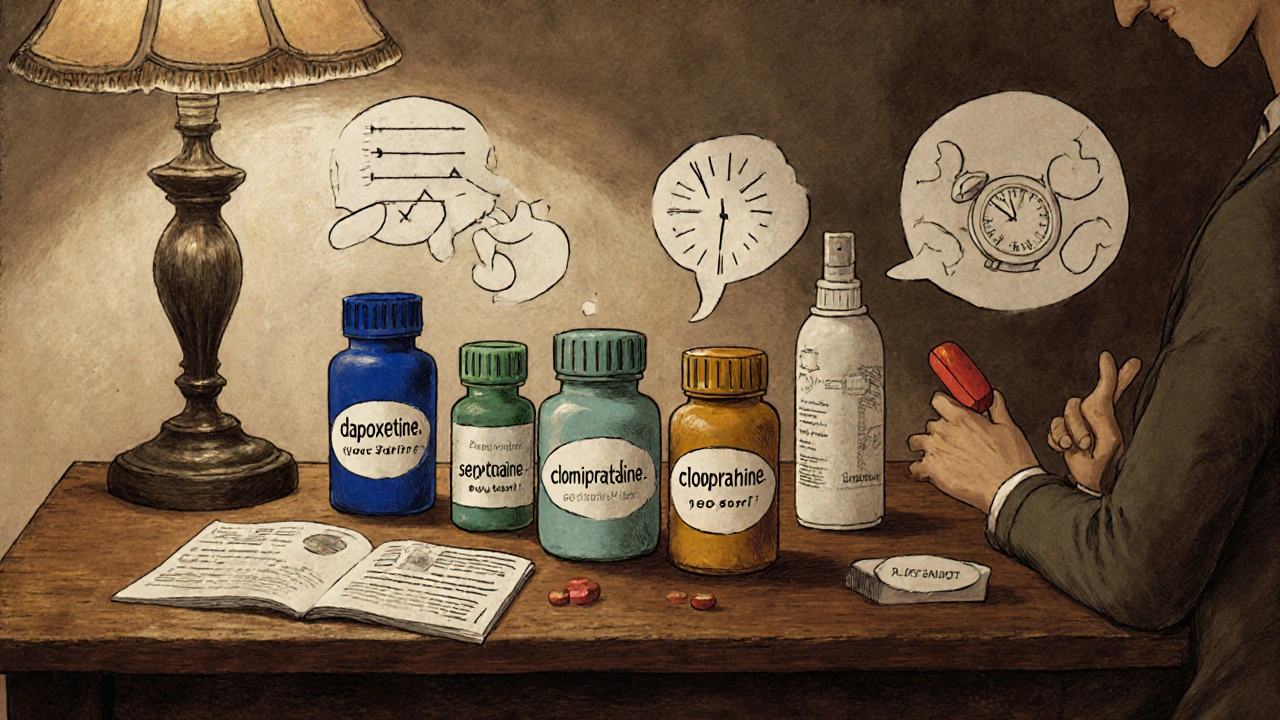
Head‑to‑Head Comparison
| Drug / Method | Mechanism | Typical Dose / Schedule | Onset of Effect | Common Side Effects | Approx. Monthly Cost (USD) |
|---|---|---|---|---|---|
| Dapoxetine | Short‑acting SSRI - raises serotonin levels briefly | 30 mg taken 1‑3 h before sex (on‑demand) | 30‑60 min | Nausea, dizziness, insomnia | $150‑$250 |
| Paroxetine | Long‑acting SSRI - sustained serotonin increase | 10‑20 mg once daily | 2‑3 weeks (steady‑state) | Sexual dysfunction, weight gain, fatigue | $30‑$60 |
| Sertraline | Long‑acting SSRI | 25‑50 mg once daily | 2‑4 weeks | Diarrhea, insomnia, decreased libido | $20‑$45 |
| Clomipramine | Tricyclic antidepressant - blocks reuptake of serotonin & norepinephrine | 10‑25 mg once daily | 1‑2 weeks | Dry mouth, constipation, drowsiness | $25‑$50 |
| Sildenafil | Phosphodiesterase‑5 inhibitor - enhances nitric oxide signaling | 50‑100 mg 30‑60 min before sex | 30‑90 min | Headache, flushing, visual changes | $40‑$120 |
| Behavioral Therapy | Psychological conditioning - trains ejaculatory control | Regular practice (daily/weekly) | Variable (weeks‑months) | Frustration during learning phase | Usually $0‑$200 (therapist fees) |
| Lidocaine‑Prilocaine Spray | Topical anesthetic - numbs penile nerve endings | Apply 5‑10 min before sex (single use) | 5‑15 min | Temporary loss of sensation, allergic reaction | $30‑$80 |
Who Should Choose Dapoxetine?
If you want an on‑demand pill that doesn’t require daily dosing, dapoxetine is a strong contender. It’s best for men who:
- Prefer a medication you only take before sex.
- Do not have contraindications like severe heart disease or concurrent use of monoamine oxidase inhibitors.
- Can afford a higher monthly price for the convenience of quick onset.
Because it’s short‑acting, dapoxetine also reduces the risk of long‑term side effects that are common with daily SSRIs.
When Alternatives Might Be a Better Fit
Consider the following scenarios:
- Cost sensitivity: Daily SSRIs such as paroxetine or sertraline are cheaper per month and may be covered by insurance.
- Concurrent depression or anxiety: If you already need an antidepressant, selecting a daily SSRI can treat both conditions.
- Desire for non‑pharmacological approach: Behavioral therapy has no medication side effects and can produce lasting control even after you stop practicing.
- Allergic or skin sensitivities: Avoid lidocaine‑prilocaine spray if you’re prone to dermatitis.
Pros and Cons at a Glance
| Option | Pros | Cons |
|---|---|---|
| Dapoxetine | On‑demand, fast onset, no need for daily pill. | Higher cost, not suitable for daily users, possible nausea. |
| Paroxetine | Inexpensive, treats depression/anxiety simultaneously. | Daily dosing, sexual side effects, weight gain risk. |
| Sertraline | Well‑tolerated, widely available. | Requires weeks to work, possible insomnia. |
| Clomipramine | Strong efficacy for PE. | More side effects (dry mouth, constipation). |
| Sildenafil | Improves erection quality, also delays ejaculation for some. | Not a primary PE treatment, interacts with nitrates. |
| Behavioral Therapy | No medication, lasting skill development. | Requires time, patience, possible initial frustration. |
| Lidocaine‑Prilocaine Spray | Quick, inexpensive per use. | Reduces sensation, possible allergic reaction. |
Practical Tips for Selecting the Right Option
- Talk to a healthcare professional. They’ll review your medical history, current meds, and cardiovascular status.
- Start low, go slow. If you try an SSRI, begin with the smallest dose to gauge tolerance.
- Consider lifestyle. On‑demand dapoxetine fits irregular sexual activity; daily SSRIs fit regular schedules.
- Budget check. Factor in insurance coverage and out‑of‑pocket costs.
- Combine approaches. Many men benefit from a low‑dose SSRI plus behavioral techniques for optimal control.
Frequently Asked Questions
Is dapoxetine safe for men with heart problems?
Dapoxetine can increase heart rate slightly, so it’s generally avoided in men with uncontrolled hypertension or recent heart attacks. Always get a cardiac clearance before starting.
How long does dapoxetine stay in my system?
The drug’s half‑life is about 1.5 hours, and it’s usually cleared within 24 hours. That’s why you feel the effect for a single sexual encounter without lingering sedation.
Can I combine dapoxetine with a daily SSRI?
Combining two SSRIs raises the risk of serotonin syndrome, a potentially serious condition. Doctors may switch you to one drug or adjust doses, but they rarely prescribe both together.
What if dapoxetine doesn’t work for me?
If you don’t notice a delay after a few tries, discuss alternatives with your doctor. Many men respond better to daily SSRIs or to non‑pharmacologic methods like the stop‑start technique.
Are there any natural supplements that work as well as dapoxetine?
Herbs such as corydalis, maca, or yohimbine have anecdotal support, but robust clinical data are lacking. They can be tried after discussing possible interactions with prescribed meds.
How soon can I resume sex after using lidocaine‑prilocaine spray?
The spray’s numbing effect lasts 30‑60 minutes. Most men wait at least 5‑10 minutes after application before intercourse to achieve comfortable sensation.
Is behavioral therapy effective on its own?
Yes, studies show up to 60 % of men improve with consistent practice of the stop‑start or squeeze techniques, especially when combined with education about arousal cues.







Written by Martha Elena
I'm a pharmaceutical research writer focused on drug safety and pharmacology. I support formulary and pharmacovigilance teams with literature reviews and real‑world evidence analyses. In my off-hours, I write evidence-based articles on medication use, disease management, and dietary supplements. My goal is to turn complex research into clear, practical insights for everyday readers.
All posts: Martha Elena