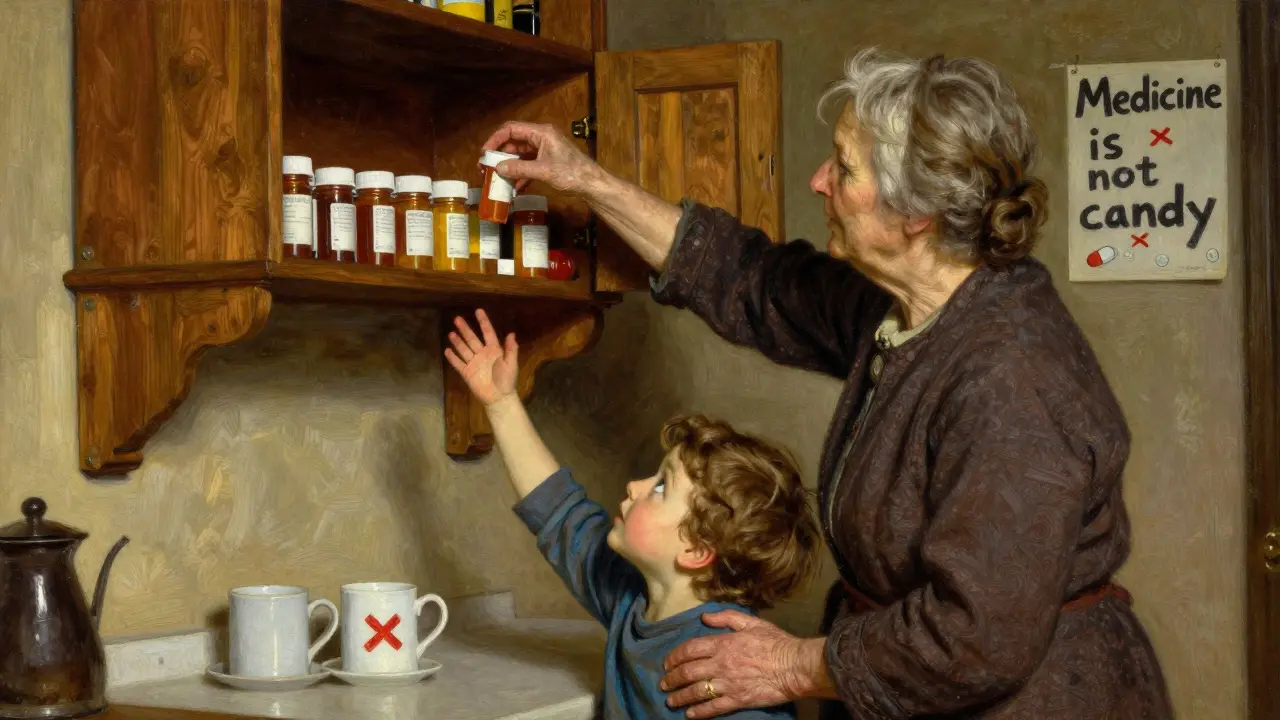
Every year, over 58,000 children under five end up in the emergency room because they got into medicine they weren’t supposed to. And in nearly four out of ten of those cases, the medicine came from a grandparent’s purse, nightstand, or kitchen counter. It’s not because grandparents are careless-it’s because they don’t realize how easily a curious toddler can find and open a pill bottle. Many think child-resistant caps are enough. They’re not. A 4-year-old can crack one open in under five minutes. And if grandma keeps her blood pressure pills in her handbag, or grandpa stores his diabetes meds on the dresser, the risk is real-and preventable.
Why Grandparents Are at the Center of This Problem
Grandparents are more involved in childcare than ever. About 13% of U.S. children live with or are regularly cared for by a grandparent. And 74% of those grandparents take at least one prescription daily. On average, they’re managing 4.7 medications at once. That’s more than double what most parents take. With so many pills in the house, the chance of a child finding one goes up fast. But here’s the twist: grandparents aren’t the ones who usually make the mistake. The system is. Most don’t get safety instructions from their doctors. Only 12% of Medicare Part D plans offer any kind of counseling about keeping medicines away from kids. And when they do get advice, it’s often buried in a pile of paperwork about side effects and dosing schedules-not child safety. The truth? Grandparents care deeply. In one study, 87% said they were extremely worried about their grandkids getting into medicine. That’s higher than most parents. But worry doesn’t change behavior unless you know how to act. Many still believe child-resistant packaging is foolproof. It’s not. Or they transfer pills into weekly pill organizers because the original bottles are hard to open. That’s a major red flag-those containers aren’t childproof at all.Where the Danger Lurks (And How to Fix It)
The biggest risks aren’t hidden in closets or locked cabinets. They’re in plain sight:- Bathroom cabinets - Damp, warm, and easy for kids to reach. 45% of grandparents store meds here before education. After a simple 15-minute talk, that dropped to 71%.
- Kitchen counters and tables - Where people leave coffee, glasses, and meds. 38% did this before training. After, it fell to 69%.
- Bedroom nightstands - The most dangerous spot. 33% kept meds here. After intervention, it dropped to 64%.
- Purses and bags - 31% of grandparents carry meds in their bags. That’s a walking hazard. One grandma told us her 3-year-old grabbed her blood pressure pills from her purse. He didn’t swallow them-but he was seconds away.
What Works: The PROTECT Initiative and Real-World Success
The CDC and the Consumer Healthcare Products Association launched the “Up & Away and Out of Sight” campaign over a decade ago. It’s simple, practical, and proven. A 15-minute session with a nurse or pharmacist-just long enough to show how to lock a cabinet, how to read a child-resistant cap, and how to talk to a grandchild about medicine-raised safe storage rates from 39% to 78% in just 90 days. What made it work? Three things:- No blame. Instead of saying, “You’re not being careful,” they said, “Let’s keep our grandkids safe.” Grandparents responded better when they felt supported, not judged.
- Hands-on practice. Only 54% of grandparents could open a child-resistant cap correctly. They practiced with real bottles. They learned how to close them properly. That small skill cut errors by half.
- Reinforcement. One talk isn’t enough. The best programs followed up with a phone call, a fridge magnet with Poison Control’s number (1-800-222-1222), and a reminder during the next visit.

How Parents and Grandparents Can Work Together
This isn’t just a grandparent problem. It’s a family problem. Only 38% of families have a clear plan about where meds are stored when a grandparent visits. That’s a gap that can be deadly. Here’s how to close it:- Have a chat before the visit. Ask: “Where do you keep your medicines?” Offer to help them set up a lockbox if they don’t have one. Many pharmacies give them away for free.
- Bring your own safety kit. Pack a small lockbox for your child’s meds, and leave it with grandma or grandpa. Label it clearly: “Only for [Child’s Name].”
- Use teachable moments. When you’re visiting, say: “Let’s check if your meds are safe.” Don’t make it a lecture. Make it a team effort.
- Keep emergency numbers visible. Tape Poison Control’s number (1-800-222-1222) to the fridge. Save it in your phone. Make sure grandparents know it by heart.
What to Do If a Child Gets Into Medicine
If you think your grandchild swallowed a pill-even if they seem fine-act fast. Don’t wait. Don’t try to make them throw up. Don’t give them milk or charcoal unless a professional says so. Call Poison Control immediately: 1-800-222-1222. It’s free, confidential, and available 24/7. They’ll tell you exactly what to do. Most cases don’t need an ER visit-but you need to know for sure. If you’re unsure whether the child swallowed something, call anyway. Better safe than sorry. In one case, a grandparent thought her 2-year-old just spit out a baby aspirin. Poison Control asked her to check the bottle. It was half empty. They rushed her to the hospital. She was treated in time.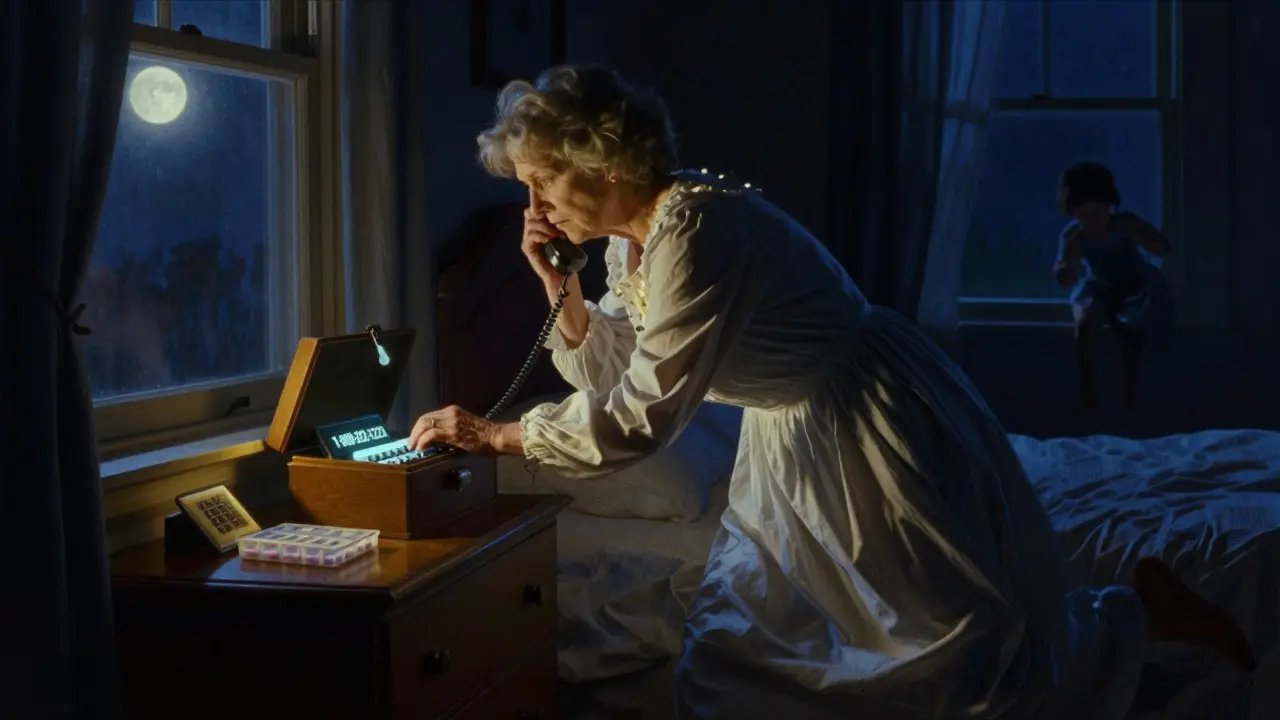
Barriers and How to Overcome Them
Not everyone can easily lock up meds. Some have arthritis and can’t twist child-resistant caps. Others live in small apartments with no high cabinets. Some feel insulted if you suggest their home isn’t safe. Here’s how to help:- For stiff hands: Use easy-open caps with a push-and-turn design. Ask the pharmacist for them. Some are labeled “easy-open” or “senior-friendly.”
- For small spaces: Use a lockable storage box that sits on a high shelf, in a closet, or even inside a locked drawer. A $15 lockbox from Amazon works fine.
- For resistance: Frame it as love, not criticism. Say: “I want to make sure you can keep enjoying visits without worrying.” Or: “My kid’s so curious-he’s like a little detective. Let’s make sure he can’t find your meds.”
- For memory issues: Use a pill dispenser with alarms. Or set a daily reminder on a phone or tablet. Even a simple sticky note on the fridge can help: “Meds locked? Check!”
What’s Changing Now-and What’s Coming
Things are getting better. In 2023, the American Geriatrics Society added pediatric medication safety to its official guidelines for senior care. Doctors are now supposed to ask: “Do you care for young children? Are your meds stored safely?” Pharmacies are stepping up too. Over 78% of major chains now offer free lockboxes to seniors who pick up prescriptions. Some even give out free safety kits with a lockbox, child-resistant caps, and a printed guide. And new tech is helping. The CDC’s “Grandparent Guardian” digital toolkit has videos in 12 languages showing exactly how to store meds safely. A new NIH app sends gentle reminders to grandparents before holidays or school breaks-times when kids are more likely to visit. But progress is uneven. Rural areas lag behind cities. Only 29% of rural pharmacies offer these programs. And 67% of grandparents say they’ve never been told about the risk. That needs to change.Final Thought: Safety Is a Shared Job
Grandparents don’t need to be perfect. They just need to know how to be safe. And they need help-not blame. This isn’t about fixing someone else’s habits. It’s about protecting the ones you love. A child doesn’t know the difference between candy and medicine. But you do. And with a few simple steps, you can make sure they never have to learn the hard way.Keep meds locked. Keep them high. Keep them in the bottle. And if you’re ever unsure-call Poison Control. It’s the best safety net you’ve got.
Why are grandparents more likely to cause pediatric medicine poisonings than parents?
Grandparents often take more medications daily-on average 4.7 versus 2.1 for parents. They’re also more likely to store pills in accessible places like purses, nightstands, or kitchen counters. Many believe child-resistant caps are enough, but 30% of 4-year-olds can open them in under five minutes. Plus, they rarely receive safety instructions from doctors, unlike parents who get guidance during pediatric visits.
Is child-resistant packaging enough to keep kids safe?
No. Child-resistant caps are designed to slow down kids-not stop them. Testing shows that 30% of 4-year-olds can open them within five minutes. Even younger toddlers can figure them out with practice. The only reliable method is storing medicine in a locked cabinet or box that requires 15+ pounds of force to open-far beyond what most children can manage.
What should I do if my grandchild gets into medicine?
Call Poison Control immediately at 1-800-222-1222. Don’t wait for symptoms. Don’t try to make them vomit or give them anything to drink unless instructed. Poison Control experts can tell you whether it’s an emergency or if monitoring at home is enough. Most cases don’t need an ER visit-but you need expert advice right away.
Can I use a weekly pill organizer for my meds if my grandkids visit?
No. Weekly pill organizers are not childproof. They’re meant for convenience, not safety. If you use one, keep it locked up just like your original bottles. The safest option is to keep all medications in their original containers with child-resistant caps, stored in a locked box or cabinet. Only transfer pills to a dispenser if you can lock it too.
How can I talk to my grandparent about medicine safety without offending them?
Frame it as teamwork. Say: “I know you’re great with the kids, and I just want to make sure we’re both doing everything we can to keep them safe.” Offer to help them set up a lockbox or show them a video from the CDC. Avoid words like “you’re careless.” Use “we” and “our grandkids” to build unity. Most grandparents want to help-they just need the right tools.
Where can I get a free medicine lockbox for my grandparent?
Many major pharmacy chains-including CVS, Walgreens, and Rite Aid-offer free lockboxes to seniors who pick up prescriptions. Some community health centers and AARP chapters also give them out during safety workshops. You can also buy one online for $15-$20. Look for one with a latch that requires 15+ pounds of force to open, as recommended by the Consumer Product Safety Commission.



Written by Martha Elena
I'm a pharmaceutical research writer focused on drug safety and pharmacology. I support formulary and pharmacovigilance teams with literature reviews and real‑world evidence analyses. In my off-hours, I write evidence-based articles on medication use, disease management, and dietary supplements. My goal is to turn complex research into clear, practical insights for everyday readers.
All posts: Martha Elena