
GLP-1 Meal Planner Calculator
Manage Nausea with Smart Meal Planning
Most patients experience less nausea with meals of 300-400 calories. This tool helps calculate your optimal meal size based on your weight and GLP-1 dose.
Recommended Meal Size
Your optimal meal size is: 0 calories
For best results, eat 0 smaller meals per day
Key Tips from the Article
• Eat 300-400 calories per meal
• Avoid greasy, fried, and overly sweet foods
• Drink fluids 30-60 minutes before/after meals
• Try ginger or peppermint for relief
Important Note
If you're on doses above 1.5 mg, your stomach may need extra time to adjust. Slow titration is key to reducing nausea.
When you start a GLP-1 medication like Ozempic, Wegovy, or Mounjaro, the goal is clear: better blood sugar control, weight loss, and long-term health. But for many, the first few weeks feel like a battle with your own body. Nausea hits hard-sometimes out of nowhere, often after meals, and it can make you wonder if the benefits are worth the discomfort. The truth? You’re not alone. Between 15% and 50% of people on these drugs experience nausea, and for some, it’s severe enough to quit treatment altogether. The good news? Most of it can be managed-or even avoided-with simple, science-backed strategies.
Why GLP-1 Medications Cause Nausea
GLP-1 drugs work by mimicking a natural hormone that tells your body to slow down digestion. That’s why they help you feel full longer and stabilize blood sugar. But slowing gastric emptying also means food sits in your stomach longer. When your stomach is full and moving slowly, it sends signals to your brain that trigger nausea. This isn’t just discomfort-it’s a physical reaction built into how the drug works. The worst of it usually shows up in the first 4 to 5 weeks. For most people, nausea fades on its own within 8 days of starting. But if you rush the dose, it can stick around much longer. Clinical trials show that nausea jumps from 15-20% at low doses of semaglutide (like 0.25 mg) to 44% at the full 2.4 mg dose. With Mounjaro, nausea climbs from 29% at 5 mg to 35% at 15 mg. The higher the dose, the more your stomach struggles to keep up.Small Meals Are the First Line of Defense
One of the most effective ways to reduce nausea isn’t a pill-it’s your plate. Eating three big meals a day is the worst thing you can do when your stomach is moving slower than usual. Large meals overload your digestive system. Instead, aim for smaller portions, spread out over the day. Experts recommend cutting each meal by 25-30%. That means swapping a 600-calorie lunch for a 400-calorie one, and adding a light snack mid-afternoon. Focus on protein and bland carbs: scrambled eggs, toast, plain rice, yogurt, or crackers. Avoid greasy, fried, or overly sweet foods-they sit heavier and trigger stronger nausea. Timing your fluids matters too. Drinking water or coffee with your meal swells your stomach even more. Instead, sip fluids 30 to 60 minutes before or after eating. Many patients report immediate relief just by making this small change. One woman in a case study reduced her nausea from 5-6 episodes a day to just 1-2 weekly by sticking to 300-400 calorie meals and keeping fluids separate.Slow Titration: The Secret Most Doctors Don’t Tell You
The standard dosing schedule for GLP-1 drugs says to increase every 2-4 weeks. But that’s too fast for most people. Leading endocrinologists, including Dr. Jennifer Shine Dyer of Rentia Clinic, have found that extending the time at each dose by 50-100% cuts nausea-related discontinuation from 12% down to under 4%. Instead of jumping from 0.25 mg to 0.5 mg after two weeks, stay at 0.25 mg for four to six weeks. Let your body adjust. If nausea pops up, don’t rush to the next dose. Hold steady for another week or two. Your body needs time to adapt to the slower digestion. One patient on Drugs.com reported nausea lasting 11 weeks after speeding up their Wegovy dose-something that could have been avoided with patience. Doctors at Hopkins MD now keep patients on starter doses for 2-3 weeks longer than the label recommends. Their clinic saw a 37% drop in severe nausea complaints. Slowing down isn’t lazy-it’s smart. You’re not wasting time; you’re building tolerance.Food and Natural Remedies That Actually Work
Some foods and natural remedies have real, measurable effects on nausea. Ginger is the most studied. A 2022 meta-analysis found ginger reduced nausea in 62% of users. Try ginger chews, tea, or even ginger capsules. Peppermint helps too-55% of small clinical studies showed improvement. Sipping peppermint tea between meals can soothe your stomach without triggering reflux. For morning nausea, keep saltine crackers by your bed. Eat one or two before you get up. This simple trick stabilizes your stomach lining before food hits. Harvard Health reports that 63% of patients who take their GLP-1 injection at bedtime experience less nausea than those who take it in the morning. Sleep dulls the sensation, and your body processes the drug more gently.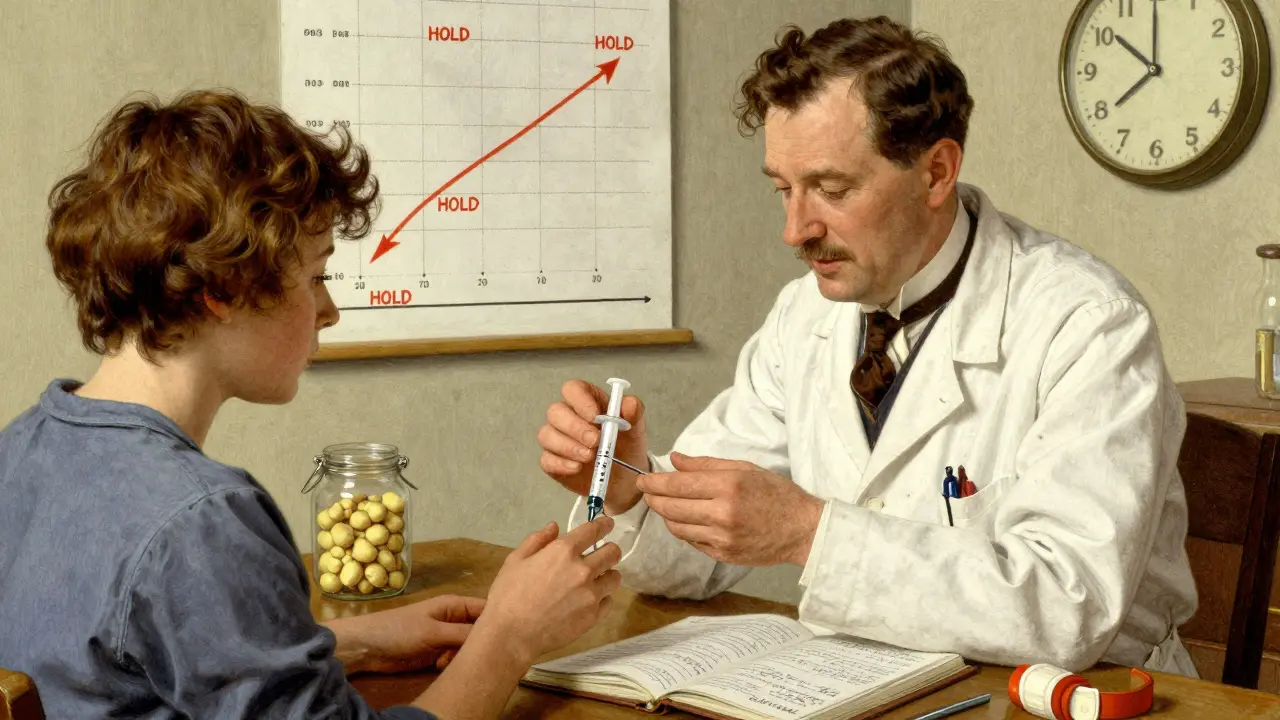
Acupressure Wristbands: A Drug-Free Option That Works
You’ve probably seen these wristbands for motion sickness. Turns out, they work for GLP-1 nausea too. A 2023 pilot study with 31 adults found that acupressure wristbands provided relief within 5 minutes in one-third of nausea episodes, and within 20 minutes for nearly all others. Overall, 80% of participants saw consistent improvement. They’re safe, reusable, and cost less than $10. No side effects. No interactions with your medication. You can wear them during meals, while working, or even while sleeping. Many patients in online forums like Reddit’s r/Ozempic swear by them. One user said, “I didn’t believe it until I tried it. Within a day, I could eat without feeling like I’d be sick.”When You Need Medication for Nausea
If diet and timing don’t cut it, there are safe, short-term options. Domperidone (10-20 mg, 3-4 times a day) is the top-recommended antiemetic for GLP-1 users. It helps food move through your stomach faster without crossing the blood-brain barrier-unlike metoclopramide, which can cause tremors or mood changes, especially in older adults. Ondansetron (Zofran) is another option. The oral disintegrating tablets work fast-76% of patients at Rentia Clinic felt relief within 15-20 minutes. Take one at the first sign of nausea. But don’t rely on these long-term. If you’re still needing anti-nausea meds more than a month after hitting your full GLP-1 dose, talk to your doctor about lowering your dose. You shouldn’t have to live with constant nausea to lose weight.Red Flags: When Nausea Is More Than a Side Effect
Most nausea fades. But if it doesn’t, it could signal something serious. Persistent vomiting (more than 3 times a day for 24+ hours), inability to keep fluids down for 12+ hours, or losing more than 5% of your body weight in a week are warning signs. These could point to gastroparesis-a rare but dangerous condition where the stomach stops emptying entirely. Gastroparesis affects about 0.5% of GLP-1 users, but it’s often missed. If your nausea lasts longer than 8 weeks, especially with bloating, early fullness, or regurgitation, get checked. A gastric emptying scan can confirm it. Don’t wait. Early intervention makes a big difference.
Track Your Progress
Keep a simple journal for two weeks. Note:- What you ate and how much
- When you drank fluids
- Time of your injection
- Nausea level (1-10)
What’s Coming Next
The future looks better. Novo Nordisk’s oral semaglutide, currently in Phase 3 trials, has shown 18% less nausea than injectable versions. New formulations are being designed to protect the stomach lining during absorption. And researchers are testing combo therapies-pairing GLP-1 drugs with prokinetic agents like domperidone from day one. Early data shows this cuts nausea by over half without hurting weight loss. Pharmaceutical companies are already helping. Novo Nordisk gives free dietitian access to most insured Wegovy patients. Eli Lilly sends new Mounjaro users nausea kits with ginger chews and acupressure bands. These aren’t just marketing-they’re proof that nausea management is now a core part of treatment.Final Thought: You Don’t Have to Suffer to Succeed
GLP-1 medications are powerful tools. But they’re not meant to make you miserable. The goal isn’t to push through nausea-it’s to find the balance where you feel well enough to stick with it. Small meals. Slow doses. Ginger. Wristbands. Timing fluids. These aren’t hacks. They’re evidence-based tools that thousands have used to stay on track. If you’re struggling, don’t give up. Don’t assume it’s just “part of the process.” Talk to your doctor. Adjust your plan. You’ve got options. And you deserve to feel good while you’re getting healthier.How long does GLP-1 nausea usually last?
For most people, nausea starts within the first week of treatment and peaks around weeks 2-4. Symptoms typically improve within 8 days of onset and fade completely in 6-8 weeks. If nausea lasts longer than 8 weeks, especially with vomiting or weight loss, it’s important to see your doctor to rule out gastroparesis or other complications.
Can I take anti-nausea medicine with GLP-1 drugs?
Yes, but only under medical supervision. Domperidone is the preferred antiemetic because it doesn’t cross the blood-brain barrier and has fewer neurological side effects than metoclopramide. Ondansetron (Zofran) also works well for sudden nausea. However, if you need anti-nausea meds for more than a month after reaching your full GLP-1 dose, your doctor may recommend lowering your dose instead of continuing long-term antiemetic use.
Should I stop my GLP-1 medication if I feel nauseous?
Not necessarily. Nausea is common in the first few weeks and often improves with simple changes like smaller meals, slower titration, and avoiding fluids with food. Stopping too soon means losing the benefits-weight loss, better blood sugar, and reduced heart risk. Try adjusting your routine first. If nausea is severe or lasts more than 8 weeks, talk to your doctor before quitting.
Does taking GLP-1 at night help with nausea?
Yes, for many people. Taking your injection at bedtime reduces nausea because you’re asleep during the peak effect. Harvard Health data shows 63% of patients who switched from morning to nighttime dosing reported less nausea. Sleep also reduces how intensely your brain registers discomfort. If you’re struggling with morning nausea, ask your doctor about switching your injection time.
Are acupressure wristbands really effective for GLP-1 nausea?
Yes, according to a 2023 pilot study of 31 adults, acupressure wristbands provided relief within 20 minutes in 80% of nausea episodes. Users reported consistent results over four weeks. While larger studies are underway, the safety, low cost, and lack of side effects make them a smart first-line option. Many patients find them helpful enough to wear daily during the adjustment period.
What foods should I avoid with GLP-1 medications?
Avoid high-fat foods (fried chicken, cheese, butter), large portions, sugary drinks, and carbonated beverages. These slow digestion even more and trigger stronger nausea. Stick to lean proteins, bland carbs (toast, rice, crackers), and low-fat dairy. Eat slowly, chew well, and keep meals under 400 calories during the first few weeks.
Can ginger help with GLP-1 nausea?
Yes. A 2022 meta-analysis found ginger reduced nausea in 62% of users. Try ginger tea, ginger chews, or capsules. Many patients in online communities say ginger is their most reliable tool. It’s safe, natural, and works best when taken 30 minutes before meals or at the first sign of nausea.
Is it normal to lose appetite on GLP-1 drugs?
Yes. Reduced appetite is a direct effect of the medication-it helps you eat less. But if you’re losing weight too fast (more than 5% in a week) or can’t keep down any food or fluids, that’s a red flag. Talk to your doctor. You want to lose weight safely, not risk malnutrition or dehydration.




Written by Martha Elena
I'm a pharmaceutical research writer focused on drug safety and pharmacology. I support formulary and pharmacovigilance teams with literature reviews and real‑world evidence analyses. In my off-hours, I write evidence-based articles on medication use, disease management, and dietary supplements. My goal is to turn complex research into clear, practical insights for everyday readers.
All posts: Martha Elena