
Donepezil Dosing Calculator for Elderly Patients
Personalized Dosing Recommendations
This tool calculates appropriate starting doses of Donepezil for elderly patients based on key clinical factors. Based on the article content, 5mg is recommended for most seniors with careful monitoring before considering a dose increase to 10mg.
When an older adult receives an Alzheimer’s diagnosis, the treatment plan suddenly becomes a balancing act. One of the most prescribed drugs, Donepezil is a once‑daily acetylcholinesterase inhibitor that can modestly slow cognitive decline, but its benefits come with a set of age‑related quirks. Understanding how to dose, monitor, and manage side effects in seniors is crucial for clinicians, caregivers, and the patients themselves.
Key Takeaways
- Start Donepezil at a low dose (5mg) for most seniors and consider titrating to 10mg after 4-6 weeks if tolerated.
- Watch for gastrointestinal upset, bradycardia, and drug‑drug interactions, especially with CYP2D6 substrates.
- Use the Mini‑Mental State Examination (MMSE) and regular weight checks to gauge response and safety.
- Caregiver education on timing, swallowability, and monitoring is as important as the prescription itself.
- When Donepezil isn’t tolerated, Memantine offers a different mechanism that may be combined for moderate‑to‑severe cases.
What is Donepezil?
Donepezil belongs to the class of acetylcholinesterase inhibitors (AChEIs). By blocking the enzyme that breaks down acetylcholine, it raises the neurotransmitter’s level in the brain, helping neurons fire more efficiently. The drug was first approved in 1996 and has since become a cornerstone of symptomatic therapy for mild‑to‑moderate Alzheimer’s disease.
Alzheimer’s Disease in Older Adults
Alzheimer’s disease (AD) is a progressive neurodegenerative disorder characterized by amyloid plaques, tau tangles, and a relentless loss of cholinergic neurons. Alzheimer’s disease prevalence spikes after age 75, and many patients present with comorbidities-cardiovascular disease, renal insufficiency, or polypharmacy-that complicate treatment choices.
Age‑Specific Dosing Guidance
Clinical trials that led to the original 5mg and 10mg doses enrolled relatively healthy adults aged 45‑85. Real‑world data show that seniors over 80 often experience higher plasma concentrations at the same dose, primarily because of reduced hepatic metabolism.
Practical dosing steps:
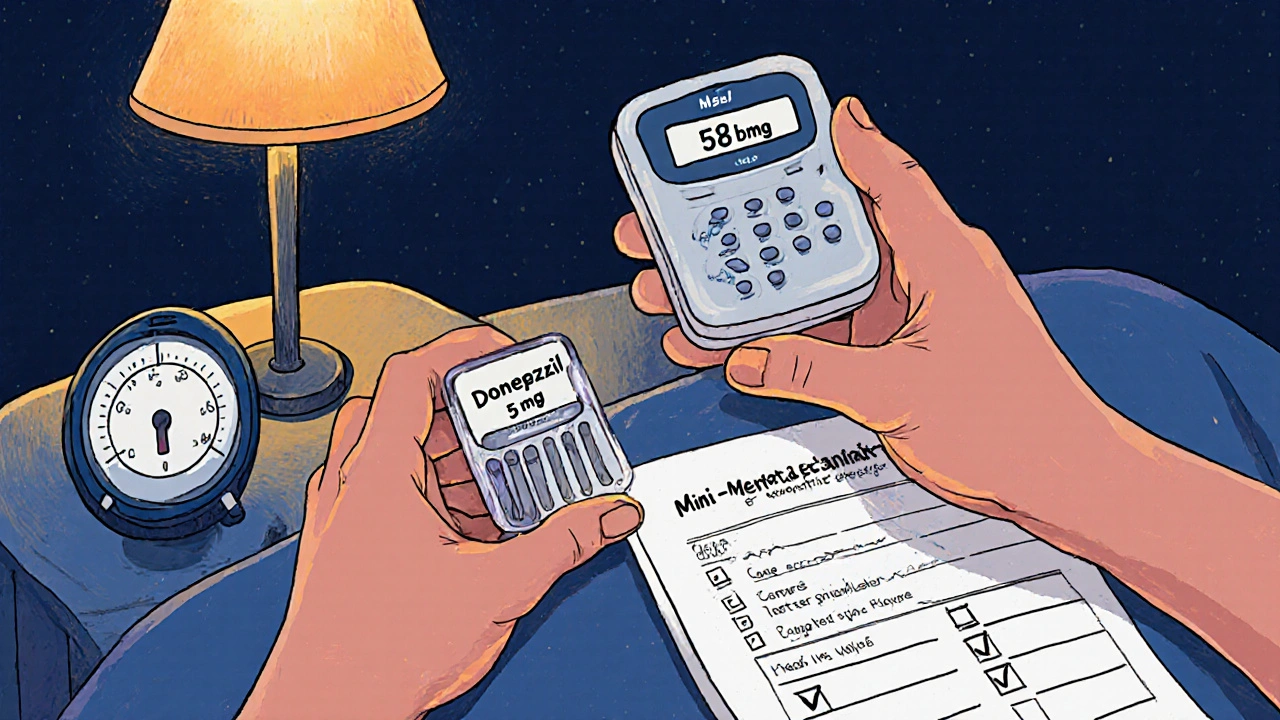
- Begin with 5mg taken at bedtime. Evening administration can lessen daytime nausea.
- After 4-6 weeks, assess tolerability using a brief cognitive screen (MMSE) and check pulse, blood pressure, and weight.
- If side effects are mild and cognition is stable or improving, increase to 10mg daily.
- For patients with severe hepatic impairment or on strong CYP2D6 inhibitors, stay at 5mg or consider alternate agents.
Remember, donepezil is the most searched keyword for this topic, and clinicians often ask whether a higher dose yields better outcomes. Meta‑analyses suggest modest extra benefit at 10mg but also a higher rate of gastrointestinal adverse events.
Metabolism and Drug Interactions
Donepezil is primarily metabolized by the cytochrome P450 enzyme CYP2D6. Variants in the CYP2D6 gene can make a patient a “poor metabolizer,” leading to plasma levels up to 1.5‑fold higher. Concomitant use of strong CYP2D6 inhibitors (e.g., fluoxetine, paroxetine, quinidine) can magnify this effect.
CYP2D6 polymorphisms are more common in older adults of certain ethnicities, so a medication review is essential before dose escalation.
Common Side Effects in the Elderly
The most frequently reported adverse events are gastrointestinal-nausea, vomiting, loss of appetite, and diarrhea. In older patients, even mild anorexia can translate into rapid weight loss, muscle wasting, and increased fall risk.
Cardiovascular concerns include bradycardia, sinus node dysfunction, and occasional syncope, especially when combined with β‑blockers or digoxin. Monitoring pulse (should stay >50bpm) after the initial titration helps catch problems early.
Comparing Donepezil with Memantine
| Attribute | Donepezil | Memantine |
|---|---|---|
| Drug class | Acetylcholinesterase inhibitor | NMDA‑receptor antagonist |
| Typical dose (elderly) | 5mg → 10mg daily | 5mg → 10mg twice daily |
| Key side effects | Nausea, vomiting, bradycardia | Dizziness, constipation, confusion |
| Metabolism | CYP2D6, CYP3A4 | Renal excretion (dose adjust if eGFR <30mL/min) |
| Evidence of benefit | Modest cognitive improvement in mild‑moderate AD | Improved functional scores in moderate‑severe AD |
When a patient cannot tolerate Donepezil, Memantine offers a non‑cholinergic alternative. In some guidelines, the two drugs are combined for moderate‑to‑severe disease, but the combination should be introduced gradually to avoid additive side effects.

Assessing Response and Safety
The Mini‑Mental State Examination (MMSE) remains the quickest bedside tool to track cognitive changes. A change of 2-3 points over 6 months may signal either drug efficacy or disease progression; context matters.
Other monitoring points:
- Weight: record baseline and repeat monthly for the first 3 months.
- Heart rate and rhythm: ECG if baseline bradycardia (<60bpm) or if taking other negative chronotropes.
- Medication list: watch for anticholinergic burden that can counteract Donepezil.
- Caregiver reports: nausea, sleep disturbances, or new falls should trigger dose review.
Practical Tips for Caregivers and Clinicians
1. **Timing matters** - taking the pill with a light snack or before bed can reduce nausea.
2. **Swallowability** - for patients with dysphagia, a crushed tablet (if the pharmacist confirms) mixed with applesauce can help, but avoid chewing to preserve the extended‑release profile.
3. **Adherence aids** - weekly pill boxes, alarm apps, or partnering with home‑health nurses improve consistency.
4. **Education** - explain that Donepezil does not cure AD; it merely slows decline. Setting realistic expectations reduces frustration.
5. **When to stop** - if weight drops >10% of baseline, persistent bradycardia (<50bpm), or severe nausea despite anti‑emetics, consider tapering off.
Future Directions and Research Gaps
Newer AChEIs with better tolerability (e.g., galantamine extended‑release) are being studied in patients over 85, but data remain limited. Pharmacogenomic testing for CYP2D6 variants could soon become routine, allowing personalized dosing before the first prescription.
Meanwhile, non‑pharmacologic interventions-cognitive stimulation, physical activity, and social engagement-continue to show additive benefits when combined with Donepezil, especially in community‑dwelling seniors.
Frequently Asked Questions
Can Donepezil be used in patients over 90 years old?
Yes, but start at the lowest dose (5mg) and monitor closely for weight loss, nausea, and bradycardia. Many clinicians keep the dose low indefinitely if higher doses cause side effects.
What should I do if my loved one vomits after taking Donepezil?
First, assess hydration. Offer small sips of water or oral rehydration solution. If vomiting recurs, contact the prescriber; they may advise a dose reduction, switching to bedtime administration, or trying an anti‑emetic.
Is it safe to combine Donepezil with Memantine?
Guidelines allow combination in moderate‑to‑severe Alzheimer’s when monotherapy is insufficient. Introduce the second drug slowly, watch for additive dizziness or gastrointestinal upset, and re‑evaluate cognition every 3 months.
How often should a clinician check the MMSE after starting Donepezil?
A baseline MMSE is taken before initiation, then at 3‑month intervals for the first year. After that, six‑month checks are typical unless clinical changes prompt an earlier assessment.
Are there any foods or supplements that interfere with Donepezil?
High‑dose anticholinergic herbs (e.g., belladonna, some antihistamines) can blunt Donepezil’s effect. Keep a list of all over‑the‑counter products and discuss them with the prescribing doctor.







Written by Martha Elena
I'm a pharmaceutical research writer focused on drug safety and pharmacology. I support formulary and pharmacovigilance teams with literature reviews and real‑world evidence analyses. In my off-hours, I write evidence-based articles on medication use, disease management, and dietary supplements. My goal is to turn complex research into clear, practical insights for everyday readers.
All posts: Martha Elena