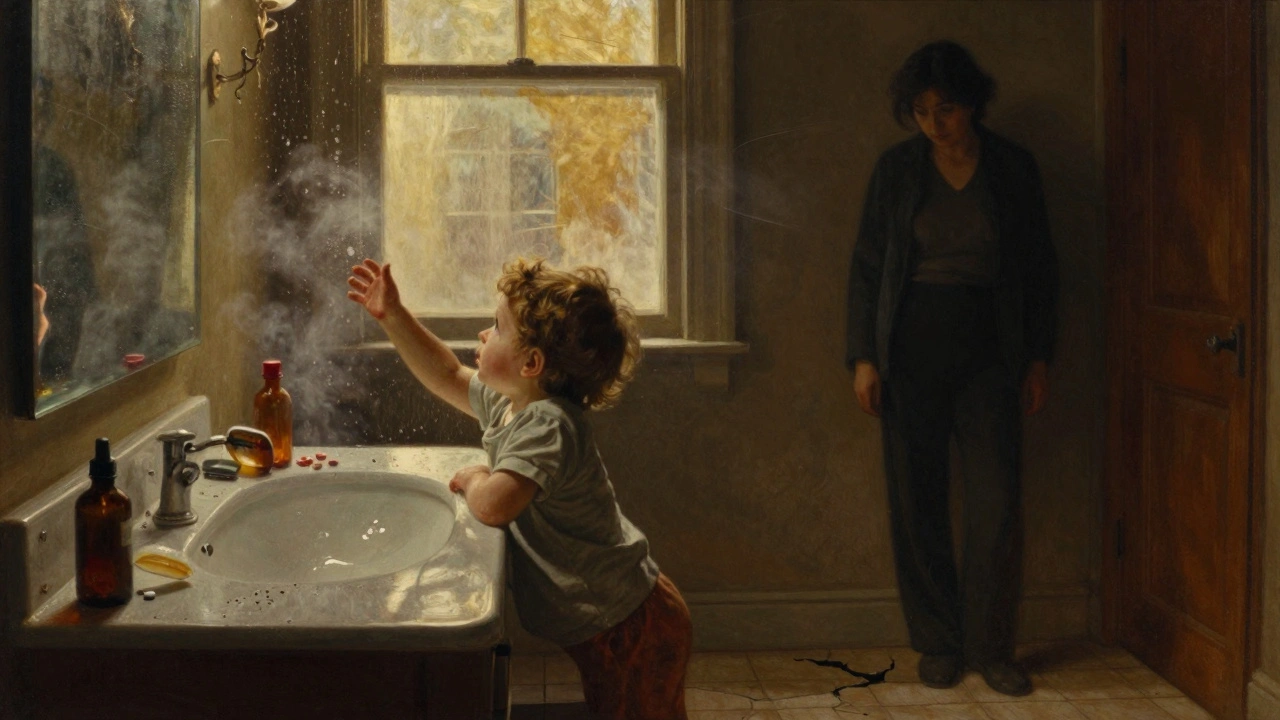
Every year, 60,000 children under five end up in emergency rooms because they got into medications left out at home. Most of these cases aren’t accidents caused by curious toddlers climbing shelves-they’re the result of simple, avoidable mistakes. A pill bottle on the bathroom counter. A purse left on a kitchen chair. A grandma’s medicine drawer unlocked. These aren’t rare events. They happen every day in homes across the country. The good news? You don’t need expensive gadgets or major renovations to keep your family safe. You just need to know where not to store your meds-and where you should.
Stop Storing Medications in the Bathroom
The bathroom is the most common place people keep their medicines. It’s convenient. It’s clean. It’s where you take your pills every morning. But it’s also the worst place for them. Showers and sinks flood the air with moisture. Humidity levels often hit 80% or higher. That’s not just uncomfortable-it’s destructive. According to MedlinePlus, 67% of common medications begin to break down within 30 days when stored in high humidity. Pills can crumble. Liquid antibiotics can lose potency. Even your pain relievers won’t work as well if they’ve absorbed too much moisture.Don’t Leave Pills in Purses, Coats, or Cars
It’s easy to grab your medication from your purse after picking up the kids. Or slip a bottle into your coat pocket before heading out. But here’s what happens: those bags get left on the floor. Coats get hung on hooks where toddlers can reach. Cars get parked in the sun. Temperatures inside a vehicle on a 75°F day can soar past 120°F. Heat ruins medicine. Insulin, thyroid pills, and seizure medications are especially sensitive. A 2023 study by Seattle Children’s Hospital found that 27% of poisoning incidents involving grandparents’ homes happened because medications were stored in purses or jackets-places children could easily find them.Locked Storage Is the Only Real Solution
High shelves? Not enough. Kids as young as 24 months can climb onto chairs, tables, and even countertops. The Washington State Department of Health found that 48-inch shelves are still within reach for toddlers. Child-resistant caps? They help-but they’re not foolproof. Half of all children can open them by age five. The only reliable method is a locked container. The EPA, FDA, and the American Academy of Pediatrics all agree: locked cabinets, safes, or boxes are the gold standard. You don’t need a fancy safe. A simple lockable plastic box from the hardware store works. So does a small lockbox you can bolt to the floor. Even a locked gun safe or fireproof document box-used by 18% of rural households-can do the job. The key is that it must be out of sight and out of reach. And it must be locked every single time.Where to Put Your Locked Storage
Think about where you spend time with kids. The living room? The kitchen? The bedroom? Avoid those areas. The best spot is a high cabinet in a room kids rarely enter-like a master bedroom closet, a home office, or a linen closet with a lock. Make sure it’s not behind a door that swings open and exposes the lock. A cabinet with a sliding door or one that opens upward is better. Some families use a drawer in a dresser that’s too heavy for a child to pull out. The goal is to make access difficult, not impossible. You need to be able to get your meds quickly when you need them-but not so easy that a child can grab them in seconds.
Temperature Matters More Than You Think
Not all medications need the same conditions. Most pills are fine at room temperature-between 68°F and 77°F. But some need refrigeration. Insulin, certain eye drops, and liquid antibiotics must be kept between 36°F and 46°F. That means your fridge. But don’t just toss them in with the milk. Store them in a sealed container on a middle shelf, away from the door. Why? The door gets warm every time you open it. And never store medicine next to food. Cross-contamination is rare, but it’s still a risk. Use a small plastic bin labeled “Medications Only” and keep it in the back of the fridge.Keep Original Labels-Always
It’s tempting to transfer pills into daily pill organizers. It helps you remember to take them. But those little plastic boxes don’t have labels. If a child finds one, you won’t know what’s inside. Same goes for transferring meds into snack bags or water bottles. That’s how accidental poisonings happen. The FDA requires every prescription bottle to have the National Drug Code, dosage, and expiration date. That’s not just bureaucracy-it’s safety. Always keep medicines in their original containers. If you use a pill organizer, keep the original bottle locked up nearby. That way, if something goes wrong, emergency responders can identify what was taken.Put It Away Immediately After Use
One of the biggest mistakes? Leaving medicine out after giving it to a child. The National Association for Children of Alcoholics found that 42% of pediatric poisonings happen in the five to ten minutes after a dose is given. Someone’s distracted-answering the door, checking on another child, answering a text-and the bottle sits on the counter. That’s all it takes. Make a rule: as soon as you give a pill, put it back in the locked container. No exceptions. Even if you’re just going to take another one in an hour. Make it a habit. Like washing your hands after using the bathroom.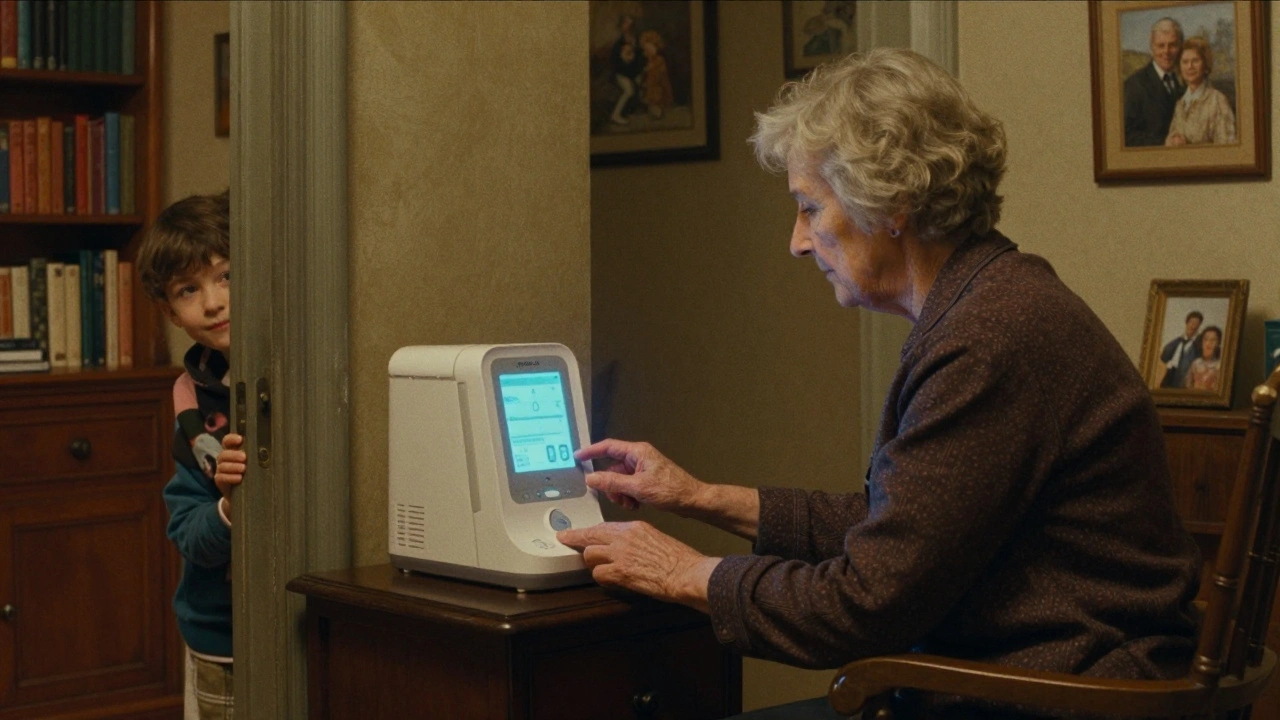
Special Cases: Seniors, Dementia, and Multi-Generational Homes
Things get complicated when older adults live with grandchildren. Grandparents may keep meds in their bedroom, on their nightstand, or in a drawer they can reach easily. But kids visit. And they explore. The CDC reports that 45% of pediatric poisonings happen in grandparents’ homes. The solution? Talk to your family. If an elderly person has dementia, locking everything away might not be safe for them. In those cases, work with their doctor. Use a digital dispenser with a biometric lock. These devices only open for authorized users and record every access. They cost between $80 and $150, but they’re worth it. Some pharmacies now give them out for free with opioid prescriptions.What About Unused or Expired Meds?
Don’t flush them. Don’t throw them in the trash. Don’t pour them down the sink. The EPA says this pollutes water supplies. Instead, find a drug take-back program. Many pharmacies, hospitals, and police stations offer free drop-off bins. You can also check the DEA’s website for collection events. If there’s no program nearby, mix pills with coffee grounds or cat litter, seal them in a plastic bag, and throw them in the trash. Remove labels first to protect your privacy. But the best practice? Only buy what you need. Don’t stockpile. Expired meds don’t work-and they’re still dangerous.Start Small. Stay Consistent.
You don’t have to overhaul your whole house overnight. Pick one medicine-maybe your child’s asthma inhaler or your blood pressure pill-and lock it up tonight. Then do the same with another tomorrow. In a week, you’ll have a system. And you’ll sleep better knowing your home is safer. The National Safety Council estimates that consistent locked storage could prevent 85% of accidental pediatric poisonings. That’s not just a statistic. That’s your child. Your grandchild. Your neighbor’s kid. It’s not about being perfect. It’s about being consistent.Can I store medications in the kitchen cabinet?
Yes-but only if it’s a locked cabinet away from the stove, sink, and countertops. Avoid cabinets near the dishwasher or above the fridge where heat and humidity build up. The best kitchen spot is a high cabinet with a childproof lock, preferably in a corner away from where kids play.
Are child-resistant caps enough?
No. While child-resistant caps require 17.5 pounds of force to open, half of children can figure them out by age five. They slow kids down-but they don’t stop them. Locked storage is the only reliable protection.
What’s the cheapest way to store medications safely?
Use a small lockbox from a hardware store-some cost under $20. Or repurpose a locked drawer, gun safe, or fireproof document box. The goal isn’t cost-it’s accessibility. Make sure it’s locked, out of sight, and out of reach.
Should I lock up over-the-counter meds too?
Yes. Acetaminophen, ibuprofen, cough syrup, and antihistamines are among the top causes of pediatric poisonings. Just because they’re sold without a prescription doesn’t mean they’re safe in unsecured places.
How do I store insulin safely?
Keep unopened insulin in the refrigerator at 36-46°F. Once opened, it can stay at room temperature for up to 28 days. Always store it in a sealed container on a middle fridge shelf, away from food. Lock it up if children or pets have access to the fridge.
What should I do if a child gets into medicine?
Call Poison Control immediately at 1-800-222-1222. Don’t wait for symptoms. Don’t try to make them vomit. Have the medicine bottle ready when you call. They’ll tell you exactly what to do. Every second counts.
Can I use a smart medicine dispenser?
Yes. Biometric or PIN-locked dispensers are especially helpful for seniors with dementia or households with frequent visitors. They record who opens them and when. Studies show they’re 78% effective at preventing unauthorized access. Some pharmacies offer them for free with opioid prescriptions.
Is it safe to store meds in the car?
No. Temperatures inside a car can exceed 120°F in summer and drop below freezing in winter. Heat and cold ruin most medications. Plus, cars are easy targets for theft. If you must carry meds in your car, keep them in a small insulated case and store them in the glove compartment-not the center console where kids can reach.





Written by Martha Elena
I'm a pharmaceutical research writer focused on drug safety and pharmacology. I support formulary and pharmacovigilance teams with literature reviews and real‑world evidence analyses. In my off-hours, I write evidence-based articles on medication use, disease management, and dietary supplements. My goal is to turn complex research into clear, practical insights for everyday readers.
All posts: Martha Elena