
Hidradenitis suppurativa isn't just a rash. It’s a relentless, painful condition that turns sweat-prone areas like the armpits, groin, and under the breasts into hotspots of deep, recurring lumps. These aren’t pimples. They’re abscesses that burst, drain, and leave behind tunnels under the skin - called sinus tracts - that won’t heal. For many, it starts in their 20s, gets worse over time, and doesn’t respond to antibiotics or topical creams. The emotional toll is just as heavy as the physical pain: isolation, shame, and constant worry about odor or flare-ups. But things are changing. Biologic therapy is now the most powerful tool we have for moderate to severe cases, offering real relief where nothing else worked.
What Exactly Are Those Painful Nodules?
The nodules in hidradenitis suppurativa (HS) start deep inside hair follicles. It begins when dead skin cells and oils clog the follicle, triggering inflammation. The body’s immune system goes into overdrive, sending inflammatory cells to the area. This isn’t an infection you can wash away - it’s an autoimmune reaction gone rogue. Cytokines like TNF-alpha, IL-17, and IL-23 flood the tissue, causing swelling, pus, and eventually, scarring. These nodules don’t pop like regular acne. They grow inward, forming painful, football-sized lumps that can last for weeks. When they rupture, they leak foul-smelling fluid and leave open wounds that heal slowly, if at all. Over time, these wounds connect under the skin, creating tunnels - sinus tracts - that make HS much harder to treat. That’s why early intervention matters so much. The longer you wait, the more scarring builds up, and the less likely any treatment will fully reverse the damage.Why Antibiotics and Surgery Aren’t Enough
For years, doctors treated HS with antibiotics like clindamycin or tetracycline, hoping to calm the inflammation. Some people got temporary relief, but the nodules always came back. Hormonal treatments, like birth control pills or spironolactone, helped a bit for women, but didn’t touch the core problem: uncontrolled inflammation. Surgery was the next step - cutting out affected skin, draining abscesses, or even removing entire sections of tissue. While sometimes necessary, especially in advanced cases, surgery doesn’t fix the underlying immune issue. Many patients end up with recurring lesions right next to surgical scars. It’s like mowing down weeds without pulling the roots. That’s why HS was considered untreatable for decades. Patients were told to manage the pain, wear loose clothes, and avoid sweating. But now, we have something better.How Biologics Work: Targeting the Real Culprit
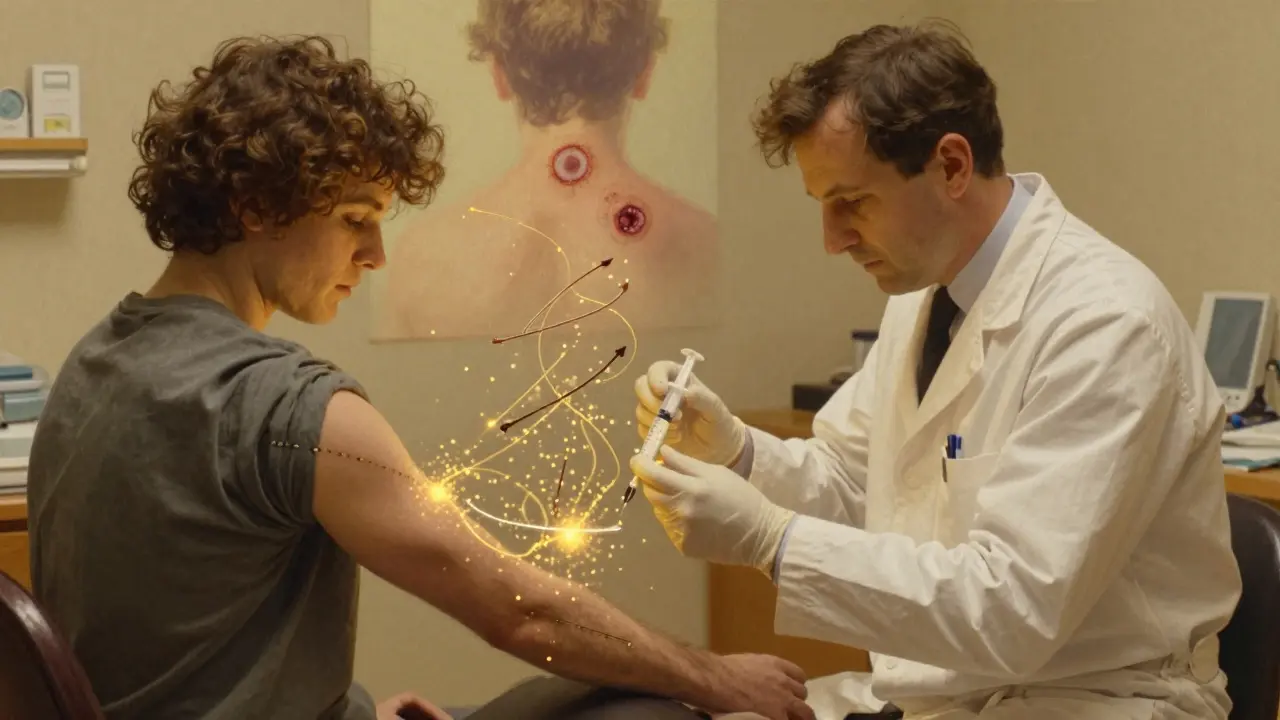
Biologic therapies are made from living cells, designed to block specific parts of the immune system that drive HS. Unlike broad-spectrum drugs that suppress the whole immune system, biologics are like precision missiles. They zero in on just one inflammatory messenger. There are three main biologics approved for HS right now:- Adalimumab (Humira): Blocks TNF-alpha, a key driver of inflammation. Given as a weekly or every-other-week injection. First FDA-approved for HS in 2015.
- Secukinumab (Cosentyx): Targets IL-17A. Injected weekly at first, then every 4 weeks. Approved in early 2024.
- Bimekizumab (BIMZELX): The newest. Blocks both IL-17A and IL-17F - two closely related molecules. Approved in mid-2024.
Efficacy: What the Numbers Really Show
Doctors measure improvement using something called HiSCR50 - a 50% reduction in abscesses and nodules without new ones forming. Here’s what the trials show:| Biologic | Target | HiSCR50 at Week 12-16 | Dosing Schedule | Monthly Cost (US) |
|---|---|---|---|---|
| Adalimumab (Humira) | TNF-alpha | 41.8% | 40 mg weekly or every other week | $5,800 |
| Secukinumab (Cosentyx) | IL-17A | 44.5% | 300 mg weekly for 5 weeks, then every 4 weeks | $6,200 |
| Bimekizumab (BIMZELX) | IL-17A and IL-17F | 66.9% | 320 mg every 4 weeks after loading dose | $6,900 |
Real Patient Experiences: Relief, Costs, and Challenges
Real people aren’t just numbers in a trial. On forums like MyHSteam and Reddit, thousands share their stories. One woman in Ohio said her pain dropped from an 8/10 to a 2/10 within six weeks of starting secukinumab. Another man in Texas stopped wearing compression shirts after 12 years - something he hadn’t dared to do since his diagnosis. But it’s not perfect. About 40% of users report injection site reactions - redness, itching, or swelling where the needle goes in. Some get colds or sinus infections more often. A third of patients stop treatment because of cost. In the U.S., even with insurance, out-of-pocket costs can hit $1,200 a month. Many can’t afford it. Medicaid approval rates lag far behind private insurance - only 45% of Medicaid patients get approved, compared to 82% of those with commercial plans. The biggest lesson from patient communities? Start early. If you’re in Hurley Stage I or II - meaning you have isolated nodules or a few connected tunnels - biologics can stop progression. Once you reach Stage III, with widespread scarring and tunnels, biologics help control symptoms but can’t undo the damage.Who Should Consider Biologic Therapy?
Biologics aren’t for everyone. They’re reserved for moderate to severe HS - what doctors call Hurley Stage II or III. That means:- Multiple abscesses or nodules that keep coming back
- At least one tunnel connecting lesions under the skin
- Failure of at least two rounds of antibiotics or other systemic treatments

What’s Next? The Future of HS Treatment
The pipeline is full. Three new biologics are in late-stage trials:- Guselkumab: Blocks IL-23. Early results show 58% of patients hit HiSCR50.
- Spesolimab: Targets IL-36, a pathway linked to skin inflammation.
- TAK-279: A TYK2 inhibitor that blocks multiple inflammatory signals at once.







Written by Martha Elena
I'm a pharmaceutical research writer focused on drug safety and pharmacology. I support formulary and pharmacovigilance teams with literature reviews and real‑world evidence analyses. In my off-hours, I write evidence-based articles on medication use, disease management, and dietary supplements. My goal is to turn complex research into clear, practical insights for everyday readers.
All posts: Martha Elena