
One glass of grapefruit juice might seem like a healthy start to your day-rich in vitamin C, low in calories, and full of antioxidants. But if you’re taking an immunosuppressant after a transplant, that glass could be putting your life at risk. This isn’t a myth. It’s not a warning on a bottle you can ignore. It’s a real, measurable, and potentially deadly interaction that has been documented for over 30 years.
Why Grapefruit Is Dangerous With Immunosuppressants
Grapefruit doesn’t just interact with medications-it rewires how your body handles them. The problem lies in a group of chemicals called furanocoumarins, found in grapefruit, pomelo, and Seville oranges. These compounds shut down an enzyme in your gut called CYP3A4. This enzyme is responsible for breaking down about half of all oral medications before they enter your bloodstream. When it’s blocked, your body absorbs way more of the drug than it should. For immunosuppressants like cyclosporine, tacrolimus, and sirolimus, this is catastrophic. These drugs already have a narrow safety margin. The difference between the right dose and a toxic one is small-sometimes just two to four times higher. Grapefruit can push levels up by 50%, 100%, or even 300%. A study from 1989 showed that one 8-ounce glass of grapefruit juice increased the blood level of felodipine (a blood pressure drug) by 260%. The same effect happens with immunosuppressants.Which Immunosuppressants Are Most Affected?
Not all immunosuppressants react the same way. The ones most at risk share three key traits:- They’re heavily broken down by CYP3A4 in the gut
- They’re poorly absorbed-only 20% to 50% of the pill actually enters your bloodstream
- They have a very narrow therapeutic window
Here’s what happens when grapefruit meets these drugs:
- Cyclosporine: Blood levels can rise 50-100%. Normal range: 100-400 ng/mL. Toxic levels start above 500 ng/mL.
- Tacrolimus: Levels can jump 30-50%. Normal: 5-15 ng/mL. Toxic above 20 ng/mL.
- Sirolimus: Levels can surge 200-300%. Normal: 4-12 ng/mL. Toxic above 20 ng/mL.
These aren’t theoretical numbers. Transplant patients have been hospitalized with acute kidney injury, tremors, high blood pressure, and dangerously high potassium levels after eating grapefruit. One Reddit user shared that their tacrolimus level doubled after one glass. Their doctor told them, “This is why we tell you never to have it.”
How Long Does the Effect Last?
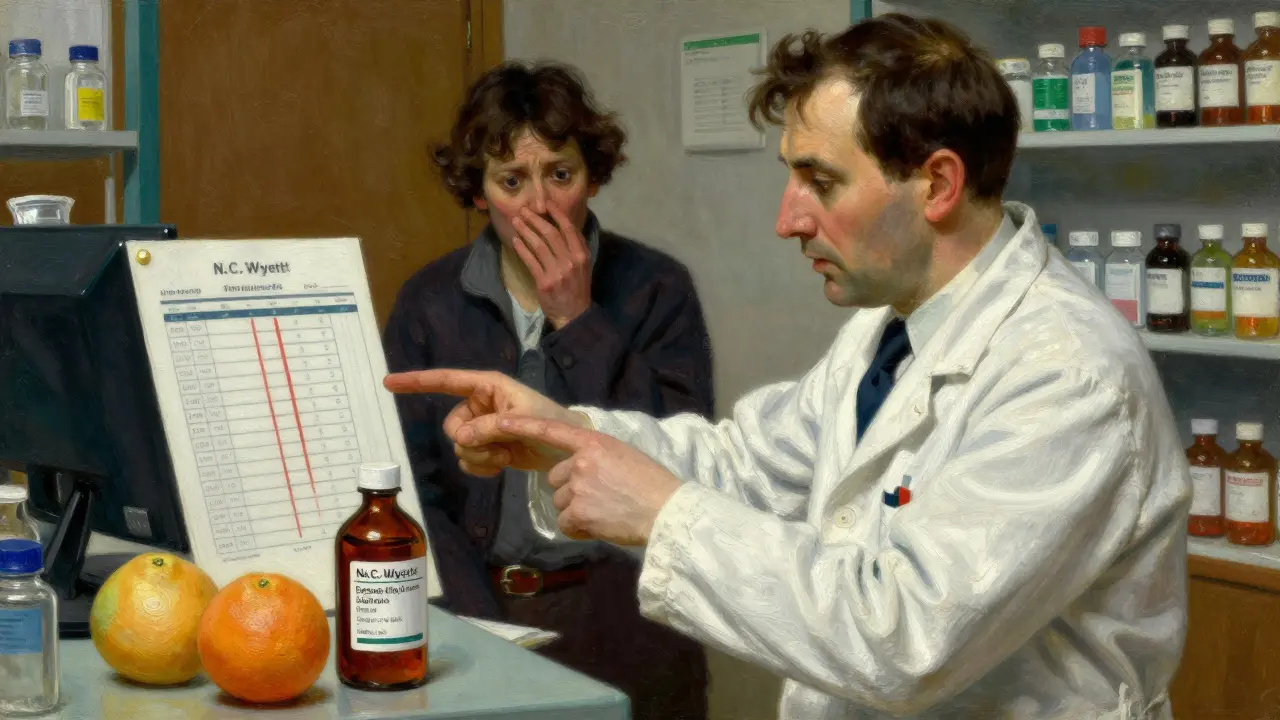
This isn’t a “don’t eat it at the same time as your pill” situation. The damage lasts far longer than you’d think. Furanocoumarins bind to CYP3A4 enzymes and destroy them. Your body can’t just make more right away. It takes about three days to rebuild those enzymes. A 2005 study in Clinical Pharmacology & Therapeutics showed that even 72 hours after drinking grapefruit juice, CYP3A4 activity was still down by 24%. That means if you eat grapefruit on Monday, you’re still at risk on Thursday-even if you haven’t had any since Monday.That’s why transplant centers don’t just say “avoid grapefruit.” They say: Avoid it for three full days before starting your medication. And if you accidentally eat it, you need your drug levels checked within 3-5 days.
What About Other Citrus Fruits?
You might think, “If grapefruit is bad, what about oranges?” The answer is simple: most oranges, tangerines, and lemons are safe. They don’t contain enough furanocoumarins to cause harm. But there’s one big exception: Seville oranges. These are the bitter oranges used in traditional marmalade. They have the same dangerous compounds as grapefruit. So if you’re on immunosuppressants, skip the marmalade on your toast.Pomelo is another hidden risk. It’s a large citrus fruit, sometimes sold as “Chinese grapefruit.” It’s not the same as grapefruit, but it contains the same toxins. Don’t assume it’s safe just because it looks different.
What Happens When Levels Get Too High?
High immunosuppressant levels don’t just make you feel off-they can cause real organ damage. You might not notice symptoms right away. But over time, elevated levels can:- Damage your kidneys (a major concern for transplant patients)
- Raise your blood pressure
- Trigger tremors, headaches, or nausea
- Lead to high potassium levels, which can cause irregular heartbeat
- Suppress your immune system too much, increasing infection risk
In 2021-2022, Mayo Clinic pharmacists found that 15-20% of unexpected immunosuppressant toxicity cases were linked to grapefruit. One kidney transplant patient in a support forum ended up in the ER with kidney failure after eating half a grapefruit. Their tacrolimus level jumped from 8.2 to 24.7 ng/mL-more than double the safe limit.
What Should You Do?
The advice is simple, but hard to follow: Don’t eat or drink anything made from grapefruit, pomelo, or Seville oranges. That includes:- Fresh fruit
- Juice
- Smoothies
- Extracts or supplements
- Marmalade made with Seville oranges
Don’t rely on memory. Don’t assume “once in a while” is okay. Don’t think your doctor will catch it if you forget. This interaction is silent and deadly.
Here’s what to do instead:
- Read the medication guide that comes with your prescription. It will list grapefruit as a contraindication.
- Ask your pharmacist to review all your medications at every refill.
- Check labels on packaged foods and drinks-grapefruit flavoring is sometimes hidden in teas, candies, or salad dressings.
- If you’re unsure about a fruit, don’t eat it.
Some transplant centers now use apps that scan your medication barcode and instantly warn you about grapefruit. Johns Hopkins launched one in January 2023. If your hospital offers something similar, use it.

Why Do So Many People Still Eat It?
The British Liver Trust found that 68% of transplant patients don’t fully understand the danger. Many think it’s just a “maybe” risk. Others believe they can control it by timing-like drinking juice hours before or after their pill. That doesn’t work. The enzyme damage lasts for days.Some patients eat grapefruit because they believe it’s healthy. And it is-when you’re not on immunosuppressants. Half a grapefruit gives you 70% of your daily vitamin C, 5% of your potassium, and 2 grams of fiber. But when you’re on cyclosporine or tacrolimus, that health benefit isn’t worth the risk.
And it’s not just older adults. Younger transplant patients often think they’re invincible. They skip the warning because they don’t feel sick. But toxicity doesn’t always cause immediate symptoms. It quietly damages organs over time.
What If You Accidentally Eat It?
If you ate grapefruit and you’re on an immunosuppressant, don’t panic-but don’t wait either.- Call your transplant team immediately.
- Don’t take your next dose until you’ve spoken to them.
- Get a blood test to check your drug levels within 24-48 hours.
- Your dose may need to be lowered by 25-50% until levels return to normal.
There’s no antidote. Activated charcoal has been studied as a way to reduce absorption if taken within an hour of eating grapefruit-but it’s not standard practice, and it’s not guaranteed to work. The only reliable solution is prevention.
The Bigger Picture
About 300,000 people in the U.S. are living with transplants and taking these drugs. Nearly all of them are on medications affected by grapefruit. Every year, 5-7% of hospitalizations for immunosuppressant toxicity are tied to this interaction. That’s hundreds of avoidable stays, costing an average of $18,500 each.The FDA has required grapefruit warnings on medication labels since 2010. But warnings alone aren’t enough. Patients need clear, repeated education. Pharmacies need to flag these interactions at the counter. Doctors need to ask about fruit intake-not just other meds.
And if you’re a transplant patient, your job is simple: protect your new organ. That means saying no to grapefruit, even if it’s the last thing you want to give up. Because this isn’t about diet. It’s about survival.




Written by Martha Elena
I'm a pharmaceutical research writer focused on drug safety and pharmacology. I support formulary and pharmacovigilance teams with literature reviews and real‑world evidence analyses. In my off-hours, I write evidence-based articles on medication use, disease management, and dietary supplements. My goal is to turn complex research into clear, practical insights for everyday readers.
All posts: Martha Elena