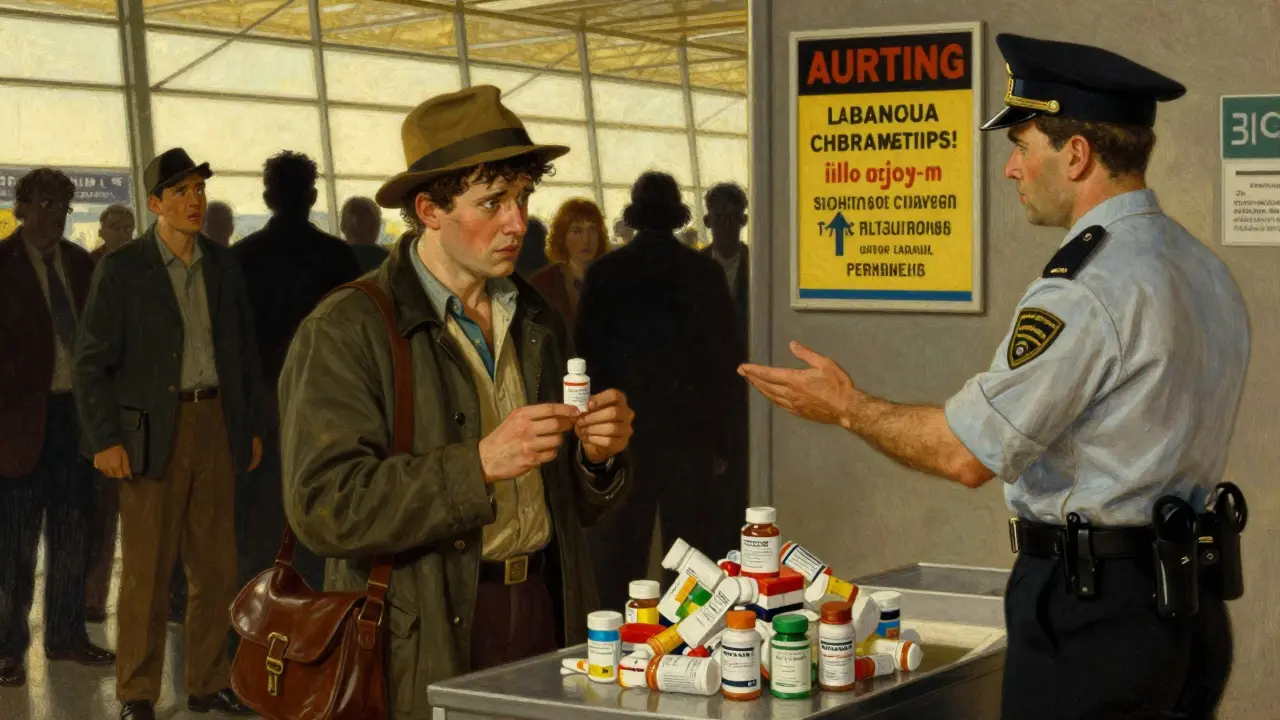
You packed your pills, double-checked your prescription labels, and assumed you were ready for your trip. Then, at customs in Tokyo, Dubai, or Bangkok, your medication was taken away - and you were questioned, fined, or even detained. This isn’t a rare horror story. Every year, thousands of travelers run into serious trouble because they didn’t check if their prescription drugs are legal in the country they’re visiting. What’s legal in New Zealand, the U.S., or Germany might be a Class A controlled substance elsewhere - with prison time as a possible penalty.
What Medications Are Actually Banned?
It’s not just opioids or sedatives. Some of the most common medications travelers carry are banned in dozens of countries. Hydrocodone and oxycodone - found in painkillers like Vicodin and OxyContin - are illegal in 9 out of 16 major travel destinations, including Japan, Singapore, and the UAE. Even something as simple as a cold medicine containing pseudoephedrine, like Sudafed, is banned in Japan and the UAE because it can be used to make methamphetamine. In 2023, Japan recorded over 1,200 incidents of travelers being stopped for carrying decongestants.ADHD medications like Adderall, Ritalin, and Concerta are another major trap. These are legal and commonly prescribed in the U.S. and Europe, but they’re completely banned in China, Thailand, and the UAE without special permits. In China, carrying these drugs without approval can lead to immediate arrest. In Thailand, penalties for stimulants jumped to 5-10 years in prison and fines up to $28,500 in 2023.
Even sleep aids like zolpidem (Ambien) and anti-anxiety meds like diazepam (Valium) are restricted in over half the countries travelers visit. The UAE treats diazepam and codeine as Class A drugs. Possessing them without prior approval can mean a 1-3 year prison sentence. And it’s not just drugs - some countries ban over-the-counter items like cough syrups with codeine or even certain antihistamines.
Country-by-Country Rules You Can’t Ignore
Each country has its own system, and guessing won’t save you. Here’s what you need to know about a few key destinations:- Japan: You can bring up to one month’s supply of most medications, but anything containing amphetamines, codeine, or pseudoephedrine is banned unless you have a special permit. You must carry the original prescription in English and an International Certificate for Psychoactive Substances, issued within 30 days of travel. Even then, customs can still confiscate your pills if they’re unsure.
- United Arab Emirates: You need pre-approval from the Ministry of Health and Prevention for any controlled substance. This includes painkillers with codeine, anti-anxiety meds, and ADHD drugs. Apply at least 10-14 days before you fly using their online portal. Without it, you risk arrest. In 2023, over 70% of medication-related arrests involved travelers who didn’t know they needed approval.
- Germany: You can bring a 30-day supply of your prescription meds without paperwork, as long as they’re for personal use. But if you’re staying longer, you need a doctor’s letter and proof of legal possession in your home country. German customs don’t mess around - they’ve trained officers to spot suspicious packages at all major airports.
- Thailand: Stimulants are a hard no. Adderall, Ritalin, even some weight-loss pills with amphetamine derivatives are banned. Penalties are severe. And while you can bring up to a 3-month supply of other controlled meds, you must have a doctor’s letter and original prescription. No exceptions.
- China: All amphetamine-based drugs are banned, period. This includes ADHD meds, some weight-loss pills, and even certain cold medicines. No permits, no exceptions. If you’re traveling for medical reasons, you must apply for special permission through the Chinese embassy - and even then, approval is rare.
Why Do These Rules Exist?
These aren’t arbitrary laws. They’re based on international treaties from the 1960s and 1970s meant to stop drug trafficking. Countries like Singapore and the UAE have zero-tolerance policies because they’ve seen how easily legal prescriptions can be diverted into illegal markets. Japan bans pseudoephedrine because it’s a key ingredient in meth labs. China restricts ADHD meds because they’re seen as recreational drugs, not treatments.But the real problem? These rules don’t distinguish between a patient with chronic pain and someone smuggling drugs. A diabetic traveling with insulin might be fine - but someone with arthritis taking hydrocodone could end up in jail. The system doesn’t care about your diagnosis. It only cares about the chemical in the pill.
What You Must Do Before You Fly
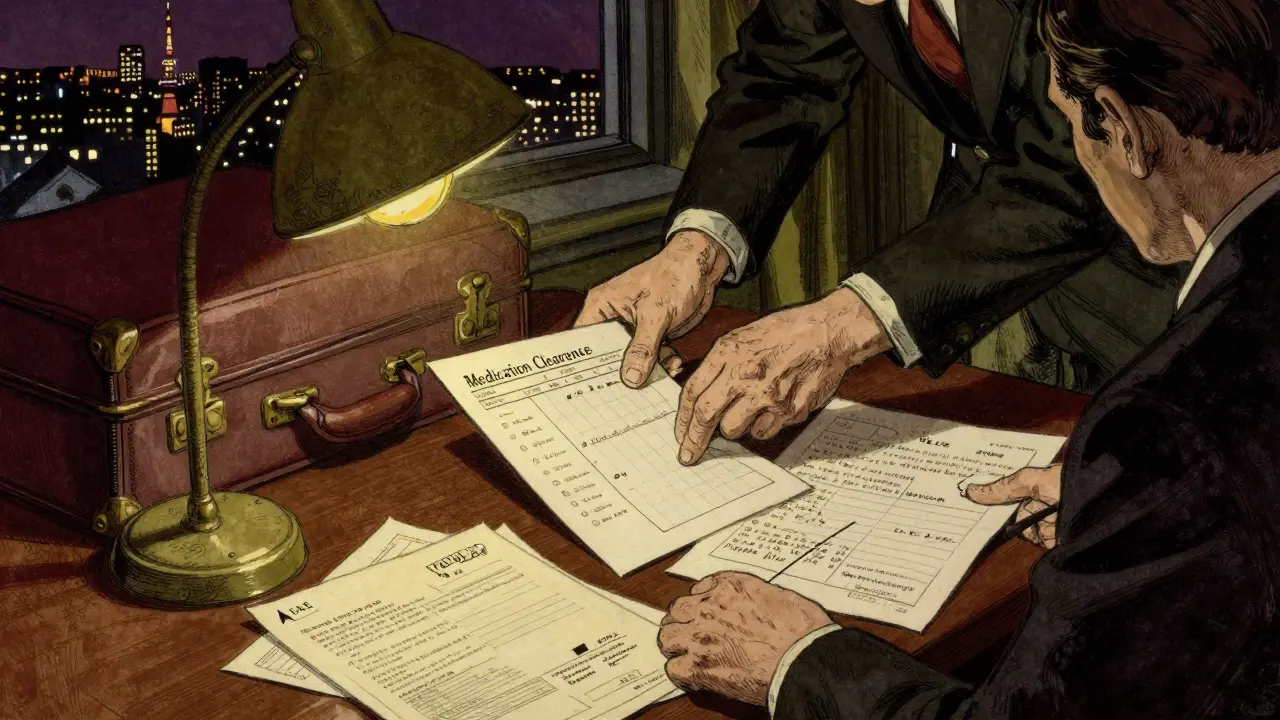
There’s no shortcut. If you’re taking any prescription medication, you need to plan ahead - and start early.- Check every country on your itinerary. Don’t just check your final destination. If you have a layover in Dubai or Singapore, you’re still subject to their rules. Use the CDC Travelers’ Health site or the DocHQ Travel Medicine Checker - both are free and updated regularly.
- Get documentation. You need three things: your original prescription (not a pharmacy label), a doctor’s letter on official letterhead explaining why you need the medication, and any country-specific forms. For Japan and the UAE, you’ll need extra paperwork.
- Don’t rely on your airline. Airlines won’t tell you if your meds are illegal. Their job is to get you on the plane, not to check your pills. Don’t assume they’ll warn you.
- Carry meds in original packaging. Never transfer pills to a pill organizer. Customs officers need to see the label with your name, the drug name, and the prescribing doctor’s info.
- Bring extra copies. Scan your prescriptions and doctor’s letter. Email them to yourself and a trusted friend. If your bag gets lost or confiscated, you’ll need proof you’re not smuggling.
It takes time. A 2023 study found travelers spend an average of 3.7 hours preparing for a single destination. But that’s less time than you’ll spend in jail if you get caught.
What Happens If You Get Caught?
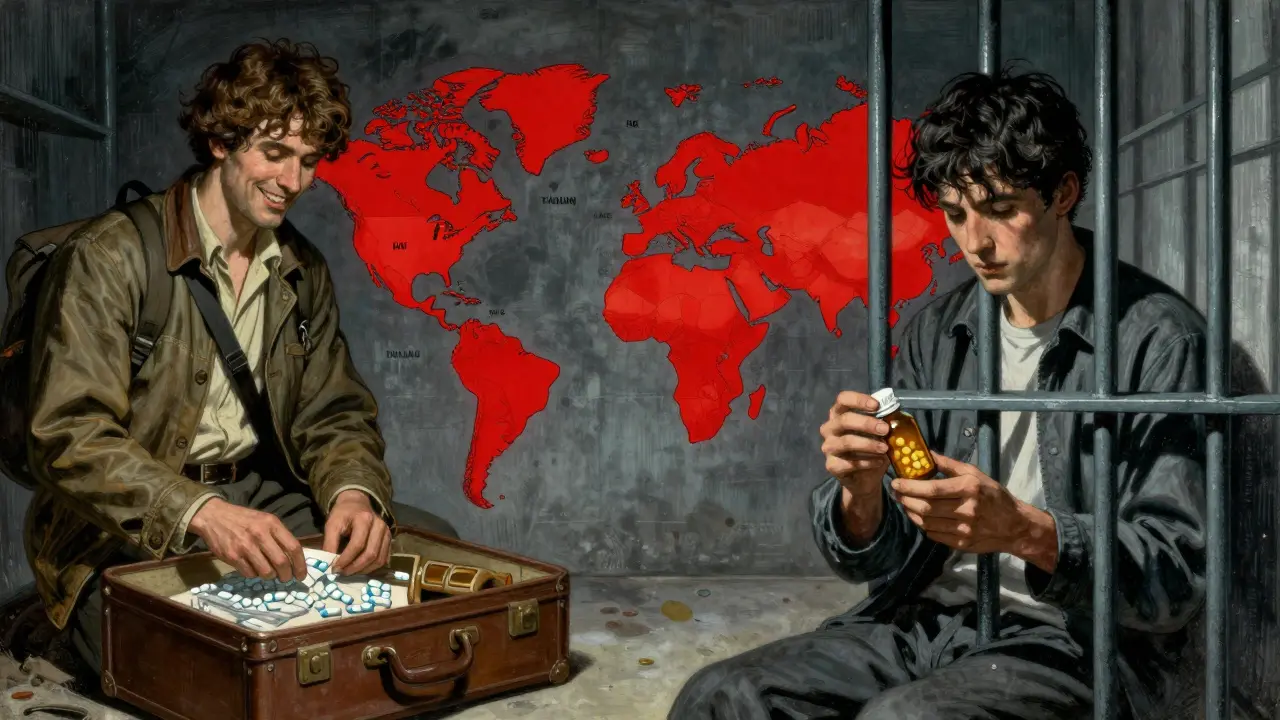
The consequences vary wildly. In the UAE, you might be detained for days while officials verify your paperwork. In Japan, your meds will be seized and you’ll be allowed to leave - but you’ll be flagged for future visits. In Thailand or China, you could be arrested immediately and held without bail. In some cases, travelers have spent months in prison before being deported.Even if you’re not arrested, losing your medication mid-trip can be dangerous. If you’re on blood pressure meds, insulin, or antidepressants, running out can lead to hospitalization. That’s why it’s not just about avoiding legal trouble - it’s about staying alive.
What About Travel Insurance?
Most travel insurance policies won’t cover you if you’re carrying illegal drugs - even if you didn’t know they were banned. But some providers, like Allianz and AXA, now offer add-ons specifically for medication coverage. These cover the cost of replacing lost or confiscated prescriptions, and sometimes even legal fees. Check your policy. If it doesn’t mention medication protection, call your provider. It’s worth the extra $20-$50.How to Stay Safe on Your Next Trip
If you take any regular medication, treat this like you would a visa application. Don’t wait until the last minute. Start 8-12 weeks before departure. Make a list of every drug you take, including over-the-counter items. Check each country’s rules. Print out the official government pages or embassy guidelines - don’t just rely on blogs or forums.Use the DocHQ Travel Medicine Checker. It’s used by over 200,000 travelers and cuts documentation errors by 73%. Or contact your local travel clinic. Many now offer medication reviews as part of their pre-travel consultations.
And if you’re ever unsure - don’t bring it. Talk to your doctor about alternatives. Is there a non-controlled version of your painkiller? Can you switch to a different antidepressant that’s legal everywhere? Sometimes, the safest option is a simple change.
Final Reality Check
Sixty-three percent of travelers don’t know their meds could be illegal abroad. Twelve percent have already had an incident. That’s not luck - that’s ignorance. The world doesn’t care if you didn’t know. The law doesn’t care if you meant no harm. Your prescription doesn’t protect you outside your home country.Don’t be the person who gets detained because they thought "it’s just a pill." Do the work. Check the rules. Carry the papers. Play it safe. Your freedom - and your health - depend on it.




Written by Martha Elena
I'm a pharmaceutical research writer focused on drug safety and pharmacology. I support formulary and pharmacovigilance teams with literature reviews and real‑world evidence analyses. In my off-hours, I write evidence-based articles on medication use, disease management, and dietary supplements. My goal is to turn complex research into clear, practical insights for everyday readers.
All posts: Martha Elena