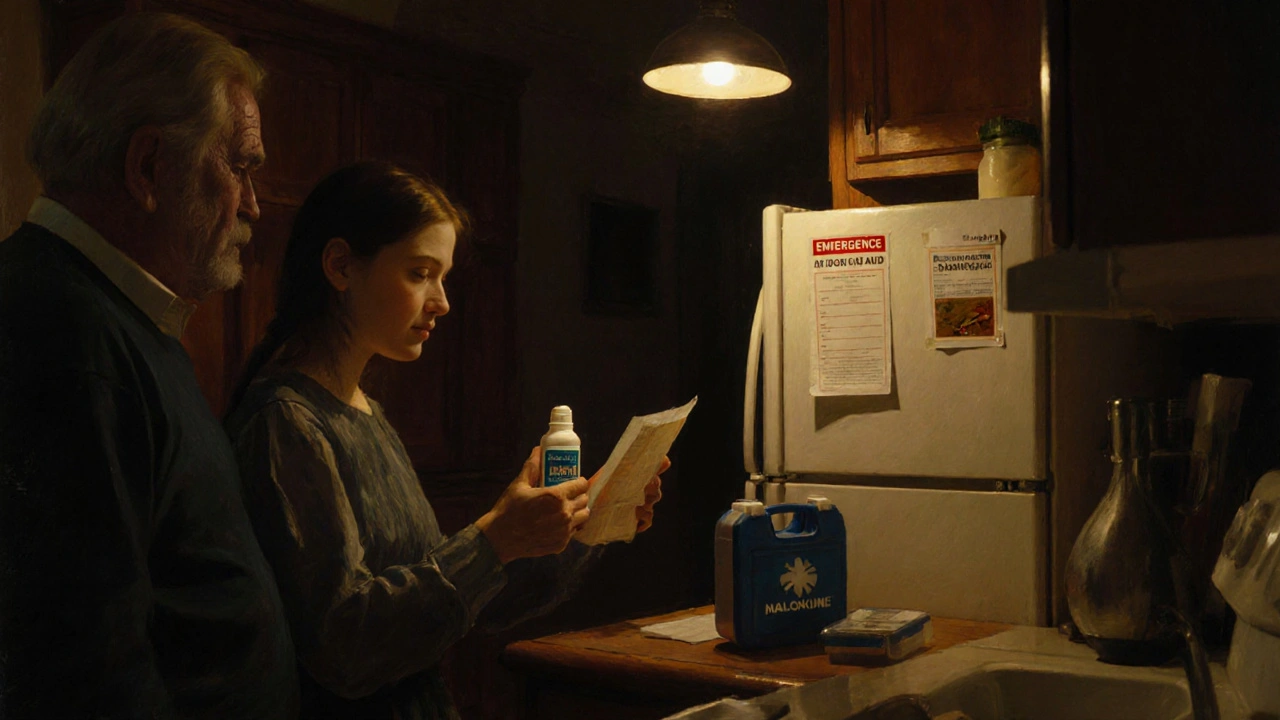
Every year, more than 100,000 people in the U.S. die from drug overdoses. Most of those deaths involve opioids - especially synthetic ones like fentanyl - and many happen at home. The truth is, if someone in your household takes prescription pain medication, an overdose emergency plan isn’t optional. It’s as essential as a fire extinguisher. You hope you never need it. But if you do, those first few minutes could save a life.
Why This Plan Matters More Than You Think
Most people don’t realize how fast an overdose can turn deadly. With fentanyl, a person can stop breathing in under three minutes. By the time someone calls 911, finds their phone, or tries to wake them up, it’s often too late. The window to reverse an opioid overdose? Four to six minutes. After that, brain damage or death becomes likely. But here’s the good news: naloxone - the medication that reverses opioid overdoses - works 93% of the time when given quickly. And it doesn’t need to be given by a doctor. A teenager, a grandparent, or a neighbor can use it. The problem? Most families don’t have it on hand. Only 12.3% of U.S. households with prescription opioids have a plan in place. This isn’t about fear. It’s about preparation.Step 1: Know Who’s at Risk
Not everyone in the house needs a plan - but some do. You need one if someone takes:- Opioid painkillers like oxycodone, hydrocodone, morphine, or fentanyl patches
- Any medication prescribed for chronic pain, especially at doses above 50 morphine milligram equivalents (MME) per day
- Medications combined with benzodiazepines (like Xanax or Valium) or alcohol - this increases overdose risk
- Medications after a recent hospital discharge, surgery, or dose increase
Step 2: Get Naloxone - and Keep It Accessible
Naloxone comes in two forms: nasal spray (like Narcan) and injectable. For families, the nasal spray is easiest. No needles. No training needed beyond reading the box. Where to get it:- Pharmacies in 46 states: You can buy it without a prescription at CVS, Walgreens, and many local pharmacies. Many offer it for $25 or less with insurance.
- Free kits: Health departments in cities like New York, Seattle, and Chicago give out free naloxone. Check your local health website.
- Community programs: Some nonprofits and tribal organizations distribute kits for free - especially in rural areas where access is limited.
Step 3: Learn the Signs of Overdose
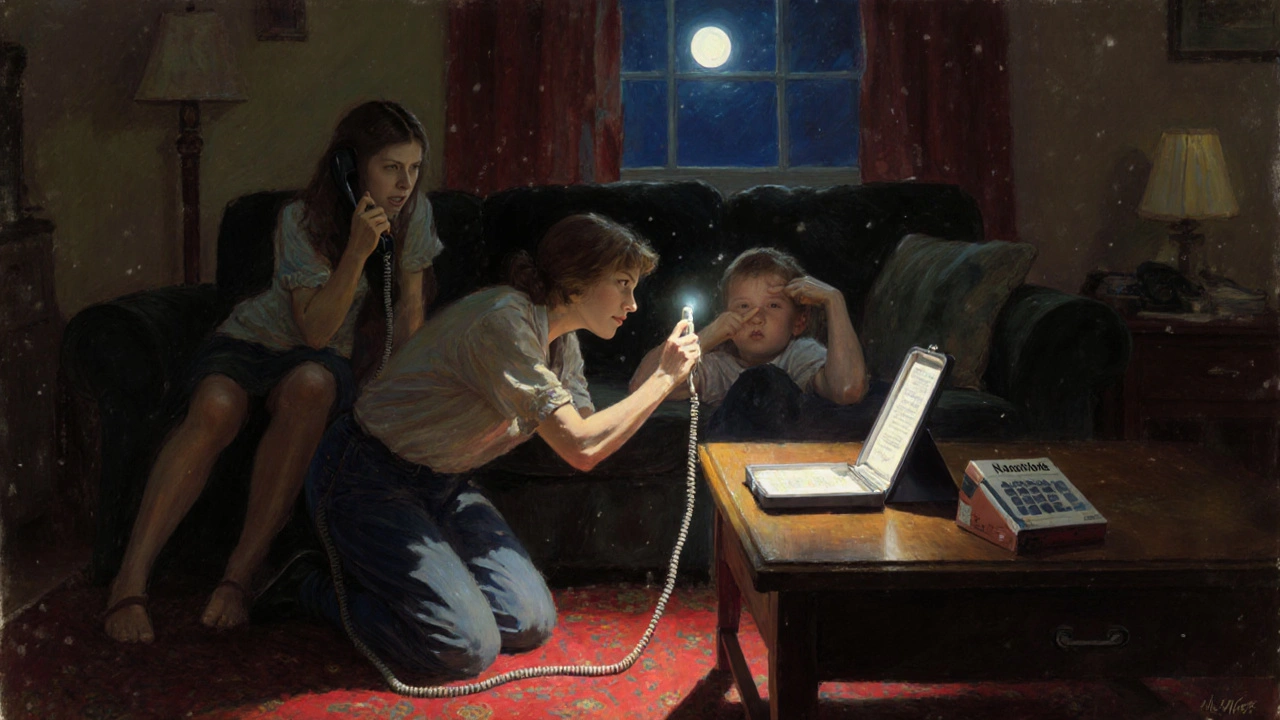
An overdose doesn’t always look like what you see on TV. The person won’t necessarily be shaking or screaming. Often, they’re silent. Look for these three signs:- Unresponsive: Shake their shoulder hard. Yell their name. If they don’t wake up, it’s an emergency.
- Abnormal breathing: Are they breathing less than 12 times a minute? Or are they making slow, gurgling, snoring sounds? That’s not sleep - that’s drowning on their own breath.
- Pinpoint pupils: Shine a light in their eye. If the black part of the eye is tiny like a pinhead, that’s a classic sign.
Step 4: Practice the Response - Every Family Member
This isn’t a one-time thing. Everyone in the house - including kids over 12 - needs to know what to do. Here’s the simple sequence:- Assess: Check for the three signs above.
- Naloxone: Remove the device from the package. Insert the nozzle into one nostril. Press the plunger firmly. That’s it. No need to tilt the head or blow.
- Call 911: Do this immediately after giving naloxone. Even if they wake up, they need medical care. Overdose symptoms can return after 30-90 minutes.
- Have more ready: If they don’t wake up in 3-5 minutes, give a second dose in the other nostril.
- Observe: Stay with them. Keep them on their side. Watch their breathing. Don’t leave them alone.
- Review: After the emergency, talk about what happened. Did the plan work? What would you change?
Step 5: Make a Quick-Reference Card
Create a laminated card that fits in a wallet or purse. Include:- Names and phone numbers of emergency contacts
- Medications the person takes (including doses and doctor’s name)
- Location of naloxone kits
- Step-by-step instructions in plain language
- Any allergies or medical conditions
What About Non-Opioid Overdoses?
Naloxone only works on opioids. It won’t help with overdoses from alcohol, benzodiazepines, or antidepressants. But here’s the thing: most fatal overdoses in homes today involve opioids - even if other drugs are mixed in. So having naloxone still gives you the best shot. If someone takes multiple medications, keep a list of what they’re on. If you’re unsure whether an overdose is opioid-related, give naloxone anyway. It’s safe. It won’t hurt someone who didn’t take opioids.
Common Mistakes and How to Avoid Them
- Expired naloxone: 31% of failed attempts involved old kits. Set a calendar reminder every 18 months.
- Wrong administration: 24% of people didn’t inject it properly. Practice on a training device (some pharmacies give them out for free).
- Delaying 911: 63% of preventable deaths involved waiting too long to call. Call as soon as you give naloxone - not after.
- Not training everyone: If only one person knows what to do, and they’re not home? The plan fails. Include teens, roommates, caregivers.
What Happens After the Emergency?
Surviving an overdose doesn’t mean the crisis is over. The person needs medical care. They may need treatment for addiction. But here’s the hopeful part: 89% of people who survive with naloxone go on to seek help. That’s not a coincidence. Having a plan gives families the courage to act - and that moment of intervention often becomes the turning point. Don’t wait for a tragedy to start this conversation. Talk to your family. Practice the steps. Keep naloxone in the drawer next to the first aid kit. Treat it like smoke alarms - not because you expect fire, but because you care enough to be ready.Resources You Can Use Today
- Free training: The American Red Cross offers a free 15-minute online course on overdose response.
- Free naloxone: Visit your local health department or search ‘free naloxone near me’.
- Insurance coverage: Since 2024, Medicare Part D covers naloxone with $0 copay. Most private insurers do too - call your plan to confirm.
- Apps: The ‘Overdose Guardian’ app (released Jan 2024) gives real-time alerts if overdoses are reported near your home.
Can I give naloxone to someone who didn’t take opioids?
Yes. Naloxone is safe and will not harm someone who hasn’t taken opioids. It only works on opioid receptors, so if there are no opioids in the system, it does nothing. If you’re unsure whether an overdose is opioid-related, give naloxone anyway - it could save a life.
How long does naloxone last, and can the overdose come back?
Naloxone works for 30 to 90 minutes, but many opioids - especially fentanyl - stay in the body much longer. That means overdose symptoms can return after naloxone wears off. This is called ‘renarcotization.’ That’s why you must call 911 even if the person wakes up. They need to be monitored for at least two hours.
Is it legal to carry or use naloxone if I’m not the patient?
Yes. All 50 states have Good Samaritan laws that protect anyone who gives naloxone in good faith during an emergency. You cannot be charged with drug possession or face legal consequences for helping someone who overdoses. These laws exist to encourage people to act.
Can kids learn to use naloxone?
Yes. Children as young as 12 can be trained to recognize overdose signs and use nasal naloxone. Many schools and community programs offer age-appropriate training. Teens are often the first to find someone unresponsive - giving them the skills can mean the difference between life and death.
What if I’m afraid to talk to my family about this?
It’s normal to feel uncomfortable. But this isn’t about accusing anyone - it’s about safety. Try saying: ‘I love you, and I want to make sure we’re all protected if something happens.’ Frame it like a fire drill: you don’t do it because you expect trouble, but because you care enough to be ready.
Where can I get free training or a naloxone kit?
Visit your local health department’s website, or search ‘free naloxone + [your city]’. Pharmacies like CVS and Walgreens often give out free kits. The American Red Cross offers a free 15-minute online course. Some nonprofits mail kits for free - no questions asked.


Written by Martha Elena
I'm a pharmaceutical research writer focused on drug safety and pharmacology. I support formulary and pharmacovigilance teams with literature reviews and real‑world evidence analyses. In my off-hours, I write evidence-based articles on medication use, disease management, and dietary supplements. My goal is to turn complex research into clear, practical insights for everyday readers.
All posts: Martha Elena