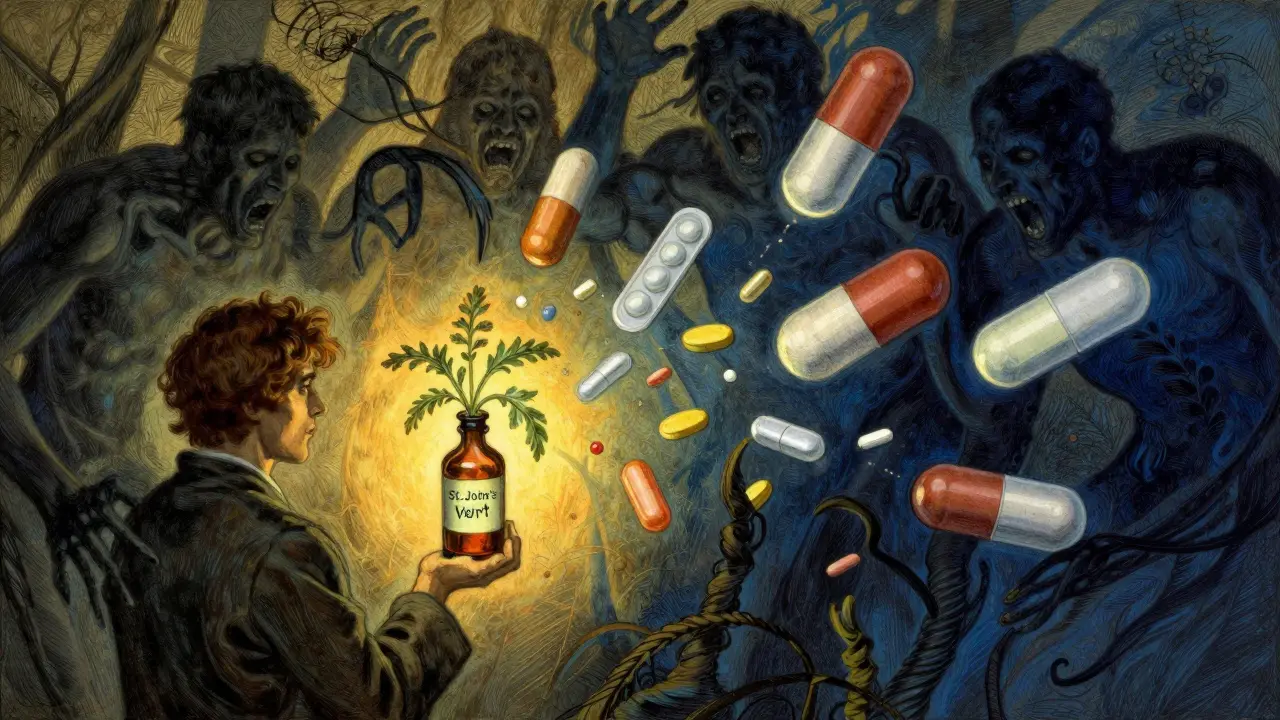
St. John's Wort Interaction Checker
Check Your Medications
Enter your prescription or OTC medications to see if they interact dangerously with St. John's Wort.
No dangerous interaction found
Based on the medications you entered, no known dangerous interactions with St. John's Wort were detected.
However, always consult your doctor or pharmacist before taking any herbal supplement with medications.
Dangerous Interaction Detected
St. John's Wort interacts dangerously with
- Reduces effectiveness of medication
- May cause serious health consequences
- Requires immediate medical attention
Stop taking St. John's Wort immediately and consult your healthcare provider.
How to Use This Tool
Enter the name of any prescription or over-the-counter medication you're taking. This tool checks for known dangerous interactions with St. John's Wort based on the latest medical research.
Common medications that interact with St. John's Wort include birth control, warfarin, seizure medications, immunosuppressants, and antidepressants. Check all your medications, even over-the-counter ones like allergy pills or acid reducers.
St. John’s Wort might seem like a harmless natural fix for low mood, but it’s far from safe when you’re taking prescription meds. This herbal supplement, often sold as a capsule or tea, can quietly wreck the effectiveness of common drugs - and sometimes turn them dangerous. If you’re on anything from birth control to heart medication, antidepressants, or even migraine pills, skipping this warning could put your health at serious risk.
How St. John’s Wort Messes With Your Medicines
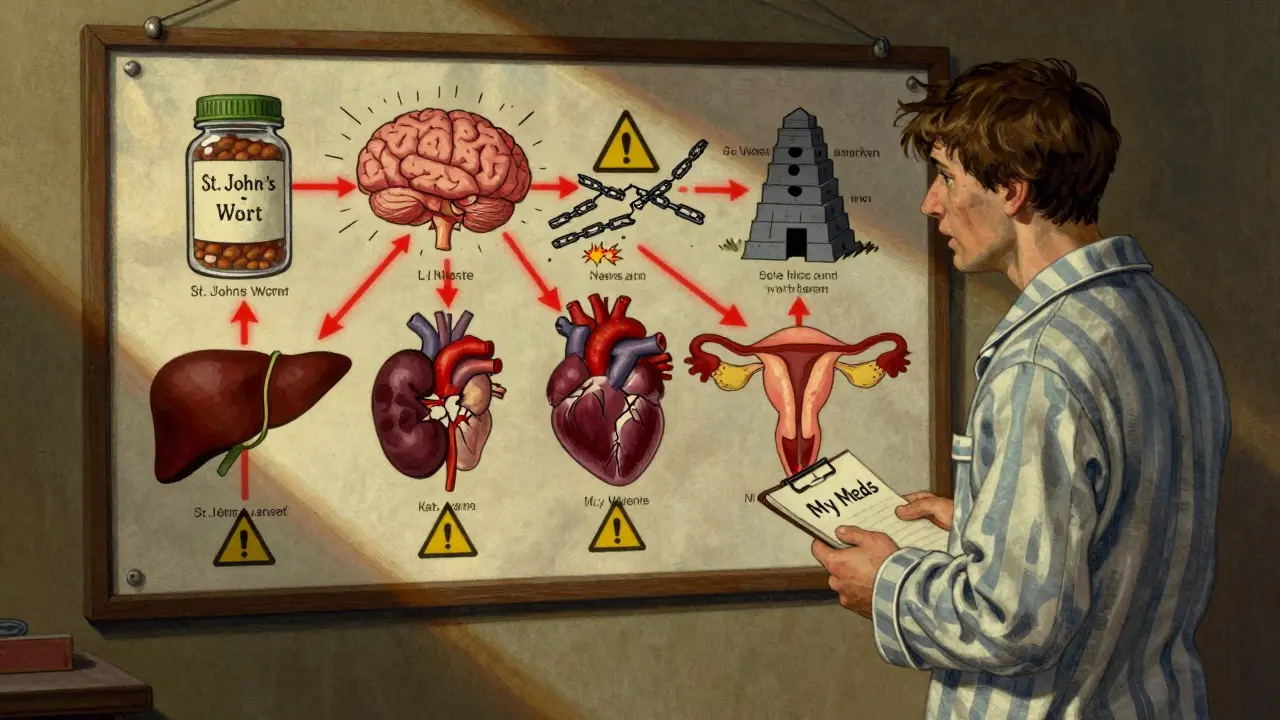
St. John’s Wort doesn’t just sit in your system. It actively changes how your body handles other drugs. The main culprit? A group of liver enzymes called cytochrome P450, especially CYP3A4. This enzyme breaks down about half of all prescription medications. St. John’s Wort turns it into overdrive, making your body flush out drugs way faster than normal. The result? Your medication doesn’t work like it should.
It also kicks up production of P-glycoprotein, a protein that pushes drugs out of cells - including those in your brain and gut. This means less of the drug gets where it needs to go. And if you stop taking St. John’s Wort? The enzymes calm down, and suddenly, your meds build up to toxic levels. That’s not a guess - it’s been documented in real cases of cyclosporin and warfarin toxicity after people quit the herb.
Drugs That Become Useless (or Dangerous) With St. John’s Wort
Here’s what you need to watch out for. This isn’t a partial list. These are real, proven, life-altering interactions:
- Birth control pills - St. John’s Wort cuts hormone levels so fast that you can get pregnant even if you take your pill every day. Breakthrough bleeding is common. This risk applies to pills, patches, and rings. IUDs are safer, but no one’s studied them thoroughly.
- Warfarin (Coumadin) - This blood thinner keeps clots from forming. St. John’s Wort makes your body break it down, raising your risk of stroke or heart attack. One wrong dose and you could bleed internally.
- Phenytoin (Dilantin), carbamazepine (Tegretol), phenobarbital - These seizure meds become less effective. People have had breakthrough seizures after starting St. John’s Wort. For someone with epilepsy, that’s not just inconvenient - it’s life-threatening.
- Cyclosporin and tacrolimus (Prograf) - Used after organ transplants to stop rejection. St. John’s Wort drops their levels so much that the body may attack the new organ. Transplant patients who took this herb have lost their grafts.
- SSRIs and SNRIs (Prozac, Zoloft, Lexapro, etc.) - Combining these with St. John’s Wort can trigger serotonin syndrome: high fever, rapid heartbeat, confusion, seizures, and even death. It’s rare, but it happens. And doctors often miss it because they don’t ask about herbal supplements.
- Methadone - Used for pain or addiction treatment. St. John’s Wort can cause withdrawal symptoms or relapse by speeding up methadone breakdown. One study showed patients in recovery went into acute withdrawal after starting the herb.
- Protease inhibitors (for HIV) - Drugs like ritonavir and indinavir lose effectiveness. That means the virus can rebound, leading to drug resistance and disease progression.
- Clozapine - An antipsychotic for severe schizophrenia. St. John’s Wort lowers its levels, making symptoms return. This isn’t theoretical - cases have been reported in psychiatric journals.
- Omeprazole (Prilosec) - This acid reducer becomes less effective. People with GERD or ulcers may find their symptoms getting worse.
- Fexofenadine (Allegra) - This allergy drug builds up in your system, causing dizziness, headaches, and nausea. It’s the opposite of what you’d expect - less metabolism, more side effects.
- Triptans (for migraines) - Used with SSRIs, they raise serotonin syndrome risk even further.
Why You Can’t Trust “Natural” Labels
St. John’s Wort is sold over the counter. No prescription. No doctor’s note. That makes people think it’s safe. But natural doesn’t mean harmless. The amount of hyperforin - the active compound - varies wildly between brands. One bottle might have 0.3%, another 3%. That’s a tenfold difference. And there’s no standardization. A supplement labeled “100% pure” could still contain contaminants or inconsistent dosing.
Regulators in Sweden and the UK require warning labels on both the herb and the drugs it interacts with. In Australia, the Therapeutic Goods Administration issued a safety alert back in 2000 - and it’s still relevant today. In the U.S.? No such requirement. The FDA doesn’t regulate supplements like drugs. So if you buy St. John’s Wort online or at a health store, you’re flying blind.
What Happens When You Stop Taking It?
Most people don’t realize the danger doesn’t end when they quit. Once you stop, your liver enzymes slow down. But your prescription drugs? They’re still in your system - and now, they’re not being broken down as fast. That means their concentration spikes.
One woman in Australia stopped taking St. John’s Wort after six months and ended up in the hospital with toxic levels of cyclosporin. Her transplant was at risk. Another had a seizure after stopping the herb while on phenytoin. These aren’t outliers. They’re documented cases.
If you’re thinking about quitting St. John’s Wort, talk to your doctor first. You may need to adjust your other meds - and do it slowly.
Who’s at Highest Risk?
- People on long-term meds for chronic conditions (epilepsy, heart disease, HIV, transplants)
- Women using hormonal birth control
- Those taking antidepressants or antipsychotics
- Patients recovering from addiction (methadone users)
- Anyone over 65 - older adults metabolize drugs slower, making them more vulnerable to spikes in drug levels
Even if you’re healthy, if you’re on more than one prescription, you’re at risk. And most people don’t tell their doctors about herbal supplements. A 2021 study found that over 70% of patients using St. John’s Wort never mentioned it to their physician.

What Should You Do?
Here’s the simple truth: if you’re on any prescription medication, don’t take St. John’s Wort without talking to your doctor or pharmacist.
Don’t assume your doctor knows. They might not ask. Bring a list - all your meds, supplements, and even teas. Say: “I’m taking St. John’s Wort. Is it safe with what I’m on?”
If you’re already taking it and started a new drug? Stop the herb immediately and call your provider. Don’t wait. Don’t Google it. Call.
For depression? There are safer, tested alternatives. Talk therapy, exercise, and FDA-approved antidepressants have predictable effects. St. John’s Wort doesn’t. And the risk isn’t worth it.
Photosensitivity is another side effect - your skin burns faster in the sun. Wear sunscreen. Wear a hat. But that’s the least of your worries.
Bottom Line
St. John’s Wort isn’t a gentle herbal remedy. It’s a powerful enzyme inducer that can undo years of medical treatment. It’s not just about depression - it’s about heart attacks, seizures, transplant failure, unplanned pregnancies, and drug toxicity. The science is clear. The warnings are out there. The choice is yours - but ignorance won’t protect you.
Can St. John’s Wort interact with over-the-counter drugs?
Yes. Even common OTC drugs like fexofenadine (Allegra) and antacids like omeprazole (Prilosec) can be affected. St. John’s Wort can reduce their effectiveness or cause them to build up to dangerous levels. Don’t assume OTC means safe - especially when combined with herbs.
Is it safe to take St. John’s Wort with antidepressants?
No. Combining St. John’s Wort with SSRIs or SNRIs can trigger serotonin syndrome - a rare but life-threatening condition. Symptoms include high fever, rapid heartbeat, confusion, muscle rigidity, and seizures. The American Academy of Family Physicians and the Mayo Clinic both warn against this combination. Never mix them without medical supervision.
How long do St. John’s Wort interactions last after stopping it?
The effects can linger for up to two weeks after you stop taking it. The enzymes it induces take time to return to normal levels. During that window, your prescription drugs can build up to toxic levels. Always wait at least 14 days before starting a new medication - and tell your doctor you stopped the herb.
Does St. John’s Wort affect birth control patches or IUDs?
It definitely affects patches and pills - they rely on liver metabolism. Studies show increased risk of pregnancy and breakthrough bleeding. IUDs (hormonal or copper) are less affected because they work locally in the uterus, not systemically. But no large studies confirm this, so assume risk until proven otherwise. Use backup contraception if you’re on St. John’s Wort.
Why don’t drug labels warn about St. John’s Wort?
In the U.S., the FDA doesn’t require supplement manufacturers to prove safety or interactions before selling. Unlike prescription drugs, herbal products aren’t tested for interactions. So even if a pill warns about 20 drugs, it won’t mention St. John’s Wort unless the manufacturer voluntarily adds it. That’s why you must proactively ask your pharmacist or doctor.
Next Steps
If you’re currently taking St. John’s Wort and any prescription medication, don’t panic - but do act. Make a list of everything you’re taking. Call your doctor. Ask: “Could St. John’s Wort be affecting my meds?” If you’re considering it for depression, explore alternatives like cognitive behavioral therapy or FDA-approved antidepressants. The risks far outweigh the benefits for anyone on chronic medication. This isn’t about avoiding natural remedies - it’s about avoiding hidden dangers.





Written by Martha Elena
I'm a pharmaceutical research writer focused on drug safety and pharmacology. I support formulary and pharmacovigilance teams with literature reviews and real‑world evidence analyses. In my off-hours, I write evidence-based articles on medication use, disease management, and dietary supplements. My goal is to turn complex research into clear, practical insights for everyday readers.
All posts: Martha Elena