SJS/TEN Symptom Risk Checker
Select all symptoms you are currently experiencing. The checker will assess your risk level based on the combination of symptoms.
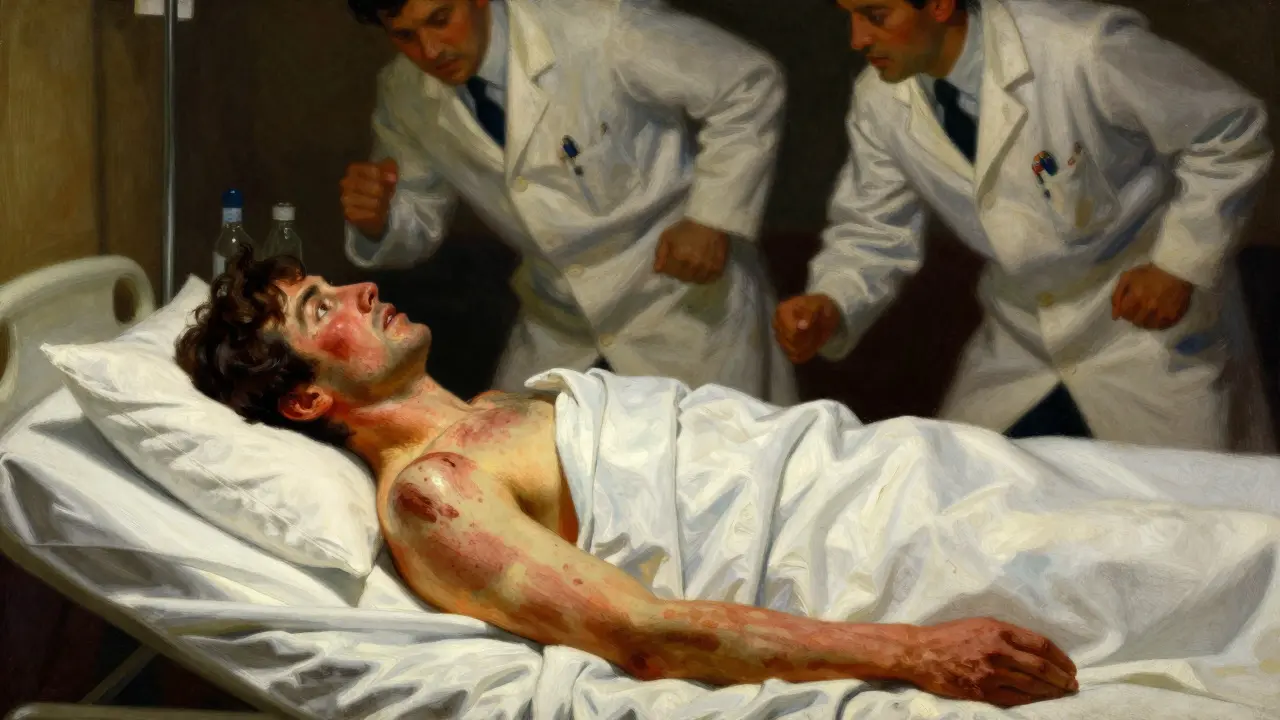
Your skin is your body’s largest organ and its first line of defense. But what happens when that defense turns against you? Stevens-Johnson Syndrome (SJS) and Toxic Epidermal Necrolysis (TEN) are rare but terrifying conditions where the immune system attacks the skin, causing it to die and peel off. These are not just bad rashes; they are life-threatening medical emergencies primarily triggered by medications.
If you have ever been prescribed a new medication, especially for epilepsy, gout, or infections, understanding these risks could save your life. The difference between SJS and TEN is simply the severity of the skin detachment, but both require immediate hospitalization. This guide breaks down what these conditions are, which drugs cause them, and how to spot the warning signs before they become catastrophic.
What Are Stevens-Johnson Syndrome and Toxic Epidermal Necrolysis?
To understand why these conditions are so dangerous, we need to look at what is happening under the surface. Stevens-Johnson Syndrome and Toxic Epidermal Necrolysis exist on the same disease spectrum. They are classified as severe cutaneous adverse reactions (SCARs). The primary mechanism involves full-thickness epidermal necrosis-meaning the entire top layer of your skin dies due to an immune-mediated attack.
The distinction between the two lies in the percentage of body surface area affected:
- SJS: Involves less than 10% of the body surface area.
- SJS/TEN Overlap: Involves between 10% and 30% of the body surface area.
- TEN: Involves more than 30% of the body surface area.
In severe cases of TEN, up to 100% of the skin can detach. Imagine a massive burn injury without any fire involved. The skin sloughs off, leaving raw, open wounds that are highly susceptible to infection. This is why patients are often treated in burn units or intensive care settings. The mortality rate reflects this severity: approximately 5% for SJS, rising to over 30% for TEN, according to clinical data from the Mayo Clinic.
The Dangerous Timeline: How Symptoms Develop
One of the most deceptive aspects of SJS and TEN is their onset. It rarely happens immediately after taking a pill. There is usually a lag period, which makes connecting the reaction to the medication difficult for patients.
According to the NHS and StatPearls, the progression typically follows this pattern:
- Prodromal Phase (Days 1-3): You feel flu-like symptoms. Fever, sore throat, cough, and general malaise set in. Most people assume they have caught a virus and might even take over-the-counter cold medicines, potentially worsening the situation if those meds are also triggers.
- Rash Onset (Days 4-7): A painful red or purple rash appears. It spreads rapidly across the trunk and face. The skin becomes sensitive to touch.
- Blisters and Detachment (Days 7-14): Blisters form on the skin and mucous membranes. The skin begins to die and peel off in sheets. Mucosal erosions affect at least two sites, commonly the eyes, mouth, and genitals.
Drug-induced reactions can occur during active use or up to two weeks after discontinuation. For example, with lamotrigine, the risk is highest within the first eight weeks of starting treatment or if the dose is increased too quickly. If you stop lamotrigine suddenly and restart it at the same dose, the risk spikes again. This specific timeline is crucial for doctors to know when evaluating a patient.
High-Risk Medications: What Triggers These Reactions?
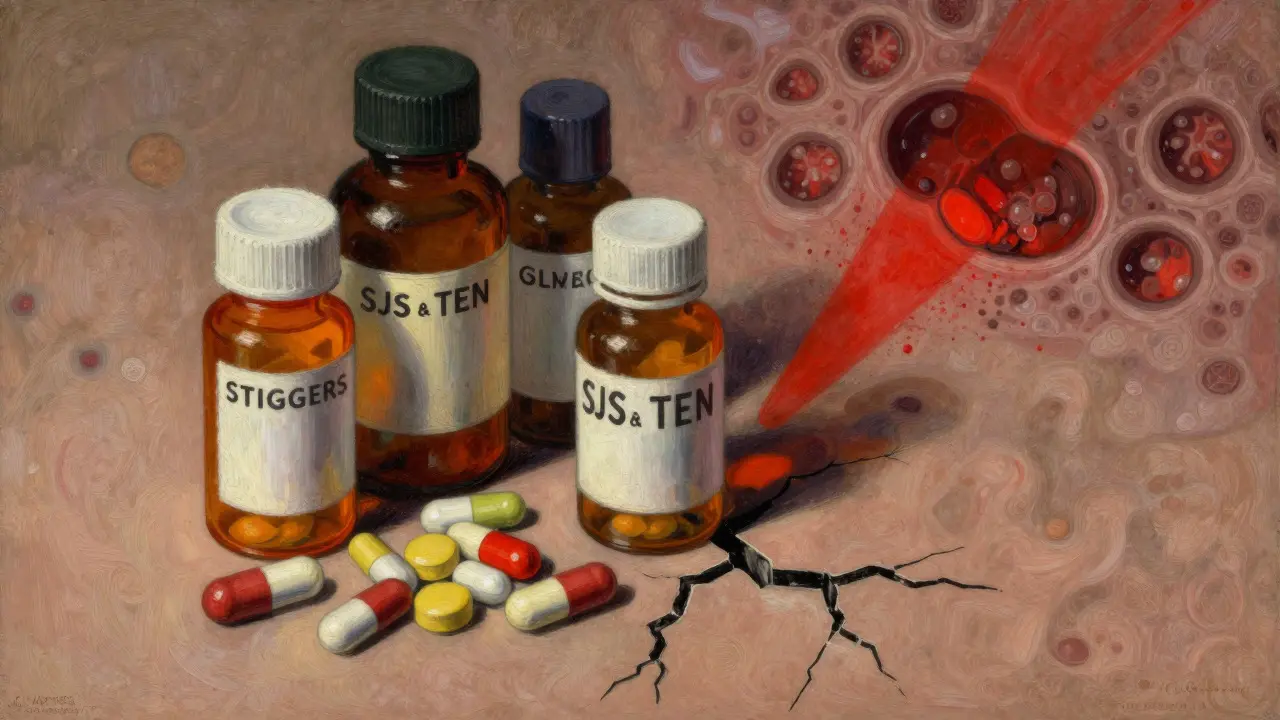
Not all drugs carry the same risk. While any medication can theoretically cause an allergic reaction, certain classes are notorious for triggering SJS and TEN. Knowing these names is vital for informed consent when starting new treatments.
| Medication Class | Specific Drugs | Primary Use |
|---|---|---|
| Anticonvulsants | Lamotrigine, Carbamazepine, Phenytoin, Phenobarbital | Epilepsy, Bipolar Disorder |
| NSAIDs (Oxicams) | Meloxicam, Piroxicam | Pain, Inflammation |
| Antibiotics (Sulfonamides) | Sulfamethoxazole, Sulfadiazine | Infections (UTIs, Pneumonia) |
| Gout Medications | Allopurinol | Gout Management |
| HIV Medications | Nevirapine | HIV/AIDS Treatment |
Cross-reactivity is a major concern. If you react to one anticonvulsant like carbamazepine, you are at higher risk for phenytoin or lamotrigine. Similarly, beta-lactam antibiotics (penicillins, cephalosporins) share structural similarities that can trigger reactions in sensitive individuals. Survivors must avoid not only the causative drug but also structurally related medicines for life.
Who Is at Higher Risk?
While SJS and TEN are rare, certain groups face elevated risks. Understanding your personal risk profile helps in monitoring for early signs.
- Genetic Predisposition: Specific genetic markers, such as HLA-B*1502, are strongly associated with carbamazepine-induced SJS in Asian populations. Genetic testing is now recommended before prescribing high-risk drugs in these demographics.
- Weakened Immune System: Individuals with HIV/AIDS or those undergoing chemotherapy have compromised immune defenses, making them more susceptible to severe reactions.
- History of Rashes: If you have had previous rashes with different epilepsy medications, your risk increases significantly.
- Drug Interactions: Taking sodium valproate concurrently with lamotrigine slows the metabolism of lamotrigine, leading to higher blood levels and a greater chance of toxicity and skin reactions.
- Age: Children and young adults appear to be more vulnerable than older adults in some studies.
It is also worth noting that having a close family member who experienced SJS suggests a potential genetic link, though this is less common than direct drug exposure.
Immediate Action: When to Seek Emergency Care
Time is tissue. The sooner the offending drug is stopped, the better the outcome. Do not wait for a doctor’s appointment if you suspect SJS or TEN.
You should go to the emergency room immediately if you experience:
- A severe rash with flushing, blisters, or ulcers.
- Painful sores in the mouth, nose, eyes, or genitals.
- Fever accompanied by a spreading red or purple rash.
- Skin that peels off easily when touched (positive Nikolsky sign).
The NHS emphasizes that if you get a severe rash with these characteristics, you must seek emergency care now. Early recognition allows for the immediate discontinuation of the suspected agent, which is the single most important step in treatment. Supportive care in specialized burn units focuses on fluid replacement, pain management, and preventing sepsis.
Long-Term Consequences and Recovery
Surviving SJS or TEN is a battle, but the fight doesn’t end when the skin heals. Long-term complications are common and can be debilitating. According to StatPearls, survivors require multidisciplinary follow-up with ophthalmologists, dermatologists, and other specialists.
Ocular sequelae are particularly devastating. Up to 30-50% of patients may experience blindness or severe visual impairment due to corneal scarring, dry eye, symblepharon (fusion of eyelid to eyeball), and neovascularization. Regular eye exams are critical for at least one year post-recovery.
Other long-term issues include:
- Cutaneous Scarring: Permanent scarring and depigmentation of the skin.
- Nail Dystrophy: Loss or abnormal growth of fingernails and toenails, though these may recover over time.
- Oral and Esophageal Issues: Dry mouth, periodontal disease, and strictures (narrowing) of the esophagus, making swallowing difficult.
- Genital Complications: Vulvovaginal stenosis in females and phimosis in males.
Psychological impact is also significant. The trauma of losing your skin and the chronic nature of recovery can lead to anxiety and depression. Holistic care plans should address mental health alongside physical rehabilitation.
Prevention Strategies for Patients and Providers
Can SJS and TEN be prevented? Not entirely, as individual immune responses are unpredictable. However, risk reduction strategies are effective.
- Gradual Dose Titration: For drugs like lamotrigine, start low and go slow. Rapid dose escalation is a known trigger.
- Avoid New Meds During Acute Illness: The NHS advises avoiding new medicines or foods during the first three months of treatment with high-risk medications to prevent confusion between viral rashes and drug reactions.
- Genetic Screening: Where available, test for HLA alleles before prescribing high-risk anticonvulsants or allopurinol.
- Patient Education: Doctors must clearly warn patients about the signs of SJS/TEN. Patients should carry a medical alert card listing their causative drugs.
- Careful Drug Selection: Physicians should consider alternative medications with lower risk profiles whenever possible, especially for patients with known allergies or weakened immune systems.
Remember, while the absolute risk is low-even for high-risk drugs-the consequences are severe. Vigilance is key. If something feels wrong with your skin after starting a new medication, trust your instincts and seek help immediately.
How long does it take for Stevens-Johnson Syndrome to develop after taking a medication?
SJS typically develops within 1 to 4 weeks after starting a new medication, though it can occur up to 8 weeks later. For some drugs like lamotrigine, the risk is highest in the first 8 weeks. In rare cases, it can appear shortly after restarting a medication that was previously stopped.
Is Stevens-Johnson Syndrome contagious?
No, SJS is not contagious. It is an autoimmune reaction triggered by medications or, less commonly, infections. You cannot catch it from someone else through contact or air.
What is the survival rate for Toxic Epidermal Necrolysis?
The mortality rate for TEN is high, ranging from 25% to over 30%, depending on the extent of skin involvement and the speed of treatment. SJS has a lower mortality rate, around 5%. Immediate hospitalization significantly improves survival chances.
Can I still take NSAIDs if I had a mild rash from one before?
If you have had any rash from an NSAID, especially oxicams like meloxicam or piroxicam, you should avoid that class of drugs. Cross-reactivity is common, and a previous reaction increases the risk of a severe recurrence like SJS. Consult your doctor for safer alternatives.
Are there genetic tests available to predict SJS risk?
Yes, genetic testing for HLA-B*1502 is recommended for patients of Asian descent before prescribing carbamazepine. Testing for HLA-A*3101 is also advised for carbamazepine use in European and Japanese populations. Allopurinol carries risk markers like HLA-B*5801 in certain ethnic groups.


Written by Martha Elena
I'm a pharmaceutical research writer focused on drug safety and pharmacology. I support formulary and pharmacovigilance teams with literature reviews and real‑world evidence analyses. In my off-hours, I write evidence-based articles on medication use, disease management, and dietary supplements. My goal is to turn complex research into clear, practical insights for everyday readers.
All posts: Martha Elena