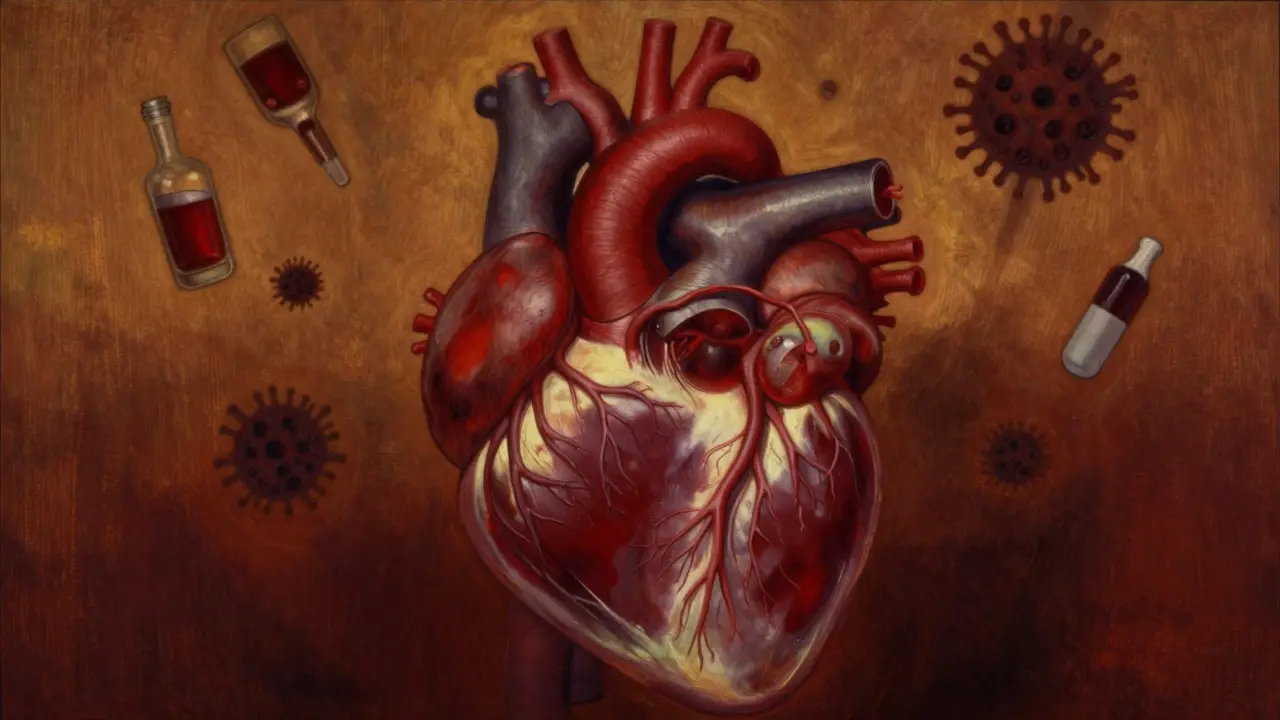
When your heart muscle doesn’t work right, it doesn’t just feel like fatigue-it can be life-threatening. Cardiomyopathy isn’t one disease. It’s a group of conditions that change the structure and function of your heart muscle, making it harder to pump blood. The three main types-dilated, hypertrophic, and restrictive-each behave differently, cause different symptoms, and need totally different treatments. Knowing which one you’re dealing with isn’t just helpful; it’s critical.
Dilated Cardiomyopathy: The Enlarged, Weakened Heart
Dilated cardiomyopathy (DCM) is the most common type, making up about half of all cases. Imagine your heart’s main pumping chamber-the left ventricle-stretching out like an overinflated balloon. The walls get thin, the chamber gets bigger, and the muscle loses its strength. This isn’t just about size. It’s about function. The heart can’t squeeze hard enough to push blood out, leading to heart failure.
What causes this? Sometimes, it’s genetic. Mutations in genes like TTN or LMNA can run in families, passed down from parent to child. But many cases have no clear family history. Alcohol abuse-more than 80 grams a day for over five years-can directly poison heart cells. Viruses like coxsackievirus B3 can trigger inflammation that leaves permanent damage. Chemotherapy drugs like doxorubicin, especially at high cumulative doses, are another known trigger. Autoimmune diseases like sarcoidosis can also attack the heart muscle.
Doctors diagnose DCM with an echocardiogram. If the left ventricle is more than 55 mm wide in men or 50 mm in women, and the ejection fraction (how much blood gets pumped out) is below 40%, it’s a clear sign. Cardiac MRI adds more detail, showing scarring or fibrosis in the muscle tissue. About 25-35% of cases are inherited, so genetic testing is often recommended if there’s a family history of sudden cardiac death or heart failure.
Treatment focuses on easing the strain and improving function. Medications like sacubitril/valsartan (brand name Entresto) have been shown to reduce hospitalizations and death by 20% compared to older drugs like enalapril. Beta-blockers slow the heart, reduce workload, and improve long-term survival. SGLT2 inhibitors, originally for diabetes, now show strong benefits for heart failure patients regardless of diabetes status. In severe cases, an implantable defibrillator may be needed to prevent sudden death from dangerous rhythms. For those who don’t respond, a heart transplant may be the only option.
Hypertrophic Cardiomyopathy: The Thickened, Stiff Heart
Hypertrophic cardiomyopathy (HCM) is the opposite problem: the heart muscle gets too thick, not too thin. This isn’t from high blood pressure or athletic training. It’s a genetic condition. Mutations in genes like MYH7 or MYBPC3 cause heart cells to grow abnormally, forming disorganized bundles that make the muscle stiff and less flexible.
It affects about 1 in 500 people, but many don’t know they have it. That’s dangerous. HCM is the most common cause of sudden cardiac death in young athletes under 35. During intense exercise, the thickened muscle can block blood flow out of the heart, or trigger deadly arrhythmias. In 70% of cases, there’s a physical obstruction-the septum bulges into the outflow tract, creating a pressure gradient over 30 mmHg. This causes chest pain, dizziness, and shortness of breath with even mild activity.
Diagnosis starts with an echocardiogram. A wall thickness of 15 mm or more (or 13 mm if a close relative has HCM) confirms it. Genetic testing finds a mutation in about 60% of cases. Cardiac MRI shows the exact location and extent of thickening, especially if the echo is unclear. A family history of sudden death at a young age is a major red flag.
Treatment is tailored. Beta-blockers or calcium channel blockers help relax the muscle and improve filling. For those with obstruction, disopyramide can reduce the blockage. If medications aren’t enough, doctors may perform a septal myectomy (surgical removal of part of the thickened wall) or alcohol septal ablation (injecting alcohol to shrink the area). Both reduce symptoms in 85% of patients. An implantable defibrillator is recommended for those at high risk of sudden death-especially if they’ve had fainting spells or dangerous heart rhythms. A new drug, mavacamten (Camzyos), approved in 2022, directly targets the overactive heart muscle and has reduced obstruction by 80% in clinical trials.

Restrictive Cardiomyopathy: The Stiff, Non-Compliant Heart
Restrictive cardiomyopathy (RCM) is the rarest, making up only 5-10% of cases. Unlike the others, the heart muscle doesn’t get big or thick-it stays normal size. But it turns rigid, like a dried-out sponge. The problem isn’t pumping; it’s filling. The ventricles can’t relax enough to let blood in, so pressure builds up in the lungs and veins.
RCM is almost always caused by something else infiltrating the heart. Amyloidosis (60% of cases) is the biggest culprit-abnormal proteins build up like plaque in the muscle. Sarcoidosis (15%) forms inflammatory granulomas. Hemochromatosis (10%) dumps too much iron into organs. Fabry disease (5%) stores fatty substances that damage cells. These conditions don’t just affect the heart-they affect kidneys, nerves, and skin too.
Diagnosis is tricky. Echocardiography shows a normal-sized heart with a classic “restrictive filling pattern”: blood rushes in early (high E wave), then stops abruptly (short deceleration time under 150 ms). The ejection fraction stays above 50%, which can mislead doctors into thinking the heart is fine. Cardiac MRI is key-it shows late gadolinium enhancement in a patchy, non-coronary pattern, and measures extracellular volume over 35%, indicating fibrosis. A biopsy is often needed to confirm amyloid or sarcoidosis.
Treatment depends entirely on the root cause. For light-chain amyloidosis, drugs like daratumumab or tafamidis can slow progression. Tafamidis, while expensive at $225,000 a year in the U.S., improves walking distance by 25 meters in six months. For hemochromatosis, regular phlebotomy (blood removal) reduces iron overload. For sarcoidosis, immunosuppressants may help. But if the damage is advanced, a heart transplant is often the only option. Survival rates are lower than the other types-only 30-50% survive five years, depending on the underlying disease.
Why the Difference Matters
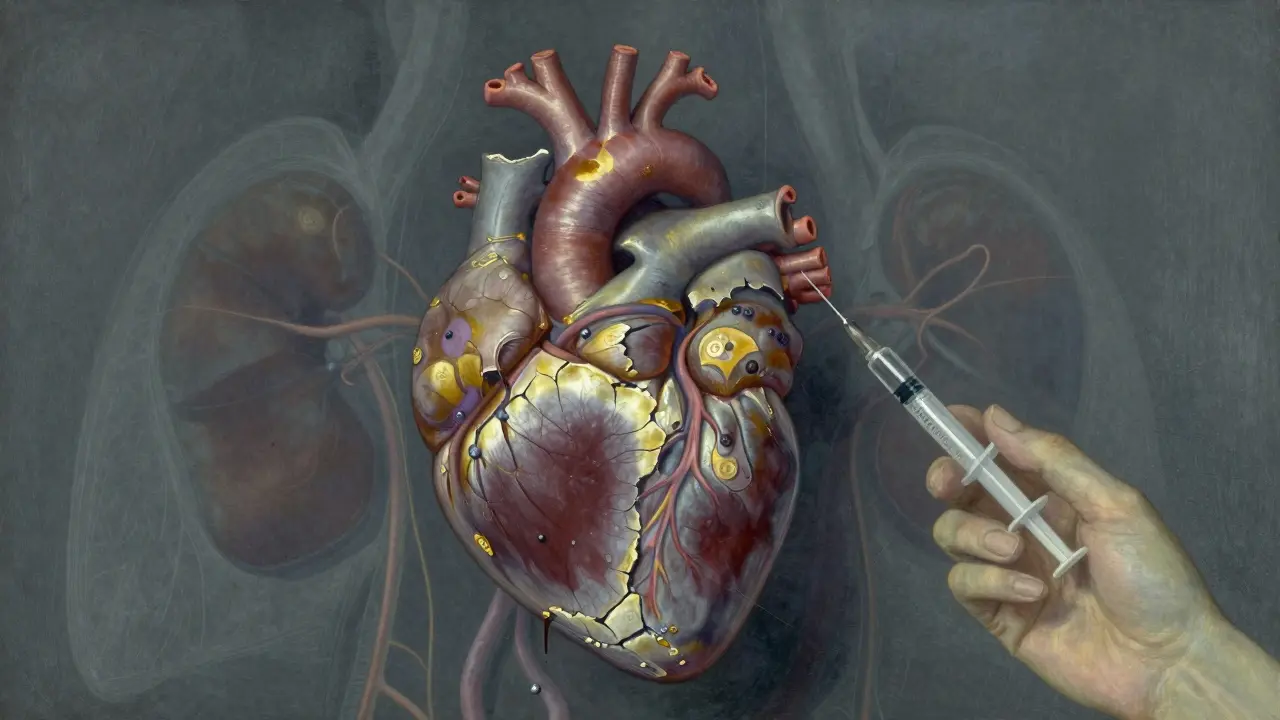
These three types might seem similar because they all lead to heart failure-but they’re not interchangeable. Mistaking one for another can be deadly. Giving a beta-blocker to someone with RCM caused by amyloidosis won’t fix the protein buildup. Skipping genetic testing in HCM means family members might not get screened, putting them at risk. Failing to rule out alcohol use in DCM means the patient keeps drinking, and the damage worsens.
Modern guidelines emphasize that cardiomyopathy must be classified by cause, not just appearance. Ischemic heart disease from blocked arteries isn’t cardiomyopathy-it’s a separate condition that can mimic it. That’s why doctors now use a combination of imaging, genetics, and biopsy to classify each case precisely.
There’s hope, too. In 2024, CRISPR-based gene therapy for HCM entered early human trials. For DCM, new drugs targeting heart metabolism are in Phase III trials. And better screening tools-like polygenic risk scores-are expected to identify at-risk people before symptoms appear, starting around 2026.
But access remains uneven. In rural areas, only 55% of counties have specialists who can diagnose these conditions correctly. Many patients wait months for an MRI or genetic test. Early diagnosis saves lives. If you have a family history of sudden cardiac death, unexplained heart failure, or fainting during exercise, get evaluated. Don’t wait for symptoms to get worse.
Can you have cardiomyopathy without symptoms?
Yes. Especially with hypertrophic cardiomyopathy, many people live for years without knowing they have it. Symptoms like shortness of breath or dizziness often only appear during physical exertion. That’s why family screening is so important-if one person is diagnosed, close relatives should get checked, even if they feel fine.
Is cardiomyopathy hereditary?
In many cases, yes. About one-third of dilated cardiomyopathy cases and up to 60% of hypertrophic cases are inherited. Restrictive cardiomyopathy is less often genetic, but conditions like Fabry disease and certain forms of amyloidosis run in families. Genetic testing can identify mutations and help determine risk for relatives.
Can exercise worsen cardiomyopathy?
It depends on the type. People with hypertrophic cardiomyopathy are often advised to avoid intense competitive sports because of the risk of sudden death. For dilated cardiomyopathy, moderate exercise is usually safe and even beneficial-once stabilized with medication. Restrictive cardiomyopathy patients need individualized advice, as physical stress can increase pressure in the heart and lungs. Always consult a cardiologist before starting or changing an exercise routine.
What’s the difference between restrictive cardiomyopathy and constrictive pericarditis?
They look very similar on tests-both cause stiff hearts and poor filling. But constrictive pericarditis is caused by a thickened, scarred outer lining (pericardium), not the heart muscle itself. The key difference? Pericarditis can often be fixed with surgery to remove the scar tissue. Cardiomyopathy cannot. Doctors use cardiac MRI and sometimes a right heart catheterization to tell them apart, because treatment is completely different.
Are there new treatments on the horizon?
Yes. For HCM, mavacamten is already approved and more targeted drugs are coming. For DCM, gene therapies like AAV1/SERCA2a are in trials. For RCM, drugs that break down amyloid proteins (like tafamidis and daratumumab) are improving survival. CRISPR gene editing is being tested to correct mutations in the MYBPC3 gene-early trials started in 2024. These aren’t just lab experiments-they’re becoming real treatment options.






Written by Martha Elena
I'm a pharmaceutical research writer focused on drug safety and pharmacology. I support formulary and pharmacovigilance teams with literature reviews and real‑world evidence analyses. In my off-hours, I write evidence-based articles on medication use, disease management, and dietary supplements. My goal is to turn complex research into clear, practical insights for everyday readers.
All posts: Martha Elena