
When treating influenza, Oseltamivir a neuraminidase inhibitor sold under the brand name Tamiflu, works by blocking the release of new viral particles from infected cells is often the go‑to prescription. But the market now offers several other options, and clinicians need a clear picture of how they stack up.
Why antiviral choice matters
Influenza can progress from a simple cough to pneumonia, especially in the very young, the elderly, and people with chronic diseases. Early antiviral therapy (within 48 hours of symptom onset) cuts the risk of complications by about 50 % and shortens illness by one to two days. Selecting the right drug hinges on efficacy, safety, resistance patterns, administration route, and cost.
How Oseltamivir works
Oseltamivir belongs to the neuraminidase‑inhibitor class. By binding to the viral neuraminidase enzyme, it prevents the cleavage of sialic acid residues, which blocks the release of progeny virions from the host cell surface. This limits the spread of infection within the respiratory tract.
- Mechanism: Neuraminidase inhibition
- Typical adult dose: 75 mg twice daily for five days
- Formulation: Oral capsules or liquid suspension
- Onset of action: Within 12-24 hours after the first dose
Common side effects include nausea, vomiting, and headache. Most patients tolerate the drug well, and severe adverse events are rare.
Key criteria for comparing flu antivirals
When we line up the available medicines, we look at six practical dimensions:
- Drug class and mechanism
- Route of administration (oral, inhaled, IV)
- Dosage convenience
- Efficacy in clinical trials (time to alleviation, complication reduction)
- Resistance prevalence in the current season
- Cost to the patient or health system
These factors help clinicians match a drug to a patient’s circumstances-whether they can swallow pills, need rapid IV therapy, or live in an area where resistance is climbing.
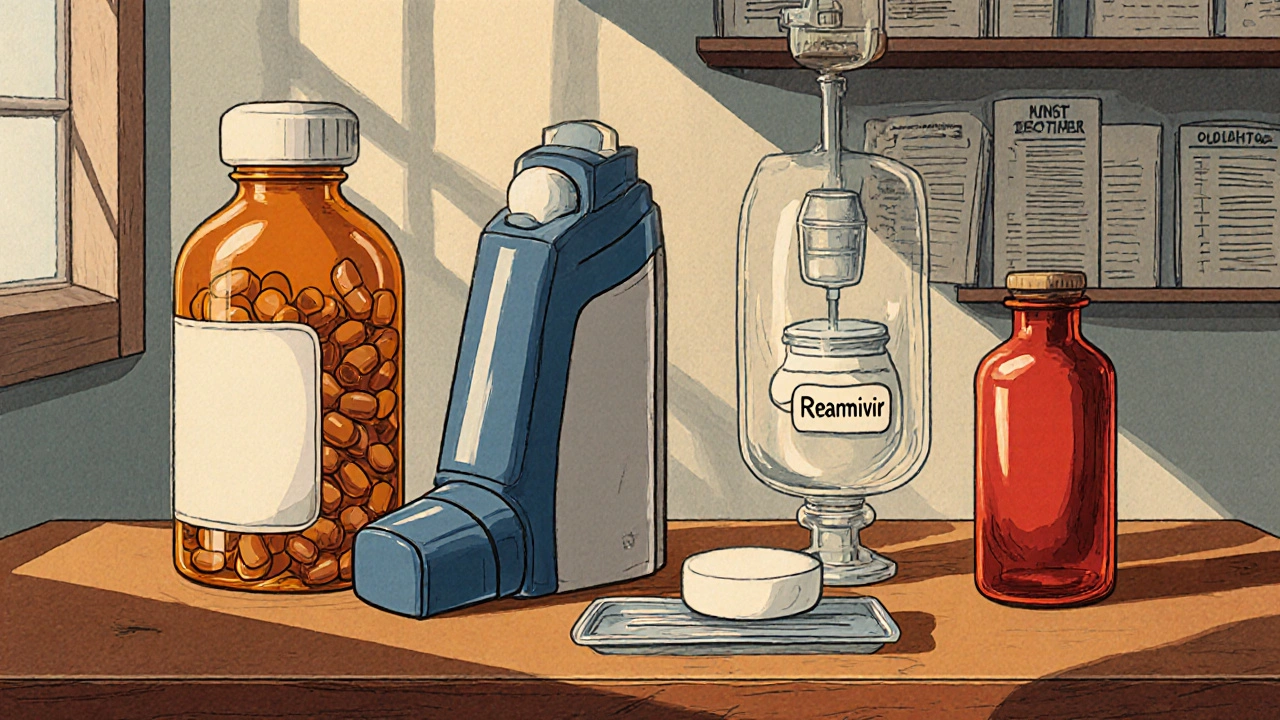
Comparison table of major influenza antivirals
| Drug | Class | Administration | Typical Adult Dose | FDA Approval Year | Resistance Rate (2023‑2024) |
|---|---|---|---|---|---|
| Oseltamivir | Neuraminidase inhibitor | Oral | 75 mg PO BID ×5 days | 1999 | ≈1 % (global) |
| Zanamivir | Neuraminidase inhibitor | Inhalation | 10 mg inhaled BID ×5 days | 1999 | ≈0.5 % (mainly H1N1) |
| Baloxavir marboxil | Cap‑dependent endonuclease inhibitor | Oral | 40 mg (≤80 kg) or 80 mg (>80 kg) single dose | 2018 | ≈2 % (some PA‑I38 T/M mutations) |
| Peramivir | Neuraminidase inhibitor | IV infusion | 600 mg IV single dose (adults) | 2014 | ≈0.8 % (mostly in hospitalized cases) |
| Rimantadine | M2 ion‑channel blocker | Oral | 100 mg PO BID ×5 days | 1994 (withdrawn for flu) | ≈90 % (A/H3N2, A/H1N1) |
Individual drug profiles
Zanamivir an inhaled neuraminidase inhibitor marketed as Relenza, delivers medication directly to the respiratory tract is useful for patients who cannot tolerate oral meds, such as those with severe nausea. However, proper inhaler technique is crucial; misuse can lead to sub‑therapeutic exposure.
- Pros: Minimal systemic side effects, effective in asthmatics when used correctly
- Cons: Requires a breath‑actuated inhaler, not for patients with underlying airway disease that limits inhalation
Baloxavir marboxil a novel cap‑dependent endonuclease inhibitor (brand name Xofluza) that blocks viral mRNA synthesis offers a single‑dose regimen, which improves adherence. Clinical trials showed non‑inferior symptom reduction compared with oseltamivir, especially in high‑risk groups.
- Pros: One‑time oral dose, rapid viral load decline
- Cons: Slightly higher cost, emergence of PA‑I38 mutations in some regions
Peramivir an IV neuraminidase inhibitor useful for hospitalized or severely ill patients delivers high plasma concentrations quickly, making it a solid choice when oral intake is impossible.
- Pros: Immediate bioavailability, helpful in ICU settings
- Cons: Requires IV access, higher administration cost
Rimantadine an M2 ion‑channel blocker historically used for influenza A has fallen out of favor because more than 90 % of circulating strains now carry resistance mutations, leading the CDC to recommend against its use for flu.
Decision guide: matching drug to patient
Below is a quick “if‑then” flow that many clinicians find handy:
- If the patient can swallow pills and presents within 48 hours → Oseltamivir (well‑studied, generic, affordable).
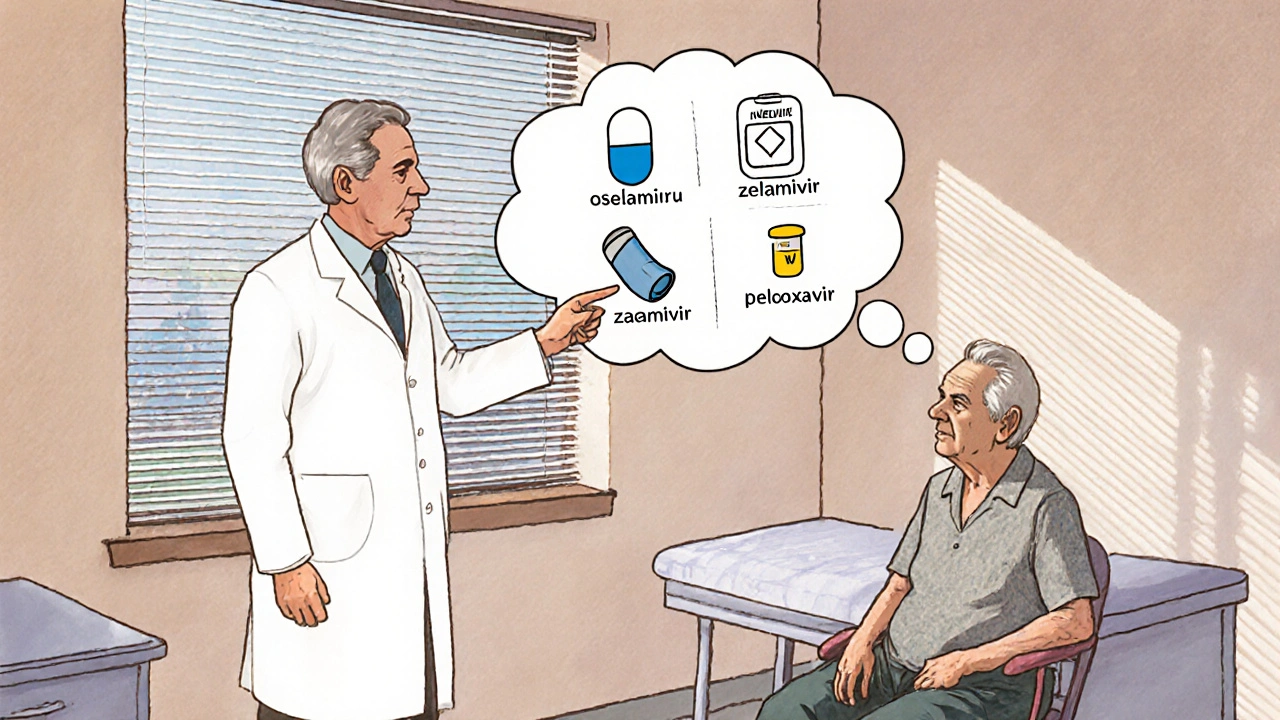
- If oral intake is limited by vomiting or dysphagia → consider Peramivir (IV) or Zanamivir (inhaled) if the patient can use a device.
- If simplifying the regimen is a priority (e.g., travel‑related flu) → Baloxavir marboxil (single dose).
- If the circulating strain shows high neuraminidase‑inhibitor resistance (rare, but possible in some Asian locales) → consult local surveillance; consider combination therapy or experimental agents.
Cost considerations also shape the choice. Generic oseltamivir typically costs US$10‑15 for a five‑day course in the US, whereas baloxavir can exceed US$200 per dose in many markets.
Resistance trends as of 2025
Global surveillance from the WHO’s FluNet indicates that neuraminidase‑inhibitor resistance remains low overall (≈1 % for oseltamivir, <1 % for zanamivir). However, isolated clusters of high‑level resistance have emerged in East Asia, often linked to prolonged antiviral use in hospitals.
Baloxavir resistance, driven by PA‑I38 T/M substitutions, has risen to about 2 % in 2024‑2025, prompting the CDC to recommend susceptibility testing when possible for hospitalized patients.
Rimantadine resistance is virtually universal, making it obsolete for seasonal flu.
Practical prescribing tips
- Confirm influenza diagnosis with rapid antigen test or PCR before starting therapy, especially during off‑season spikes.
- Document symptom onset time; therapy beyond 48 hours offers diminishing returns unless the patient is high‑risk.
- Check for drug interactions: oseltamivir has minimal CYP involvement, but baloxavir is a substrate of OATP1B1/3 and may interact with certain statins.
- Educate patients on completing the full course, even if they feel better after 2‑3 days.
- For pediatrics, weight‑based dosing is essential. Oseltamivir dosage is 3 mg/kg (max 75 mg) PO BID.
Future outlook
Research into next‑generation antivirals targets the viral polymerase complex and host‑cell entry pathways, aiming for broader activity against both influenza A and B. Combination regimens (e.g., neuraminidase inhibitor + baloxavir) are under investigation to curb resistance emergence.
Is oseltamivir still the best first‑line flu drug?
For most healthy adults who can start treatment within 48 hours, oseltamivir remains the most cost‑effective first‑line option because of its established efficacy, generic availability, and low resistance rates.
When should I choose baloxavir over oseltamivir?
Baloxavir is handy when a single dose improves adherence-e.g., during travel, in patients who dislike pills, or when rapid viral load decline is desired. It’s also an alternative if local resistance data suggest reduced oseltamivir activity.
Can I give zanamivir to a child?
Yes, zanamivir is approved for children ≥5 years old (2 mg inhaled BID). Proper inhaler technique must be taught, and the medication should be avoided in children with severe asthma.
What are the main side effects of peramivir?
Peramivir is generally well‑tolerated. Reported adverse events include mild diarrhea, infusion‑site reactions, and occasional elevated liver enzymes.
Why is rimantadine no longer recommended?
Over 90 % of circulating influenza A strains carry mutations that render rimantadine ineffective, so public‑health agencies have withdrawn it from seasonal flu treatment guidelines.







Written by Martha Elena
I'm a pharmaceutical research writer focused on drug safety and pharmacology. I support formulary and pharmacovigilance teams with literature reviews and real‑world evidence analyses. In my off-hours, I write evidence-based articles on medication use, disease management, and dietary supplements. My goal is to turn complex research into clear, practical insights for everyday readers.
All posts: Martha Elena