
Imagine your child is having an asthma attack at school. The teacher reaches for the inhaler, presses the button, and tells your child to breathe. But most of that medicine just hits the back of their throat, leaving the lungs starving for relief. It's a common, stressful scenario, but there is a simple tool that changes the game: the spacer. Using a asthma spacers isn't just a "bonus"-it's the difference between a medication that works and one that is mostly wasted.
Quick Takeaways for Parents
- Spacers are essential: They ensure more medicine reaches the lungs and less stays in the mouth.
- Better than nebulizers: For mild to moderate attacks, MDI + spacer is as effective as a nebulizer and often reduces hospital visits.
- School plans are non-negotiable: A written Asthma Action Plan and a dedicated spacer at school reduce absenteeism by up to 37%.
- Technique is everything: Proper cleaning (soap and water, air dry) prevents static electricity from trapping the medicine.
What Exactly is a Spacer and Why Does Your Child Need One?
A Spacer is a valved holding chamber that attaches to a metered-dose inhaler (MDI). Instead of the medication blasting into the throat at high speed, the spacer holds the medicine in a cloud for a few seconds. This allows your child to breathe it in slowly and deeply, ensuring the drug actually reaches the lower airways where the inflammation is happening.
For kids under five, the struggle is real. Coordinating a deep breath with the exact moment you press the puffer is nearly impossible for a toddler. Spacers remove that need for perfect timing. In fact, research shows that children using spacers have significantly better medication delivery than those using an inhaler alone. When we talk about MDI (Metered Dose Inhalers), the spacer acts as the critical bridge that makes the medicine usable.
Comparing Delivery Methods: Spacer vs. Nebulizer
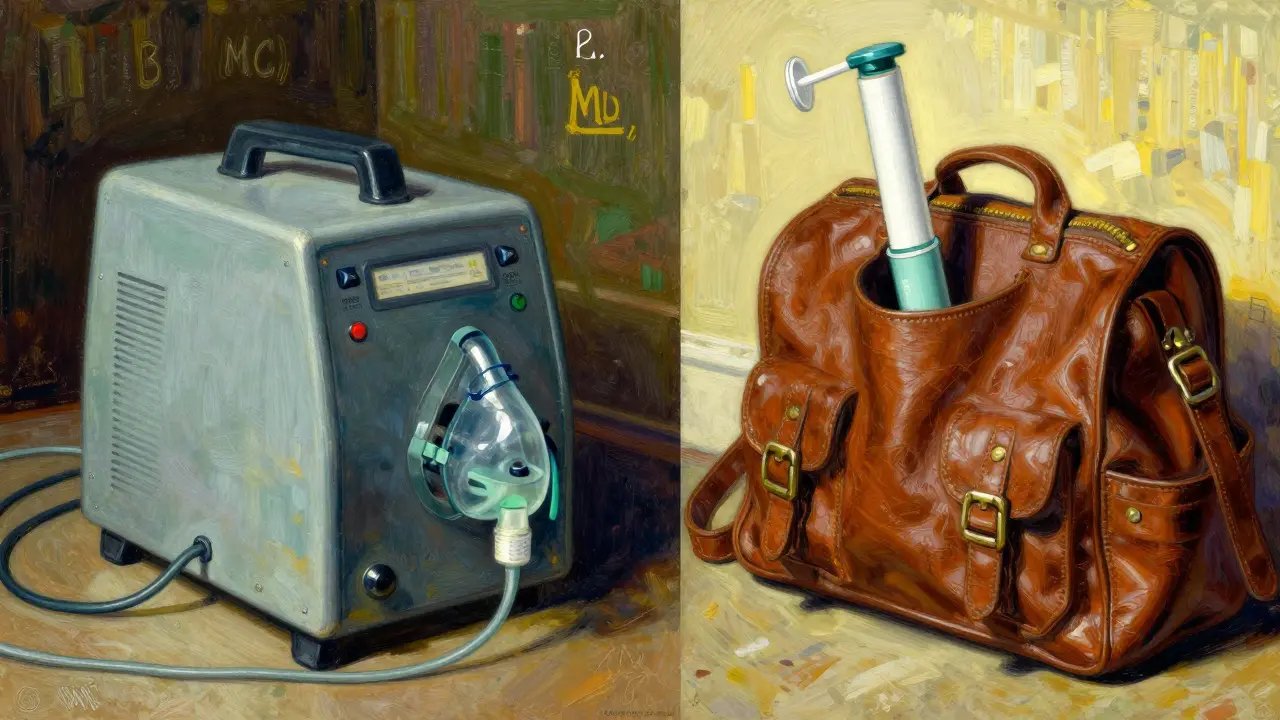
Many parents assume that a bulky nebulizer machine is "stronger" or more effective for a severe wheeze. However, the data tells a different story. For most children with mild to moderate asthma, a puffer with a spacer is just as effective as a nebulizer. In some cases, it's actually better.
| Feature | MDI + Spacer | Nebulizer |
|---|---|---|
| Speed of Setup | Instant / Portable | Slower (requires machine/power) |
| Lung Deposition | High (with correct technique) | High |
| Hospitalization Risk | Lower (proven reduction in kids <5) | Standard |
| Portability | High (fits in a school bag) | Low (bulky equipment) |
| Cost of Use | Lower per dose | Higher overall healthcare costs |
A systematic review of nearly 1,900 children found that using a spacer reduced the odds of hospital admission for acute wheezing compared to nebulizers. Not only is it faster, but it also tends to be less frightening for the child, as they don't have to sit still under a mask for 15 minutes while a machine hums in their ear.
The Golden Rules of Spacer Technique
Having a spacer is one thing; using it correctly is another. A common mistake is treating the spacer like a toy or ignoring its maintenance. If you don't follow the physics of the device, the medicine sticks to the plastic walls instead of going into the lungs.
Here is the step-by-step process for a successful dose:
- Positioning: Have your child sit upright. Keep the spacer and puffer level-don't tilt it up or down.
- The Breath: Ask them to breathe out gently first to clear some space in the lungs.
- The Trigger: Press the puffer button once. Just one. Multiple puffs at once create a cloud that's too dense to breathe in effectively.
- The Intake: The child should breathe in and out normally four times. This takes about 15 to 20 seconds. If they just take one quick breath, they're wasting half the dose.
Pro Tip on Cleaning: Never wipe the inside of a spacer with a dry cloth. This creates static electricity, which acts like a magnet for the medication, trapping it on the walls of the tube. Instead, wash it with warm water and mild dish soap, then let it air dry. Do not rinse it with a high-pressure stream; just let it sit. This keeps the chamber neutral and the medicine moving.
Navigating Asthma at School
School is where asthma management often falls apart. Between the fear of being "different" and the lack of teacher training, many kids skip their doses. Adolescents are particularly prone to this; they often feel the spacer is too bulky or embarrassing to carry, leading to a significant drop in effective technique compared to younger children.
To fix this, you need a comprehensive Asthma Action Plan. This isn't just a note saying "my child has asthma." It's a formal document that tells the school exactly what to do based on symptoms. It should include:
- Green Zone: Daily maintenance (what to do when they feel fine).
- Yellow Zone: Early warning signs (coughing, slight wheeze) and the specific dose of rescue medication needed.
- Red Zone: Emergency steps and when to call 911 or an ambulance.
Schools that implement these policies see a massive drop in absenteeism-roughly 37%-because kids are managed on-site rather than being sent home or to the ER. Make sure the school nurse or teacher has a 15-minute training session on the spacer. A child's life can depend on whether the adult helping them knows to wait for those four breaths instead of one.

Common Pitfalls and Troubleshooting
Even the most diligent parents hit roadblocks. If your child's symptoms aren't improving despite using a spacer, check for these common issues:
The "Wet Spacer" Trap: If a spacer is wet, it will not work. The medication clings to the moisture, and nothing reaches the lungs. If you're in a pinch and the spacer is damp, it's actually safer to use the puffer alone (though it's less effective) until you have a dry spacer.
The Mask Fit: For toddlers, the seal between the mask and the face is everything. If air is leaking out the sides, the medicine is escaping. Ensure the mask is snug but not crushing the nose. As soon as the child is old enough to seal their lips around a mouthpiece, make the switch; it's much more efficient than a mask.
The Adolescent Ego: For older kids, the bulky plastic tube is an eyesore. Talk to your doctor about compact, high-efficiency spacers or "pocket" versions that are less conspicuous. Remind them that a 20-second use of a spacer is better than a three-day stay in the hospital.
Can I use a spacer without a puffer?
No. A spacer is not a medication; it is a delivery device. It must be attached to a metered-dose inhaler (MDI) to hold the medicine. Without the puffer, the spacer is just an empty plastic tube.
How often should I clean my child's spacer?
Most health guidelines recommend cleaning spacers once a week. Use mild dish soap and warm water, then allow it to air dry completely. Avoid using tissues or cloths to dry the inside to prevent static buildup.
Is a spacer really as good as a nebulizer for severe attacks?
For mild to moderate exacerbations, yes. Evidence from the Cochrane database shows that MDI with a spacer is as effective as nebulizers and can even lead to shorter hospital stays and lower costs. However, for life-threatening emergencies, medical professionals will determine the best route.
What should I do if my child refuses to use the spacer at school?
This is common with teenagers. Start by discussing the "why"-explain that the spacer makes the medicine work faster and better. Work with the school to find a private place for them to use it, or look into smaller, more discrete spacer models with your pediatrician.
Does the type of puffer matter when using a spacer?
Yes. Spacers are designed for metered-dose inhalers (MDI). They do not work with dry powder inhalers (DPIs), which require a strong, fast breath to pull the powder into the lungs. Always check the compatibility of your spacer with your specific medication brand.
Moving Forward: Your Asthma Checklist
Managing pediatric asthma is a team effort between the home, the clinic, and the classroom. To make sure nothing slips through the cracks, keep this simple checklist in mind:
- [ ] The Gear: Do we have a backup spacer in case the main one gets wet?
- [ ] The Plan: Is the Asthma Action Plan signed by the doctor and shared with all school staff?
- [ ] The Technique: Can the child (or teacher) demonstrate the "four-breath" rule?
- [ ] The Maintenance: Is the spacer on a weekly cleaning schedule?
- [ ] The Review: When was the last time we checked if the mask still fits the child's growing face?







Written by Martha Elena
I'm a pharmaceutical research writer focused on drug safety and pharmacology. I support formulary and pharmacovigilance teams with literature reviews and real‑world evidence analyses. In my off-hours, I write evidence-based articles on medication use, disease management, and dietary supplements. My goal is to turn complex research into clear, practical insights for everyday readers.
All posts: Martha Elena