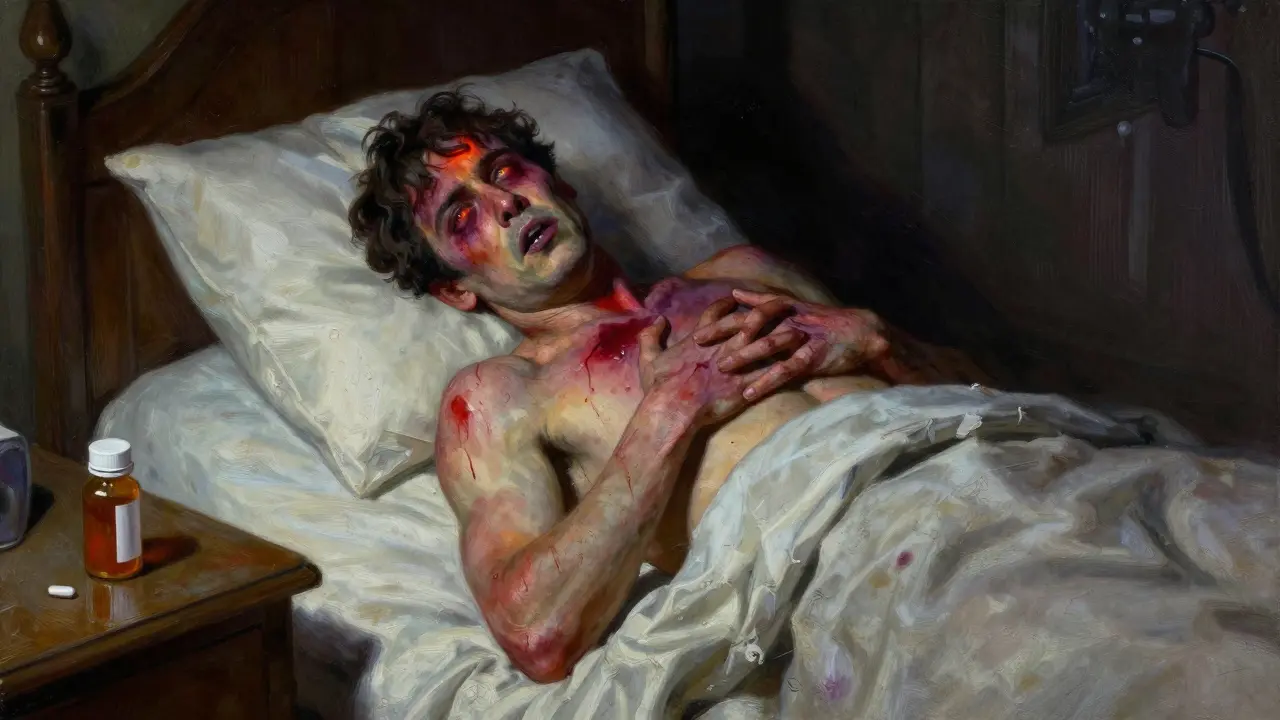
Stevens-Johnson Syndrome and Toxic Epidermal Necrolysis aren’t just rare skin conditions-they’re life-threatening emergencies triggered by your own body’s reaction to a medication. Imagine waking up with a fever, sore throat, and burning eyes, then watching your skin start to blister and peel off like a sunburn gone horribly wrong. That’s what these conditions look like in real time. They don’t happen to everyone, but when they do, the stakes are incredibly high. Between 1 and 6 people out of every million experience this each year. Most cases are caused by drugs, not infections. And the damage isn’t just skin-deep-it can leave lasting scars on your body, eyes, and mind.
How SJS and TEN Are Connected
Stevens-Johnson Syndrome (SJS) and Toxic Epidermal Necrolysis (TEN) are two ends of the same spectrum. Doctors used to think they were different diseases, but now they know better. The only real difference is how much of your skin comes off. If less than 10% of your body surface area is affected, it’s called SJS. If it’s more than 30%, it’s TEN. Anything in between? That’s the overlap form. The more skin that detaches, the higher the risk of death. In SJS, about 5-15% of people don’t survive. In TEN, that number jumps to nearly 25%. The process is the same: your immune system goes rogue, attacks your skin cells, and causes them to die in massive numbers. The result? Raw, oozing wounds that look like severe burns.
What Happens Before the Skin Starts Peeling
It doesn’t start with blisters. It starts with something that feels like the flu. You get a fever above 38.9°C (102°F), your throat hurts, your eyes burn, you feel exhausted, and you might have a cough. This phase lasts one to three days-sometimes longer. You might go to the doctor thinking you have a bad cold or strep throat. But here’s the catch: you’ve probably taken a new medication in the last 1 to 3 weeks. That’s the hidden trigger. In some cases, especially if you’ve taken the drug before, symptoms can appear within 48 hours. The first visible sign is flat, red or purple spots on your chest or back. They don’t itch. They hurt. And within a day or two, they turn into blisters that merge into large sheets of peeling skin. This is when you need to get to a hospital-now.
The Role of Medications
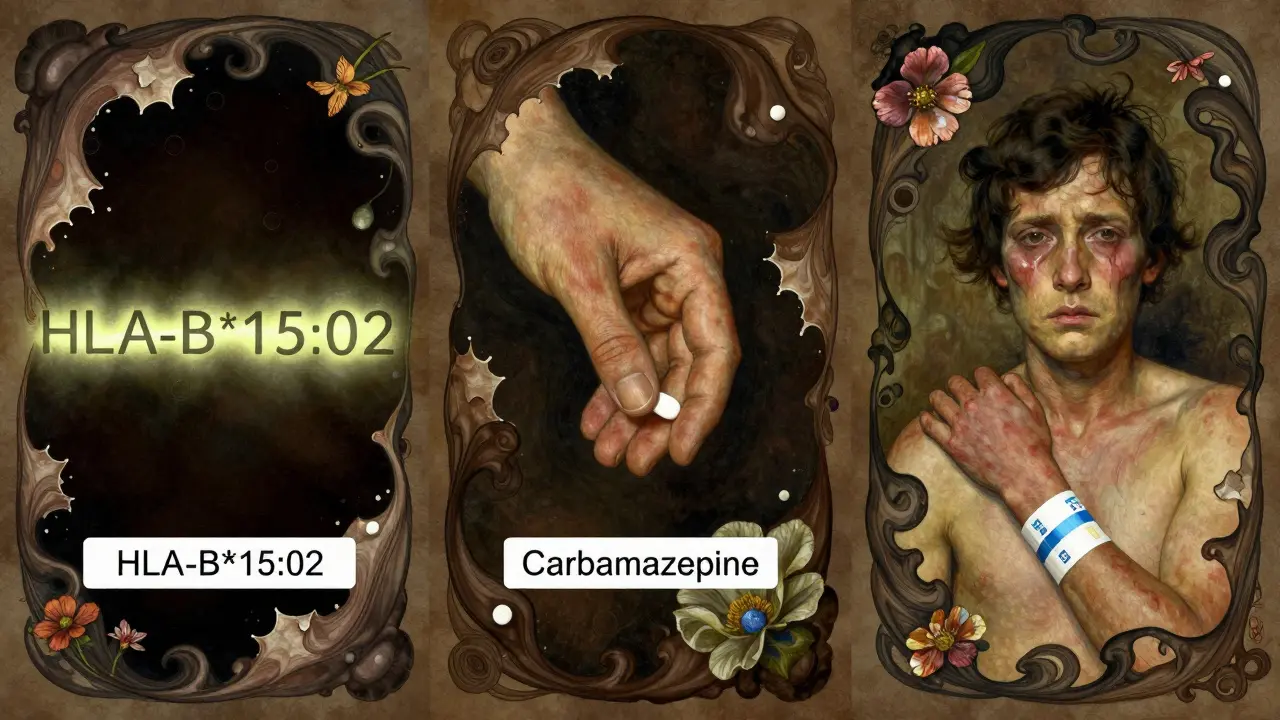
Over 80% of SJS and TEN cases are caused by drugs. Some medications carry a much higher risk than others. Carbamazepine (used for seizures and nerve pain), phenytoin, and lamotrigine account for about 30% of cases. Sulfonamide antibiotics like trimethoprim-sulfamethoxazole make up another 20%. Allopurinol, used for gout, is responsible for 15%. Even common painkillers like ibuprofen and naproxen have been linked, though less often. The problem isn’t just the drug itself-it’s your genes. If you carry the HLA-B*15:02 gene variant, taking carbamazepine increases your risk of SJS/TEN by up to 1,000 times. If you have HLA-B*58:01, allopurinol becomes far more dangerous. That’s why in places like Taiwan and parts of the U.S., doctors now test patients for these genes before prescribing these drugs. It’s not routine everywhere yet, but it’s becoming standard in high-risk populations.
Why Your Skin Detaches
It’s not an allergic reaction like hives or swelling. This is an immune attack at the cellular level. Specialized immune cells-cytotoxic T cells and natural killer cells-release a protein called granulysin. This protein punches holes in your skin cells, causing them to die en masse. The skin layers separate at the junction between the epidermis and dermis. The result? Large areas of skin peel away with minimal pressure-a sign doctors call Nikolsky’s sign. A skin biopsy shows full-thickness death of the epidermis with almost no inflammation underneath, which is different from other blistering diseases. That’s why diagnosis matters. Mistaking it for staphylococcal scalded skin syndrome or another condition can delay treatment and cost lives.
What Happens in the Hospital
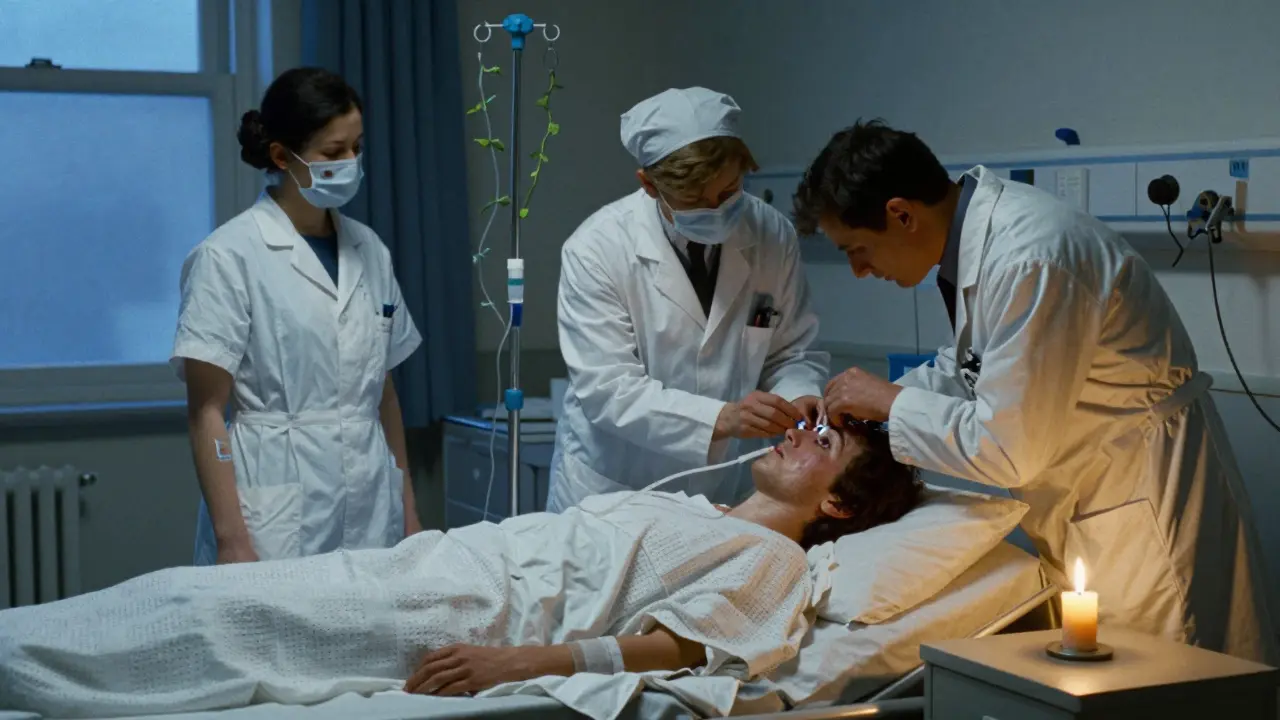
If you’re suspected of having SJS or TEN, you’re not going to a regular ward. You’re going to a burn unit or intensive care. The first step? Stop every non-essential medication immediately. Finding the culprit isn’t always easy, but it’s critical. Fluid loss is massive-up to three or four times what your body normally needs. You’ll get IV fluids to replace what’s leaking out through your damaged skin. Wounds are covered with non-stick dressings, not regular bandages. Pain control is intense. Many patients need opioid-level pain meds. Eye care is non-negotiable. Up to 80% of survivors develop chronic dry eyes, corneal scarring, or even vision loss. Daily eye exams by an ophthalmologist are required to prevent eyelids from sticking to the eyeball. Mouth sores make eating impossible, so feeding tubes are often needed. Infections are the biggest killer-bacteria invade the raw skin like a wound from a car crash.
How Doctors Predict Survival
There’s a tool called SCORTEN that helps doctors estimate your chance of survival within the first 24 hours. It looks at seven things: your age (over 40), whether you have cancer, your heart rate (over 120 beats per minute), how much skin has detached (over 10%), your blood urea level (over 10 mmol/L), your blood sugar (over 14 mmol/L), and your bicarbonate level (under 20 mmol/L). Each factor adds risk. One factor? Around 10% chance of death. Three factors? 35%. Five or more? Up to 90%. That’s why early transfer to a specialized unit matters so much. The faster you get care, the better your odds.
Treatments That Work-and Those That Don’t
There’s no magic bullet. Intravenous immunoglobulin (IVIG) was once thought to help, but large studies showed it doesn’t reduce death rates. Steroids are controversial-they can suppress the immune system but also raise your risk of deadly infections. Some doctors use high-dose methylprednisolone early on, but it’s not proven. Cyclosporine, a drug used for organ transplants, has shown real promise. One 2016 study found that patients on cyclosporine had their death rate drop from 33% to just 12.5%. Even more exciting? Etanercept, a drug that blocks tumor necrosis factor (TNF), showed 0% mortality in a small 2019 study when given within 48 hours. It’s not FDA-approved for this yet, but it’s being used off-label in serious cases. Research is now focused on blocking granulysin directly-phase II trials for new inhibitors are expected to start soon.
Life After SJS or TEN
Surviving doesn’t mean you’re back to normal. Sixty to eighty percent of survivors deal with long-term problems. Your skin may be darker or lighter in patches. Nails can grow crooked or fall off. Scarring is common. For women, vaginal adhesions can form, requiring surgery. Men can develop urethral strictures. Eyes are the biggest concern-half to eight in ten survivors have chronic dry eyes, light sensitivity, or blurred vision. Some need lifelong eye drops, contact lenses, or even corneal transplants. And it’s not just physical. Forty percent of survivors develop post-traumatic stress disorder. The pain, the isolation, the fear of dying-those memories don’t fade. Counseling and support groups are as important as medical follow-up.
Can It Be Prevented?
Yes-and it’s already happening in some places. Taiwan started mandatory HLA-B*15:02 testing before prescribing carbamazepine in 2007. Within six years, SJS/TEN cases dropped by 80%. The U.S. FDA now recommends testing for HLA-B*58:01 before giving allopurinol to people of Asian descent. These aren’t just recommendations-they’re life-saving protocols. If you’re prescribed one of these high-risk drugs and you’re of Asian, African, or Mediterranean descent, ask your doctor about genetic testing. If you’ve had a mild rash or reaction to a drug before, never take it again without telling your doctor. Keep a list of all medications you’ve reacted to. That list could save your life.
What to Do If You Suspect SJS or TEN
If you’re on a medication and suddenly develop fever, painful mouth sores, red eyes, or a spreading rash that turns into blisters-go to the emergency room immediately. Don’t wait. Don’t call your doctor’s office. Don’t try to treat it at home. Bring your medication list. Tell them you’re worried about Stevens-Johnson Syndrome or Toxic Epidermal Necrolysis. Time is everything. The sooner you get into a burn unit or ICU, the better your chance of survival. And if you’ve survived it before? Never take the same drug again. Ever.
Can Stevens-Johnson Syndrome be caused by infections?
Yes, though it’s rare. About 10% of cases in children are triggered by infections, especially Mycoplasma pneumoniae. In adults, medications are the main cause-responsible for over 80% of cases. But if you’ve recently had a bad respiratory infection and then developed a rash and mouth sores, doctors will consider both possibilities.
Is Stevens-Johnson Syndrome contagious?
No. It’s not an infection. You can’t catch it from someone else. It’s a severe immune reaction to a drug or, less often, an infection in your own body. Being around someone with SJS or TEN poses no risk to you.
How long does it take to recover from SJS or TEN?
The acute phase lasts about 8 to 12 days. Skin starts to regrow after that, but full healing can take weeks to months. However, many complications-like eye damage, scarring, and psychological trauma-last years or even a lifetime. Recovery isn’t just about the skin healing; it’s about managing long-term health issues.
Are children at risk for Stevens-Johnson Syndrome?
Yes, but it’s less common than in adults. When it does happen in kids, infections like Mycoplasma pneumoniae are more likely triggers than medications. The same symptoms apply-fever, rash, mouth sores, skin peeling. Children often need specialized pediatric burn care and close eye monitoring.
What should I do if I’ve had SJS or TEN before?
Never take the drug that caused it again. Tell every doctor, pharmacist, and dentist you see. Keep a medical alert bracelet or card listing the drug and the reaction. Get genetic testing if you haven’t already-knowing your HLA status can prevent future reactions. And consider joining a survivor support group. You’re not alone, and sharing your experience can help others avoid the same fate.




Written by Martha Elena
I'm a pharmaceutical research writer focused on drug safety and pharmacology. I support formulary and pharmacovigilance teams with literature reviews and real‑world evidence analyses. In my off-hours, I write evidence-based articles on medication use, disease management, and dietary supplements. My goal is to turn complex research into clear, practical insights for everyday readers.
All posts: Martha Elena