
Choosing the right insulin for diabetes isn’t about picking the most advanced or expensive option-it’s about matching your life, your body, and your goals. Whether you’re newly diagnosed with type 1 diabetes or your type 2 diabetes has progressed beyond pills, insulin can be life-saving. But with so many types and regimens out there, it’s easy to feel overwhelmed. The good news? You don’t need to understand every detail to make a smart choice. You just need to know what matters most for you.
Understanding the Four Main Types of Insulin
Insulin isn’t one-size-fits-all. It’s broken down by how fast it starts working, when it peaks, and how long it lasts. These differences determine when and how you use it.Rapid-acting insulins like Humalog, NovoLog, and Apidra kick in within 10-15 minutes. They peak around 30-90 minutes and wear off in 3-5 hours. These are your mealtime insulins. You take them right before or even right after eating to handle the spike in blood sugar from food. Studies show they control post-meal glucose better than older short-acting insulins, with 25% fewer low blood sugar episodes.
Regular (short-acting) insulin, like Humulin R, takes longer-about 30 minutes to start. It peaks at 2-3 hours and lasts up to 8 hours. It’s cheaper and still used in some settings, but most people today prefer rapid-acting because it’s more flexible and matches meals better.
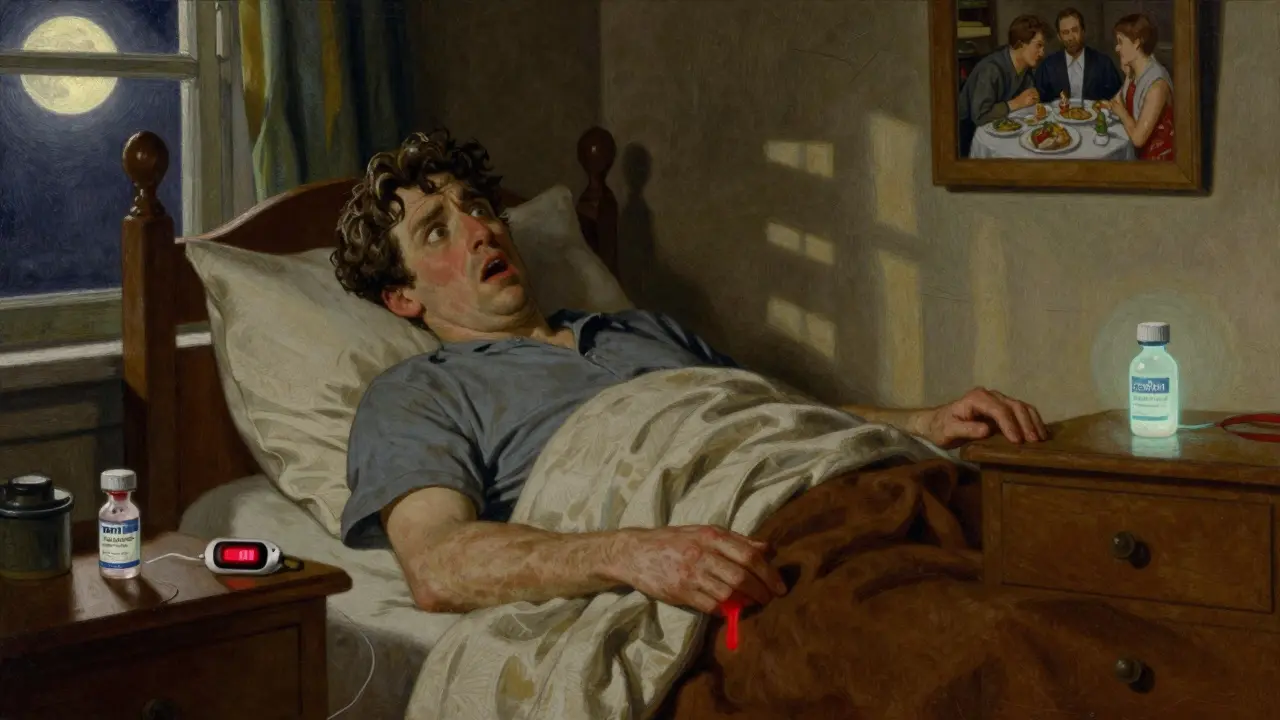
Intermediate-acting insulin, mostly NPH (like Humulin N), starts working in 1-2 hours, peaks between 4-12 hours, and lasts 12-18 hours. It’s often used twice daily. But here’s the catch: that peak can cause nighttime lows. Many people on NPH wake up with scary hypoglycemia because their blood sugar drops too low in the early morning hours.
Long-acting insulins are your background insulin. They don’t have a strong peak, so they give steady coverage all day. Lantus (glargine) lasts about 24 hours. Levemir (detemir) lasts 18-24 hours. Toujeo (glargine U300) lasts up to 36 hours. And Tresiba (degludec) goes beyond 42 hours-making it the longest-lasting option available. These are taken once or twice daily, no matter when you eat.
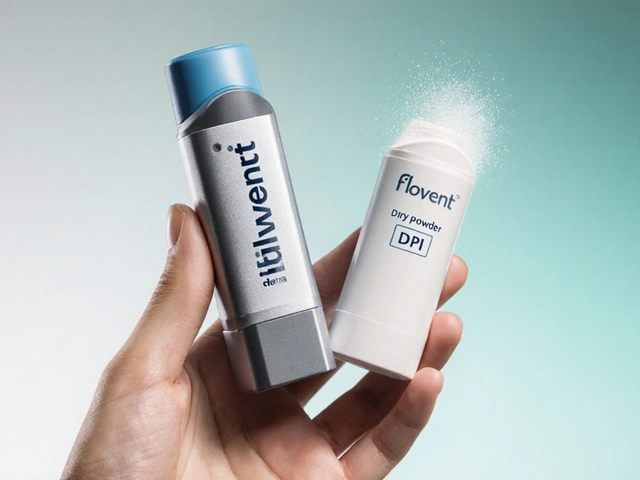
There’s also inhaled insulin-Afrezza. It works fast like rapid-acting insulin but doesn’t need a needle. It’s great for people with needle fear. But it’s expensive, and if you smoke or have lung issues, it’s not recommended.
How Insulin Regimens Work: Basal-Bolus vs. Premixed
You don’t just take one type of insulin. You combine them in a regimen that mimics how a healthy pancreas works.Basal-bolus therapy is the gold standard for type 1 diabetes and many with type 2. It means taking a long-acting insulin once or twice a day for background coverage (basal), plus rapid-acting insulin at each meal (bolus). This gives you control. You can adjust your meal doses based on what you eat, your activity, and your blood sugar. It’s more work, but it’s the most precise way to manage glucose.
For example, someone might take 20 units of Tresiba in the morning for all-day coverage, then 6 units of NovoLog at breakfast, 8 at lunch, and 7 at dinner. They check their blood sugar before each meal and adjust the bolus dose based on carb intake and how high their number is.
Premixed insulins, like Humalog Mix 75/25, combine 75% intermediate-acting and 25% rapid-acting in one shot. They’re convenient-only two injections a day, usually before breakfast and dinner. But you’re locked into fixed ratios. If you eat a big lunch one day, you can’t adjust your bolus without taking extra insulin. And if you skip a meal, you risk a low. They’re best for people with very predictable routines.
Choosing Based on Your Type of Diabetes
Type 1 diabetes means your body makes zero insulin. You need insulin-always. The American Diabetes Association says the standard is basal-bolus therapy with rapid- and long-acting analogs. Insulin pumps or hybrid closed-loop systems (like the MiniMed 780G) can help reduce A1C by 0.5-1.0% and cut hypoglycemia. But you need to be willing to learn carb counting, check your blood sugar often, and troubleshoot tech issues.For type 2 diabetes, it’s different. You may not need insulin right away. Guidelines now say to start with GLP-1 agonists (like semaglutide) or SGLT2 inhibitors (like empagliflozin) if you have heart or kidney disease. These lower blood sugar, help you lose weight, and protect your organs. Insulin comes in later-when pills aren’t enough or your A1C is above 9.5%. But once you start insulin, you still need to choose wisely. Many people with type 2 do well on once-daily long-acting insulin, like Tresiba or Lantus, and only add mealtime insulin if needed.
Cost Matters More Than You Think
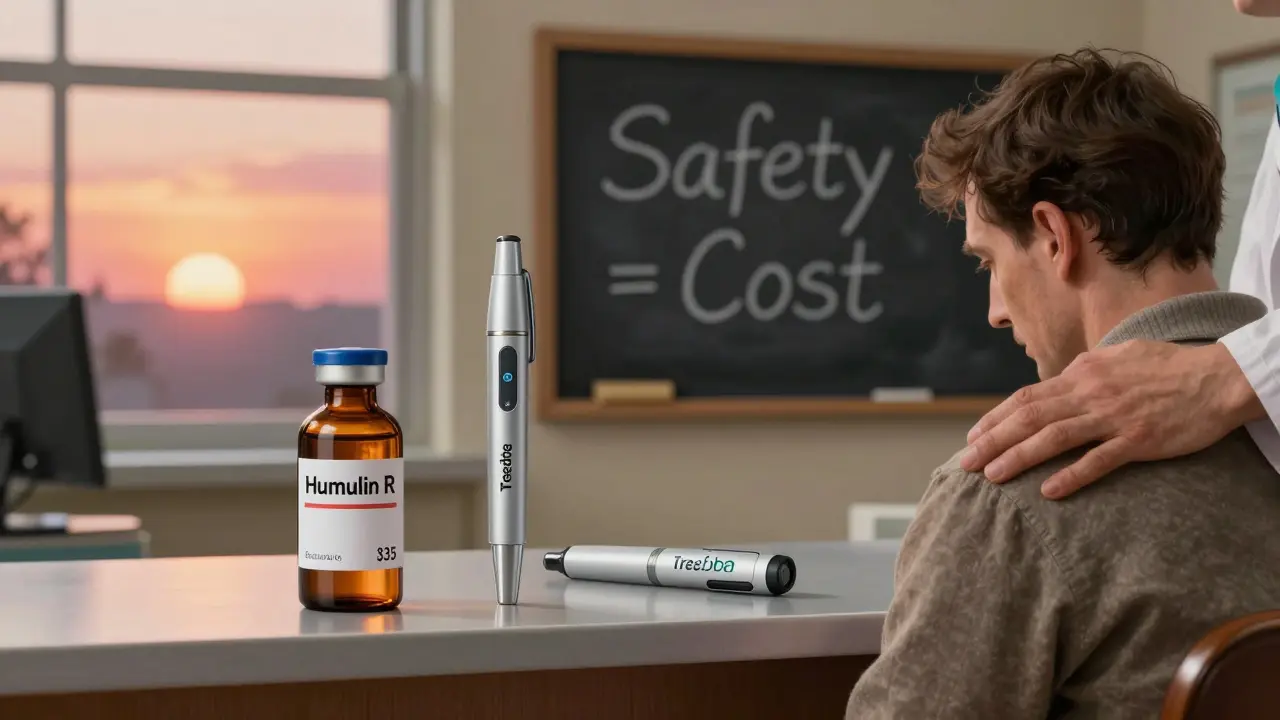
Insulin is not just a medical decision-it’s a financial one. In 2023, 1 in 4 people with diabetes admitted to rationing insulin because they couldn’t afford it. Human insulins like Humulin R or NPH cost $25-$35 at Walmart or ReliOn. That’s a fraction of the $250-$350 price tag for analogs like Lantus or Tresiba.But here’s the trade-off: analogs reduce hypoglycemia by 22-50% compared to NPH. A single severe low can send you to the ER. For many, the cost difference isn’t worth the risk.
The Inflation Reduction Act capped insulin at $35/month for Medicare beneficiaries in 2023. That led to an 18% jump in analog use among seniors. By 2025, this cap will expand to commercial insurance. Biosimilars like Semglee (a cheaper version of Lantus) are already gaining market share. If you’re uninsured or underinsured, ask your doctor about human insulin. It’s not glamorous-but it’s effective and safe if you monitor closely.
What Experts Say About New Options
In 2024, the FDA approved the first once-weekly insulin-basal insulin icodec. Early trials show it works as well as daily degludec, with slightly better A1C control. For people struggling with daily injections, this could be a game-changer.But not all new things are better. Ultra-long-acting insulins like Tresiba have a delayed onset. If your blood sugar is sky-high and you need to adjust your dose, you won’t see the full effect for 6-12 hours. That can delay correction and leave you in hyperglycemia longer than needed.
And while smart pens and closed-loop systems are growing fast, they’re not for everyone. If you’re not tech-savvy or don’t want to wear a device 24/7, a simple pen and fingerstick testing might be better.
Real-Life Challenges and How to Overcome Them
The biggest problem? Nighttime lows. About 35% of insulin users have a low blood sugar at least once a week. The fix? Switch from NPH to a long-acting analog. Reduce your basal dose by 10-20%. Or use a continuous glucose monitor (CGM)-now recommended for everyone on insulin. A CGM tells you if your sugar is dropping while you sleep.Another issue: forgetting doses. People miss insulin more than any other diabetes medication. Setting phone alarms, using smart pens that log doses, or linking insulin to daily habits (like brushing your teeth) helps.
And don’t underestimate education. Taking a DAFNE-style course (Dose Adjustment for Normal Eating) cuts the time to master carb counting by 40%. Certified Diabetes Care and Education Specialists (CDCES) can help you adjust doses safely. Studies show working with one boosts your A1C by 0.5-1.0%.
What to Ask Your Doctor
Don’t just accept the first prescription. Ask:- Is human insulin an option? Can we try it first?
- What’s my A1C goal? Is it realistic for my lifestyle?
- Do I need a CGM? Will my insurance cover it?
- Can we start with once-daily long-acting insulin before adding mealtime doses?
- What’s the cheapest insulin that still gives me safety and control?
There’s no perfect insulin. There’s only the one that works best for your life right now. And that can change. Your needs at 30 are different than at 60. Your schedule, your health, your budget-all of it matters. The goal isn’t to be perfect. It’s to stay safe, avoid complications, and live well.
Future of Insulin: What’s Coming
Oral insulin is in phase 3 trials. If approved, it could replace injections for some. Glucose-responsive “smart insulins” are being tested-these would turn on only when blood sugar rises. That could eliminate highs and lows entirely.But until then, the tools we have now are powerful. Whether you’re using a vial and syringe, a smart pen, or a pump, what matters most is consistency, education, and support. You don’t need to be a scientist. You just need to be informed-and to know you’re not alone.
What’s the difference between human insulin and analog insulin?
Human insulin is made to match the body’s natural insulin and has been used since the 1980s. Analog insulins are chemically modified to act faster or longer. Analogs reduce hypoglycemia risk and give more predictable results, but cost 10-15 times more. Human insulin is still safe and effective if you monitor closely and stick to a routine.
Can I switch from analog to human insulin to save money?
Yes, many people do. Switching from analogs like Lantus or Humalog to Humulin N or R can cut your monthly cost from $300 to under $40. But you’ll need to adjust your timing-human insulin starts slower, so you’ll need to inject 30 minutes before meals. You may also need more frequent blood sugar checks and might face higher hypoglycemia risk, especially at night. Talk to your doctor before switching.
Why do I need to check my blood sugar so often?
Insulin dosing isn’t guesswork. Your meal size, activity level, stress, and even sleep affect how your body responds. Checking 4-6 times a day helps you adjust doses correctly. If you skip checks, you risk highs that damage organs or lows that cause seizures. A CGM reduces the need for fingersticks but doesn’t replace the need to understand trends and respond.
Is insulin the only option for type 2 diabetes?
No. For most people with type 2, doctors now recommend GLP-1 agonists (like Ozempic or Wegovy) or SGLT2 inhibitors (like Jardiance) before insulin-especially if you have heart or kidney disease. These lower blood sugar, help you lose weight, and protect organs. Insulin is usually added later if those aren’t enough, or if your A1C is very high (above 9.5%).
What if I’m scared of needles?
You’re not alone. Inhaled insulin (Afrezza) is an option for mealtime doses-it’s powder you breathe in. But it’s expensive, not for smokers, and can cause lung issues. Insulin pens are much easier than syringes-they’re quiet, small, and use very fine needles. Many people get used to them quickly. If you’re terrified, talk to a diabetes educator. They can help you practice with dummy pens and find strategies to reduce anxiety.
How do I know if my insulin dose is right?
Your dose is right if your blood sugar stays between 80-130 mg/dL before meals and under 180 mg/dL after meals, without frequent lows. You’ll also know if you’re not having highs or lows without clear reasons. Most people need to adjust doses every few weeks. Use a logbook or app to track meals, activity, and numbers. If your A1C is still above 8% after 3 months, your regimen likely needs tweaking-not more insulin.





Written by Martha Elena
I'm a pharmaceutical research writer focused on drug safety and pharmacology. I support formulary and pharmacovigilance teams with literature reviews and real‑world evidence analyses. In my off-hours, I write evidence-based articles on medication use, disease management, and dietary supplements. My goal is to turn complex research into clear, practical insights for everyday readers.
All posts: Martha Elena