Antibiotic & Probiotic Timing Planner
Configure Your Schedule
Your Personalized Timeline
Enter your details on the left and click Generate to see your safe dosing schedule.
Antibiotics save lives, but they often wreck your stomach in the process. You take a pill to kill an infection, and suddenly you’re dealing with bloating, gas, or worse-diarrhea that won’t quit. It’s a frustrating trade-off. Many people reach for probiotics to fix this, assuming more good bacteria equals better health. But here is the twist: new research suggests taking probiotics at the wrong time might actually delay your gut’s natural recovery.
The science isn't black and white. While some studies show probiotics protect your gut diversity during treatment, others indicate they can interfere with the return of your native microbiome. So, how do you navigate this? Do you take them together, apart, or not at all? Let’s break down what the latest data says about timing, strain selection, and how to minimize side effects without messing up your long-term gut health.
The Core Conflict: Protection vs. Recovery
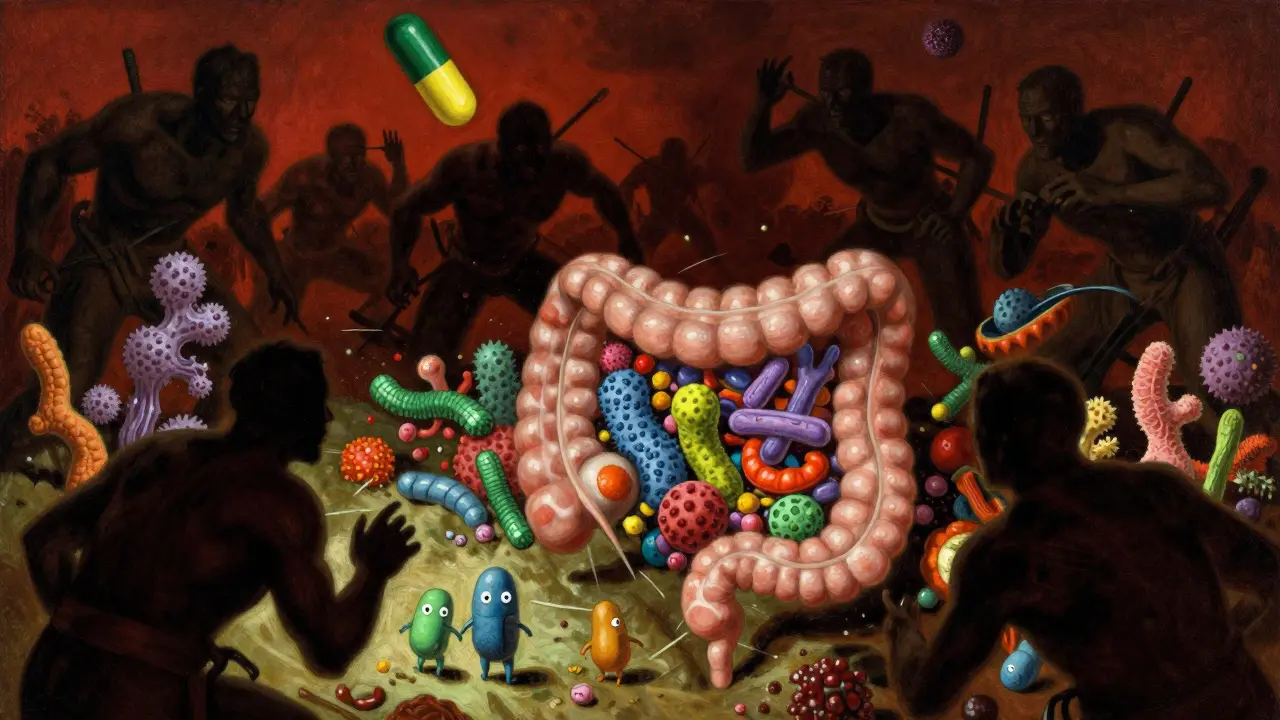
To understand why timing matters, we need to look at what happens inside your gut. Antibiotics are medications designed to kill or inhibit the growth of bacteria. They don't have eyes; they cannot tell the difference between the bad bacteria causing your sinus infection and the good bacteria living in your colon. This collateral damage leads to dysbiosis, an imbalance in your microbial community.
Enter Probiotics, which are live microorganisms that provide health benefits when consumed. The logic seems sound: if antibiotics kill good bugs, add more good bugs. A major systematic review published in the Journal of Medical Microbiology in November 2022, led by Dr. Elisa Marroquin from Texas Christian University, supported this view. They found that taking probiotics alongside antibiotics could protect against negative impacts on gut diversity.
However, there is a competing theory. An article from UCLA Health in October 2023 highlighted research suggesting that while probiotics might prevent immediate symptoms like diarrhea, they can actually delay the restoration of your native microbiome. Think of it like trying to plant grass on a field immediately after a fire. If you drop seeds too early, before the soil has stabilized, they might not take root properly, or worse, they might crowd out the native plants that were trying to grow back. A study by Palleja et al., published in Nature Microbiology in 2018, found that probiotic use after antibiotics extended the time to microbiome restoration by 132 days compared to spontaneous recovery.
The Golden Rule: Spacing Out Your Doses
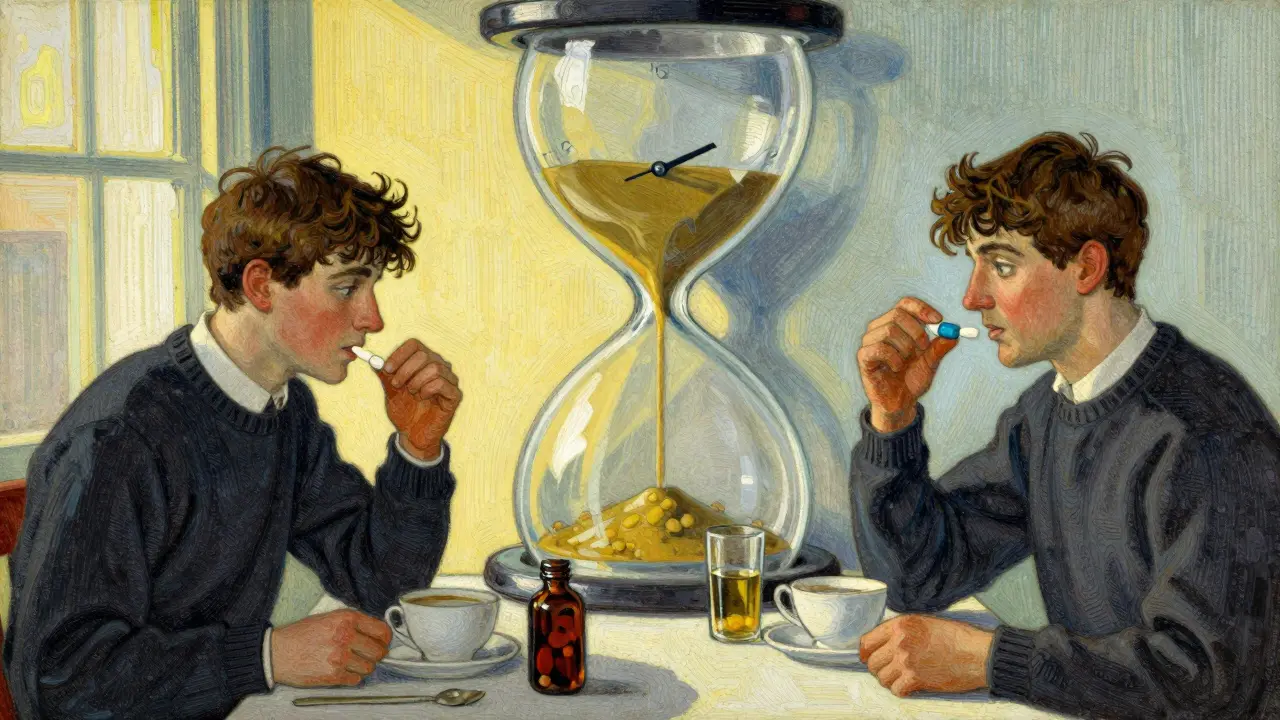
If you decide to take probiotics, the most critical factor is timing. You do not want the antibiotic to kill the probiotic before it can do any good. Taking them at the exact same moment is usually a waste of money and effort.
Harvard Medical School’s clinical guidance from November 2023 recommends spacing probiotics at least 2 to 3 hours apart from your antibiotic dose. This gap allows the antibiotic levels in your gut to drop slightly, giving the probiotic organisms a fighting chance to survive and colonize.
- Morning: Take your antibiotic with breakfast.
- Lunch: Wait until lunchtime (at least 2-3 hours later) to take your probiotic.
- Evening: Take your next antibiotic dose with dinner, and save the evening probiotic for bedtime if prescribed twice daily.
This strategy minimizes direct interaction. A user poll on Drugs.com in 2023 involving 1,875 respondents showed that 42% of users preferred taking probiotics 2 hours after antibiotics, while 38% took them 2 hours before. Both methods aim to create that crucial separation window.
Choosing the Right Strain Matters More Than Brand Name
Not all probiotics are created equal. In fact, only about 5 out of over 500 commercial strains have robust evidence for preventing Antibiotic-Associated Diarrhea (AAD). Most multi-strain blends are marketing fluff. When buying a bottle, look for these specific names on the label:
| Strain Name | Key Benefit | Evidence Level |
|---|---|---|
| Lactobacillus rhamnosus GG | Reduces risk of diarrhea by ~26% compared to multi-strain formulas. | High (Cochrane Review 2022) |
| Saccharomyces boulardii | A yeast-based probiotic that is naturally resistant to antibiotics. | High (Multiple Meta-Analyses) |
| Lactobacillus plantarum 299v | Showed 37% greater microbiome preservation when timed correctly. | Moderate (ISAPP Conference 2023) |
Saccharomyces boulardii deserves special mention. Because it is a yeast, not a bacterium, antibiotics generally do not kill it. This makes it a unique option for those worried about their probiotic being neutralized by the medication. However, people with compromised immune systems or central venous catheters should avoid yeast-based probiotics due to a small risk of systemic infection.
Dosage and Duration: How Long Should You Take Them?
How much is enough? The general recommendation ranges from 5 to 40 billion CFU (Colony-Forming Units) per day. For healthy adults, 10-20 billion CFU is often sufficient. If you have a compromised immune system, you might need higher doses under doctor supervision, but be cautious-high doses can sometimes cause bloating or gas.
When should you stop? Don’t just quit when the antibiotic course ends. Your gut needs time to heal. The American Gastroenterological Association suggests continuing probiotics for 1 to 2 weeks after finishing antibiotics. Some protocols extend this to 4 weeks for broad-spectrum antibiotics. A 2024 study by D. John et al. in Frontiers in Microbiomes administered probiotics daily throughout a 7-day antibiotic course and for 28 days post-treatment, showing sustained reduction in antibiotic resistance genes.
What About Prebiotics and Fermented Foods?
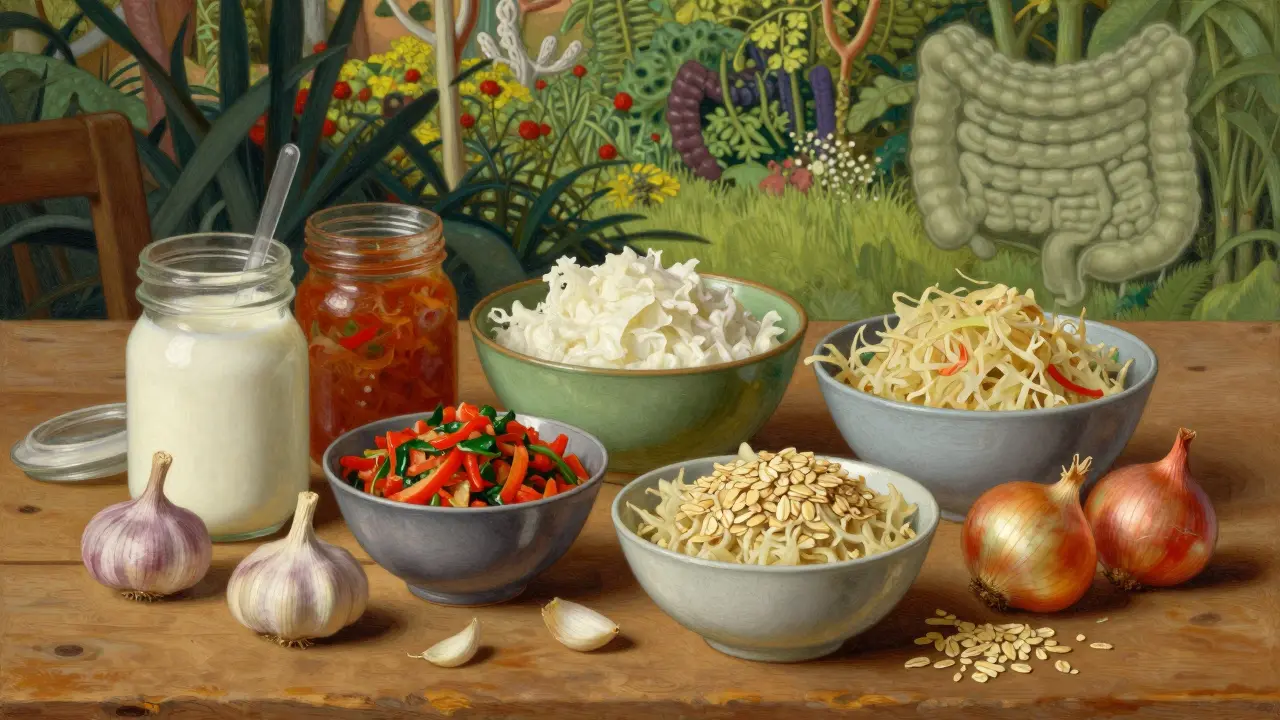
If you are hesitant about supplements, consider food. Fermented foods like yogurt, kefir, sauerkraut, and kimchi contain live cultures. However, cooking kills these bacteria, so ensure they are unpasteurized and refrigerated. Also, remember the timing rule: eat these foods 2-3 hours away from your antibiotic dose.
Prebiotics are different. They are fibers that feed good bacteria. While probiotics add soldiers to the battle, prebiotics provide ammunition. Eating high-fiber foods (garlic, onions, bananas, oats) helps your native bacteria recover faster once the antibiotic pressure lifts. Some experts argue that supporting your native flora with prebiotics is safer than introducing foreign probiotic strains, as it avoids the "delayed recovery" issue mentioned earlier.
Who Should Avoid Probiotics During Antibiotic Therapy?
While safe for most, probiotics are not for everyone. Consult your doctor before starting if you fall into these categories:
- Immunocompromised Individuals: People with HIV, undergoing chemotherapy, or organ transplant recipients are at risk for rare but serious infections from probiotic bacteria entering the bloodstream.
- Critical Illness: Patients in ICU settings with central lines should avoid yeast-based probiotics like S. boulardii.
- Short Bowel Syndrome: There is a risk of bacterial overgrowth in the small intestine.
In these cases, the risks outweigh the potential benefit of reduced diarrhea. Your doctor might recommend focusing solely on hydration and diet instead.
Practical Tips for Success
1. Check Storage Requirements: Some strains, like Lactobacillus rhamnosus GG, require refrigeration to maintain viability. Shelf-stable versions often lose potency faster. Check the label. If it says "refrigerate," keep it cold. A 2023 stability test in the Journal of Probiotics and Health showed refrigerated strains maintained 85-90% viability versus 65-70% for shelf-stable ones after 30 days at room temperature.
2. Watch for Gas: It is normal to experience increased gas or bloating when starting probiotics. This is usually temporary. If it persists or worsens, try lowering the dose or switching strains.
3. Hydrate: Antibiotics and diarrhea both dehydrate you. Drink plenty of water and electrolyte-rich fluids to help your body recover.
Can I take probiotics and antibiotics at the same time?
It is generally not recommended. Taking them simultaneously may allow the antibiotic to kill the probiotic bacteria before they can benefit your gut. Experts suggest spacing them out by at least 2 to 3 hours to maximize the survival of the probiotic organisms.
Do probiotics really help with antibiotic side effects?
Yes, specifically for preventing antibiotic-associated diarrhea (AAD). Meta-analyses show a significant reduction in risk for certain strains like Lactobacillus rhamnosus GG and Saccharomyces boulardii. However, recent studies suggest they might delay the full recovery of your native microbiome, so the benefit is primarily symptom management rather than long-term ecological restoration.
Which probiotic strain is best for antibiotics?
Lactobacillus rhamnosus GG and Saccharomyces boulardii have the strongest scientific evidence for reducing antibiotic-associated diarrhea. S. boulardii is a yeast and is not affected by antibiotics, making it a popular choice. Look for products that list these specific strains and provide at least 10-20 billion CFU per dose.
How long should I continue taking probiotics after finishing antibiotics?
Most guidelines suggest continuing probiotics for 1 to 2 weeks after completing your antibiotic course. This helps support your gut lining and microbial balance as your native bacteria begin to repopulate. Some protocols extend this to 4 weeks for broad-spectrum antibiotics.
Are there any risks to taking probiotics with antibiotics?
For most healthy people, risks are low and limited to mild digestive upset like gas or bloating. However, individuals with weakened immune systems, those with central venous catheters, or critically ill patients should consult a doctor first, as there is a rare risk of systemic infection from probiotic organisms.



Written by Martha Elena
I'm a pharmaceutical research writer focused on drug safety and pharmacology. I support formulary and pharmacovigilance teams with literature reviews and real‑world evidence analyses. In my off-hours, I write evidence-based articles on medication use, disease management, and dietary supplements. My goal is to turn complex research into clear, practical insights for everyday readers.
All posts: Martha Elena