
Pediatric Side Effect Risk Calculator
When a child is given a new medication or undergoes a complex treatment, doctors don’t always know what might go wrong. Side effects in kids aren’t just smaller versions of adult reactions-they can be completely different. That’s why tracking these reactions isn’t just important, it’s urgent. But traditional clinical trials barely include children. So how do we learn what’s safe? The answer lies in pediatric safety networks.
Why Kids Need Their Own Safety Networks
Most drugs given to children were never tested on them. Instead, doctors guessed doses based on weight or adult guidelines. This left a dangerous gap. A child might react badly to a common antibiotic, or develop a rare neurological symptom after a new cancer drug-but without enough data, no one could see the pattern. One hospital might see two cases. Another might see none. Together, they could spot a trend. Alone, they’re just noise.
This is where pediatric safety networks step in. They’re not just research groups. They’re real-time alert systems. By connecting hospitals, clinics, and public health agencies across states and regions, these networks collect data from hundreds of children at once. They look for patterns: Which drug caused vomiting in 15% of toddlers? Did a new heart medication lead to unexpected sleep disturbances? These aren’t guesses. They’re patterns found in real-world use.
The CPCCRN: How Critical Care Got a Safety Backbone
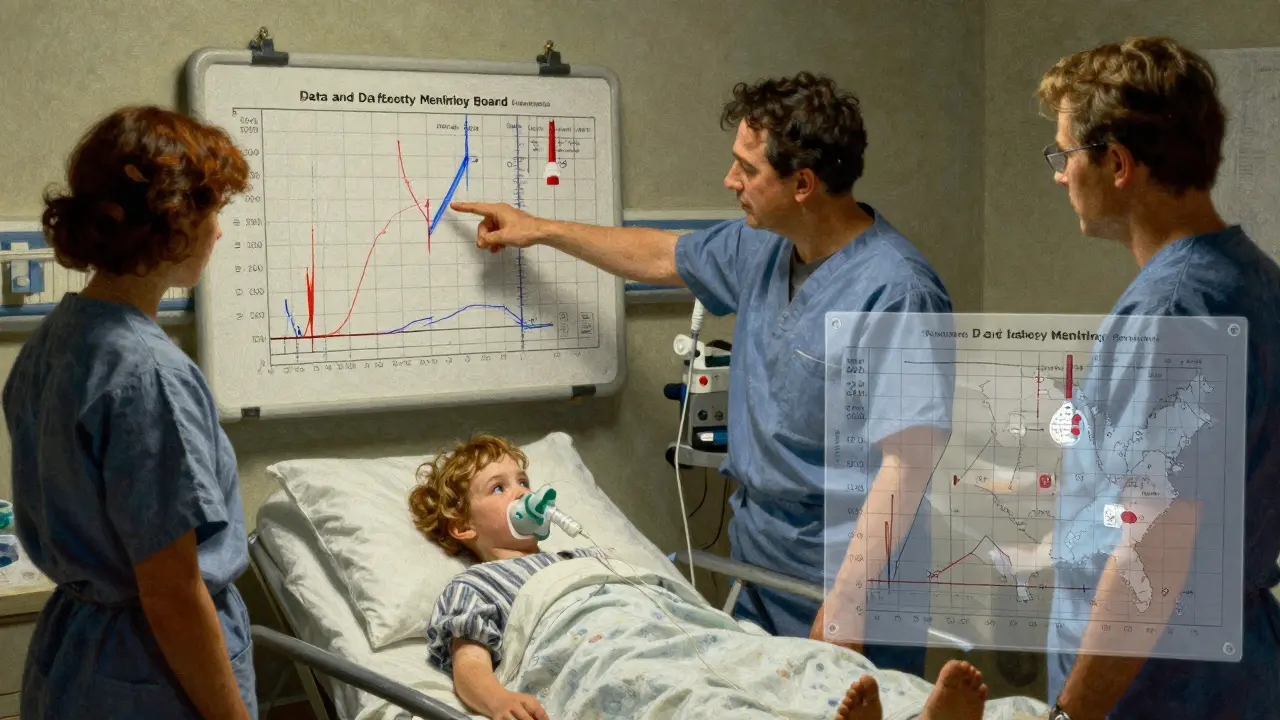
The Collaborative Pediatric Critical Care Research Network (CPCCRN), launched by the NIH in 2014, was built for this exact problem. It brought together seven major children’s hospitals, a central data hub, and a strict oversight board. Each site treated critically ill kids-kids on ventilators, after trauma, recovering from surgery. These weren’t healthy volunteers. These were kids in high-risk situations where side effects could be deadly.
What made CPCCRN different? Three things. First, every protocol had to be approved by a Data and Safety Monitoring Board-a team whose only job was to watch for harm. Second, all data flowed into one central system. No more lost records. No more siloed hospitals. Third, the network didn’t just collect data-it acted on it. If a drug caused low blood pressure in 8% of infants under 6 months, the network paused enrollment, reviewed the data, and adjusted the protocol within weeks.
One study tracked the use of sedatives in ICU children. Before CPCCRN, doctors used whatever was available. After two years of pooled data, they found that one commonly used drug doubled the risk of prolonged sedation in children under 1 year. The network issued a safety alert. Within six months, usage dropped by 60% across all seven sites. That’s not theory. That’s a saved life.
Child Safety CoIIN: When Prevention Is the Cure
Not all side effects come from drugs. Sometimes they come from environments, policies, or even well-meaning interventions. The Child Safety Collaborative Innovation and Improvement Network (CoIIN), funded by HRSA, focused on exactly that. It didn’t study medications. It studied how safety programs themselves could backfire.
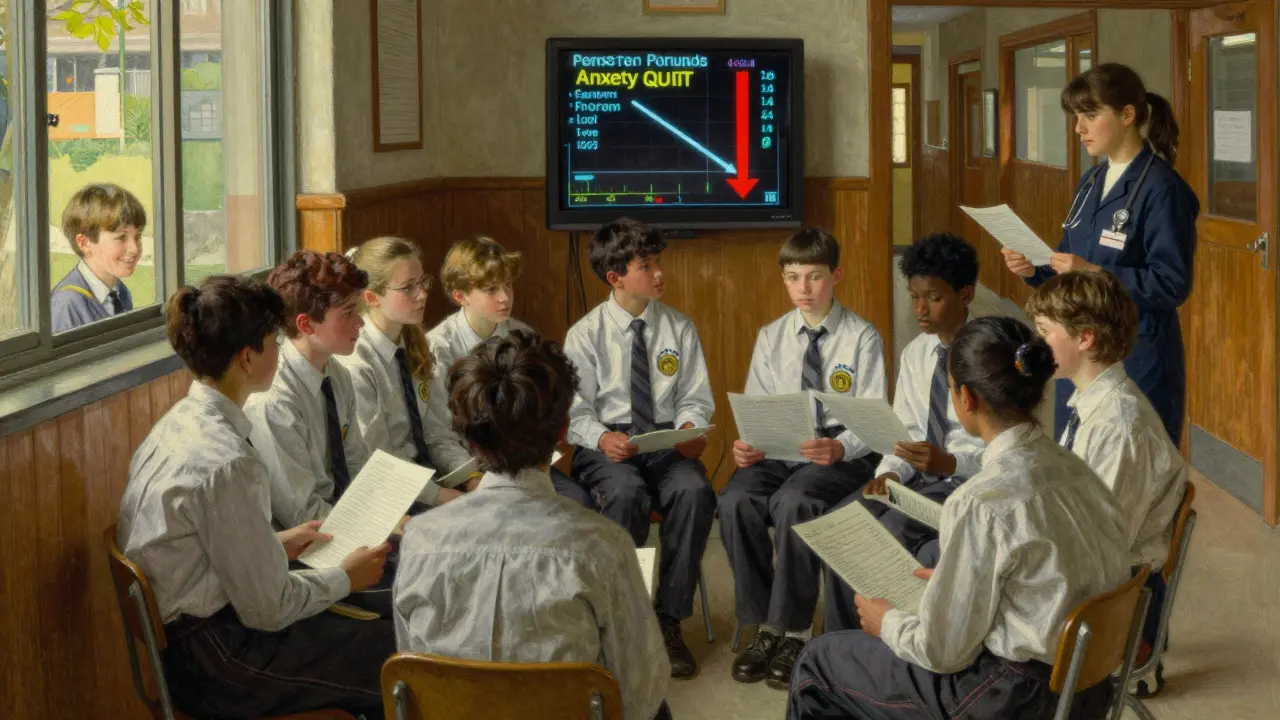
One state ran a program to reduce sexual violence in schools by training teens to intervene. They called it “Green Dot.” Sounds good, right? But when they started tracking outcomes through CoIIN’s real-time dashboards, they found something unexpected: older teens who participated were more likely to report feeling isolated. Why? Because the training made them feel responsible for preventing violence they couldn’t control. The program wasn’t broken-it just had a hidden side effect.
CoIIN’s teams used simple tools: worksheets, checklists, monthly data logs. They didn’t need fancy tech. They needed honesty. When one team saw a spike in anxiety among kids in foster care after a new safety curriculum, they paused. They interviewed the kids. They changed the material. Within three months, anxiety levels dropped. That’s the power of listening while collecting data.
How These Networks Work Behind the Scenes
Both CPCCRN and CoIIN used similar structures, even though their goals differed. Each had:
- A Steering Committee-decision-makers from each site who voted on protocols
- A Data Coordinating Center-the central brain that cleaned, analyzed, and protected data
- A Protocol Review Committee-scientists who approved studies before they started
- A Data and Safety Monitoring Board-independent experts who watched for harm
The Data Coordinating Center did the heavy lifting. It designed digital forms that every hospital used. It calculated sample sizes so studies weren’t too small to catch rare side effects. It checked for duplicate entries. It flagged unusual patterns-like a sudden spike in rashes in one region. All data was encrypted and HIPAA-compliant. No one had access to names. Just codes, symptoms, and timelines.
And here’s the kicker: these networks didn’t wait for accidents. They designed studies to find them. A protocol might ask: “In children under 5 receiving this vaccine, how many develop fever over 103°F within 48 hours?” That’s not vague. That’s specific. That’s measurable. That’s how you catch something dangerous before it spreads.
What These Networks Couldn’t Do
They weren’t magic. Both networks struggled with long-term effects. CPCCRN tracked kids for days or weeks-long enough to catch immediate reactions, but not enough to see if a drug caused learning delays five years later. CoIIN tracked programs over months, not decades. They could see if a school program reduced bullying, but not if it changed how kids trusted adults ten years later.
They also depended on funding. CPCCRN’s original grant expired in 2014. CoIIN’s second cohort ended in 2019. Neither was renewed in its original form. That’s the problem with government-funded networks: they’re built for short-term projects, not lifelong monitoring.
Still, their legacy lives on. CPCCRN’s infrastructure became the model for the Pediatric Trials Network, which now runs dozens of ongoing studies. CoIIN’s data collection tools are still used by state health departments across the U.S. The methods didn’t disappear-they got embedded.
What’s Next for Pediatric Safety
The future isn’t about building more networks. It’s about connecting them. Right now, a child in a hospital in Ohio might be tracked for drug side effects, while a child in California is tracked for injury risk after a car seat program. But if those two systems could talk to each other? Imagine spotting a pattern: a certain painkiller used in both settings leads to abnormal liver enzymes in toddlers. That’s the next leap.
Some hospitals are already testing this. They’re using shared digital platforms that let safety data flow between pediatric networks, emergency departments, and even schools. The goal? A real-time map of child health risks-where side effects pop up, how fast they spread, and how to stop them.
It’s not science fiction. It’s the next step. And it’s built on the work of networks that dared to ask: What if we watched kids together?







Written by Martha Elena
I'm a pharmaceutical research writer focused on drug safety and pharmacology. I support formulary and pharmacovigilance teams with literature reviews and real‑world evidence analyses. In my off-hours, I write evidence-based articles on medication use, disease management, and dietary supplements. My goal is to turn complex research into clear, practical insights for everyday readers.
All posts: Martha Elena