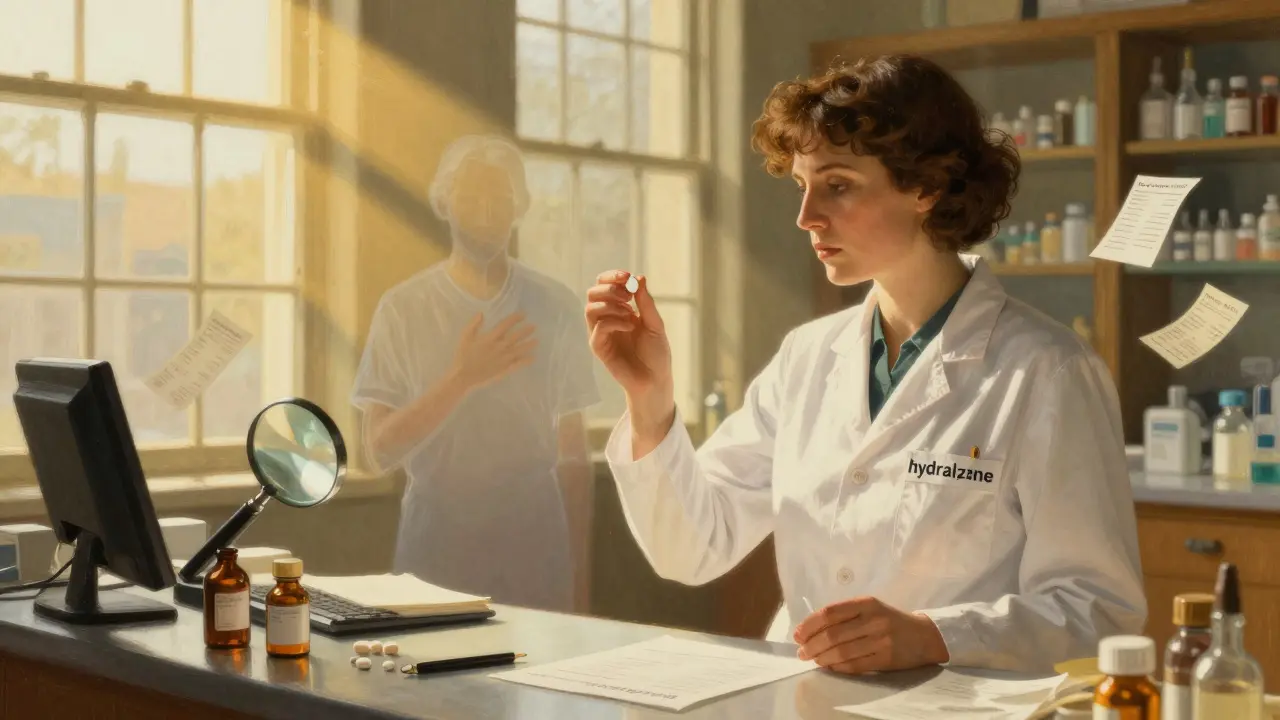
Every day, pharmacy technicians handle thousands of prescriptions. Most of them-nearly 90%-are for generic drugs. But knowing the difference between generic and brand names isn’t just helpful. It’s life-or-death. A mix-up between hydroxyzine and hydralazine, two look-alike generic names, has caused seizures and dangerous drops in blood pressure. These aren’t hypothetical risks. They’re documented errors that happen because technicians weren’t trained well enough to spot the difference.
Why Generic Drug Knowledge Is Non-Negotiable
Generic drugs make up the backbone of modern pharmacy. They’re cheaper, widely available, and just as effective as their brand-name counterparts. But they’re not always easy to identify. The same medication can have multiple generic names depending on the manufacturer. One pill might be sold as metformin by one company and glucophage by another. If a technician doesn’t recognize both, they might dispense the wrong dose, miss a dangerous interaction, or accidentally double-prescribe. The stakes are high. According to the Institute for Safe Medication Practices, about 10-15% of all medication errors linked to death or serious harm involve confusion between generic and brand names. In 2021 alone, these errors contributed to roughly 7,000 preventable deaths in the U.S. That’s not a statistic-it’s a failure of training. The Pharmacy Technician Certification Board (PTCB) made this clear in 2016 when they updated their exam to include 16% of content focused on pharmacology and generic drug knowledge. By 2026, that number will jump to 18%. This isn’t just a test tweak. It’s a response to real-world harm.What Pharmacy Technicians Must Know
There’s no single list, but most training programs and certification exams agree on the essentials. You need to know at least 200 medications by both their generic and brand names. The PTCB focuses on the top 200 most prescribed drugs. RxTechExam narrows it to the Top 100, but includes drug classification, dosage form, and therapeutic use. Here’s what you actually need to memorize:- Generic name and brand name pairs (e.g., lisinopril and Zestril)
- Drug classification (e.g., statin, SSRI, beta-blocker)
- Common dosage forms (tablet, capsule, liquid, injection)
- Strengths and routes of administration (oral, topical, IV)
- High-alert medications (insulin, heparin, warfarin, opioids)
How Training Programs Teach This
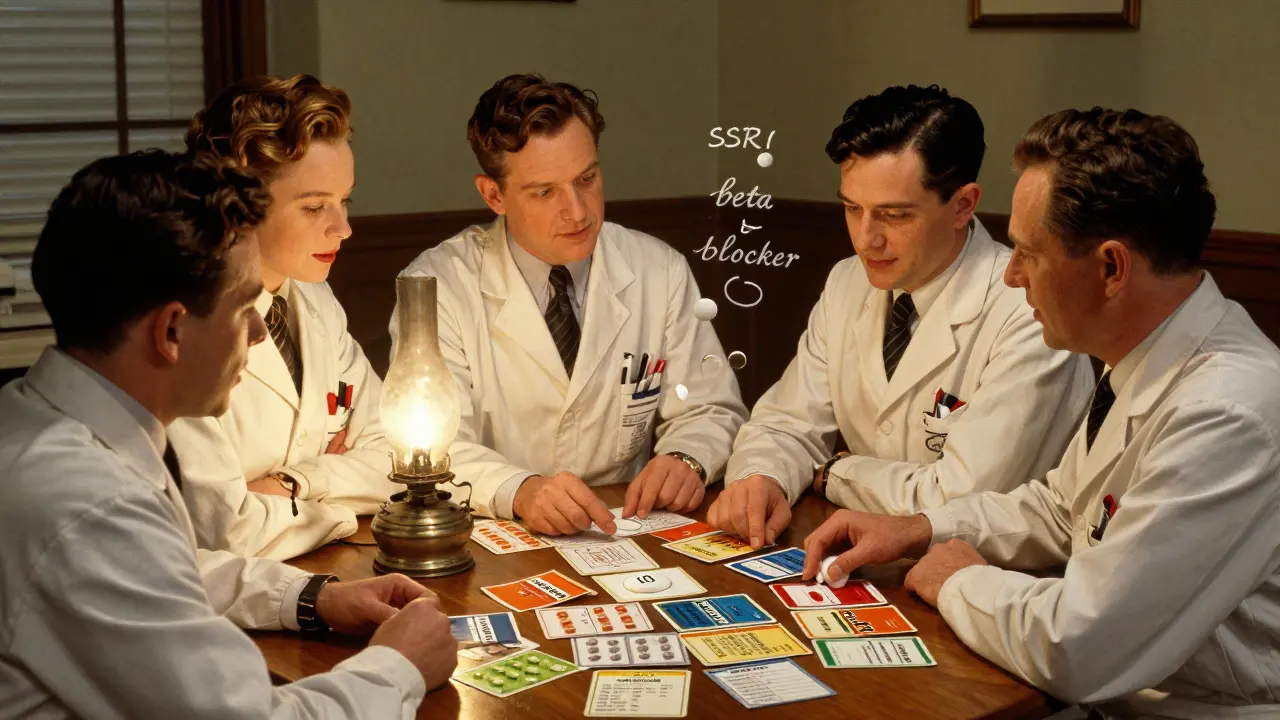
Most pharmacy technician programs spend 35-40 hours on drug identification alone. That’s out of a 1,200-hour curriculum. Why so much time? Because memorizing 200 drug names isn’t like memorizing state capitals. These are drugs that can kill if misidentified. Successful programs don’t rely on rote flashcards alone. They use patterns:- Grouping by therapeutic class: All statins end in “-vastatin” (atorvastatin, rosuvastatin)
- Using pill appearance: Color, shape, imprint codes (e.g., a white, round pill with “10” on one side is likely 10mg lisinopril)
- Matching brand to generic using visual aids: Flashcards with photos of actual pills
Where Standards Differ-and Why It Matters
Not all states or employers require the same level of knowledge. California demands proficiency in 180 specific drugs. Texas requires only 120. The PTCB exam covers 200+. The National Healthcareer Association’s ExCPT exam tests only about 150. That’s a 25% gap. This creates real problems. A technician certified in Texas moves to California and fails their state registration exam because they’ve never studied 60 of the required drugs. They’re not lazy. They were trained to a lower standard. Hospitals follow ASHP guidelines, which emphasize high-alert drugs. Community pharmacies follow NABP standards, which focus more on substitution rules and formulary management. The VA? They’re the gold standard. Their technicians must pass quarterly assessments with 90% accuracy on 100 randomly selected drugs from a list of 300. And then there’s the issue of biosimilars. Since 2015, the FDA has approved 25 biosimilars-complex drugs that mimic biologics like Humira. Their naming conventions are different. They end in “-mab” and have a four-letter suffix to distinguish manufacturers. Most training programs still don’t cover this. But starting in 2025, ASHP added it to their model curriculum. The gap is closing-but slowly.Technology Can Help, But It Can’t Replace Knowledge
Barcode scanning systems have cut generic substitution errors by 89% in hospital settings, according to a 2024 Johns Hopkins study. That sounds like a win. But here’s the catch: scanners fail. Labels get smudged. Barcode stickers peel off. Pills get repackaged. And when the machine doesn’t work, the technician is the last line of defense. Walmart’s AI-powered training tool reduced onboarding time by 35% and improved accuracy by 22%. But it doesn’t replace the need for deep knowledge. It just makes learning faster. No app can replace a technician who sees a prescription for glipizide and immediately recognizes it’s a diabetes drug, knows it’s not interchangeable with glyburide, and remembers the patient had a bad reaction to glyburide last year. That’s clinical thinking. That’s competence.
What Happens When Technicians Aren’t Trained Well
A 2023 University of Utah study tracked 1,247 pharmacy technicians across 42 pharmacies. Those who scored below 70% on generic drug identification tests made 3.2 times more errors than those scoring above 90%. That’s not a small difference. That’s a safety crisis. In one case, a technician filled a prescription for hydroxyzine (an antihistamine) but thought it was hydralazine (a blood pressure drug). The patient, already on multiple cardiac meds, suffered a stroke. The error was caught before it was dispensed-but only because the pharmacist double-checked. The Institute for Safe Medication Practices lists 37 high-risk look-alike/sound-alike pairs. Here are a few:- Hydroxyzine / Hydralazine
- Glipizide / Glyburide
- Fluoxetine / Fluconazole
- Clonidine / Clonazepam
How to Stay Current in a Fast-Changing Field
The FDA approves 15-20 new generic drugs every month. That’s over 200 a year. A technician who learned the Top 200 in 2022 might now be working with 40 drugs they’ve never seen before. The VA updates their drug nomenclature guide quarterly. Most independent pharmacies? They still use annual pocket guides. That’s a problem. Here’s how to keep up:- Subscribe to the FDA Orange Book (free online)
- Use PTCB’s updated drug list every exam cycle
- Join a professional group like ASHP or NCPA for monthly updates
- Set a monthly reminder to review 10 new generic drugs
Final Reality Check
Generic drug knowledge isn’t about passing a test. It’s about protecting people. Every time you pick up a script, you’re making a decision that could save a life-or end one. The standards exist for a reason. The data doesn’t lie. The mistakes are preventable. But only if we train technicians properly. It’s not about memorizing lists. It’s about building a mental framework: knowing drug classes, understanding therapeutic intent, recognizing patterns, and never assuming. Because in pharmacy, assumptions kill. If you’re training to be a pharmacy technician, don’t just study the drugs. Study the consequences. Because when it comes to generic medications, there’s no room for error.Why do pharmacy technicians need to know generic drug names?
Pharmacy technicians must know generic drug names because nearly 90% of prescriptions in the U.S. are for generic medications. Mistaking a generic for a brand name-or confusing two similar-sounding generics-can lead to dangerous medication errors, therapeutic duplication, or incorrect dosing. Accurate identification ensures patient safety and compliance with state and federal regulations.
How many generic drugs should a pharmacy technician know?
Most certification programs, including the PTCB, require technicians to know at least 200 of the most commonly prescribed medications by both generic and brand name. The VA requires mastery of 300 high-use drugs, including all controlled substances. While some exams like the ExCPT test fewer (around 150), aiming for 200+ ensures readiness for any pharmacy setting.
Are generic drugs really the same as brand-name drugs?
Yes, by FDA standards, generic drugs must have the same active ingredient, strength, dosage form, and route of administration as the brand-name version. They must also meet the same quality and performance standards. The only differences are in inactive ingredients, packaging, and price. However, some patients report differences in effectiveness, which is why technicians must know how to identify and verify each version correctly.
What’s the biggest challenge in learning generic drug names?
The biggest challenge is the sheer volume and constant change. With 15-20 new generics entering the market each month, memorizing static lists becomes outdated quickly. Additionally, look-alike/sound-alike names (like glipizide and glyburide) are easy to confuse. Many technicians struggle with rote memorization, which is why grouping drugs by class, appearance, or therapeutic use improves retention.
Do all states have the same generic drug competency requirements?
No. While all 50 states require pharmacy technicians to demonstrate knowledge of generic drugs, the specific requirements vary. California requires knowledge of 180 drugs, Texas requires 120, and the PTCB exam covers 200+. This inconsistency creates mobility issues for technicians moving between states and can lead to gaps in training.
Can technology like barcode scanning replace the need for drug knowledge?
No. While barcode scanning reduces errors by up to 89%, it doesn’t eliminate the need for human knowledge. Scanners can fail due to damaged labels, repackaged medications, or incorrect barcodes. When the system fails, the technician must still identify the drug correctly. Relying solely on technology without foundational knowledge puts patients at risk.


Written by Martha Elena
I'm a pharmaceutical research writer focused on drug safety and pharmacology. I support formulary and pharmacovigilance teams with literature reviews and real‑world evidence analyses. In my off-hours, I write evidence-based articles on medication use, disease management, and dietary supplements. My goal is to turn complex research into clear, practical insights for everyday readers.
All posts: Martha Elena