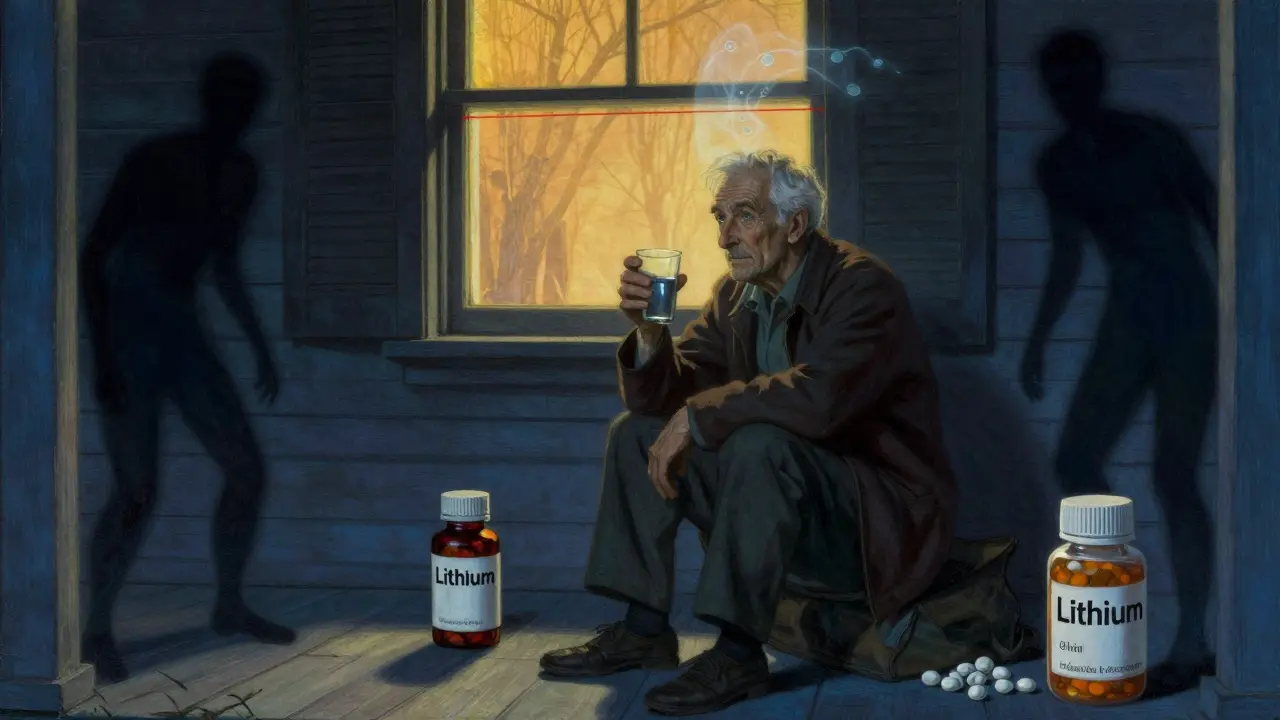
When you're taking lithium for bipolar disorder, even small changes in your body can send lithium levels into dangerous territory. It's not just about the dose you take-it's about what else is in your system, how much water you're drinking, and even how much salt you eat. Lithium has a narrow therapeutic window: between 0.6 and 1.2 mmol/L. Go above that, and you risk serious, even life-threatening toxicity. Below that, your mood may not be controlled. That tight balance makes lithium one of the most sensitive medications you can take-and one of the most dangerous when combined with common drugs or lifestyle changes.
Why Lithium Is So Fragile
Lithium doesn’t get broken down by your liver. Almost all of it-95%-leaves your body through your kidneys. That means anything that affects kidney function or fluid balance can change how much lithium stays in your blood. Your kidneys filter lithium like they do sodium and water. If you’re dehydrated, your kidneys hold onto more lithium to conserve fluid. If you take a drug that slows down kidney filtration, lithium builds up. It’s not complicated, but it’s easy to miss.
People over 65 are at 3.2 times higher risk of lithium toxicity. Why? Kidneys naturally slow down with age. Add a chronic condition like heart failure or diabetes, and the risk climbs even higher. Many older adults are on multiple medications, and that’s where things get risky.
NSAIDs: The Silent Threat
Non-steroidal anti-inflammatory drugs-like ibuprofen, naproxen, and diclofenac-are among the most common culprits. You take them for a headache, a sore knee, or arthritis. But they block prostaglandins in your kidneys, which normally help keep blood flow steady. Less blood flow means less lithium gets filtered out. The result? Lithium levels can jump 25% to 60%, depending on the NSAID.
Indomethacin is the worst offender-it can spike lithium levels by up to 60%. Ibuprofen? Around 25-40%. Even celecoxib, often thought to be safer, still pushes levels up by 15-30%. This isn’t a slow build-up. Changes happen within the first week of taking the NSAID. And if you’re already low on fluids or taking other medications, the rise can be sudden and severe.
One fatal case in New Zealand involved a 72-year-old woman on lithium and an ACE inhibitor. She started taking an NSAID for back pain. Her lithium levels weren’t checked for months. She developed vomiting, confusion, and seizures. She didn’t survive. The report called it preventable. Regular monitoring could have caught it.
Diuretics: A Double-Edged Sword
Diuretics are another major red flag. But not all diuretics act the same.
Thiazides-like hydrochlorothiazide-are the most dangerous. They cause lithium levels to rise by 25-50% within 7-10 days. Why? Thiazides reduce sodium excretion. Your kidneys, trying to hold onto sodium, also hold onto lithium. This interaction is so predictable that many doctors avoid prescribing thiazides to anyone on lithium.
Loop diuretics like furosemide (frusemide) are less risky, but still dangerous. They can raise lithium levels by 10-25%. They’re often used for heart failure or fluid retention, conditions that already increase lithium risk. So even if the rise is smaller, the overall danger is higher because the patient is already vulnerable.
Then there are the oddballs: osmotic diuretics (like mannitol) and carbonic anhydrase inhibitors (like acetazolamide). These actually lower lithium levels by 15-30%. That’s not safer-it’s just a different kind of risk. If your lithium level drops too low, your mood can destabilize. Suddenly, you’re not protected from mania or depression.
And don’t forget herbal diuretics. Supplements labeled as "natural weight loss formulas" often contain dandelion, green tea extract, or caffeine. These act like mild diuretics. No one tells you they interact with lithium. But they do. And they can cause dehydration-another trigger for lithium toxicity.
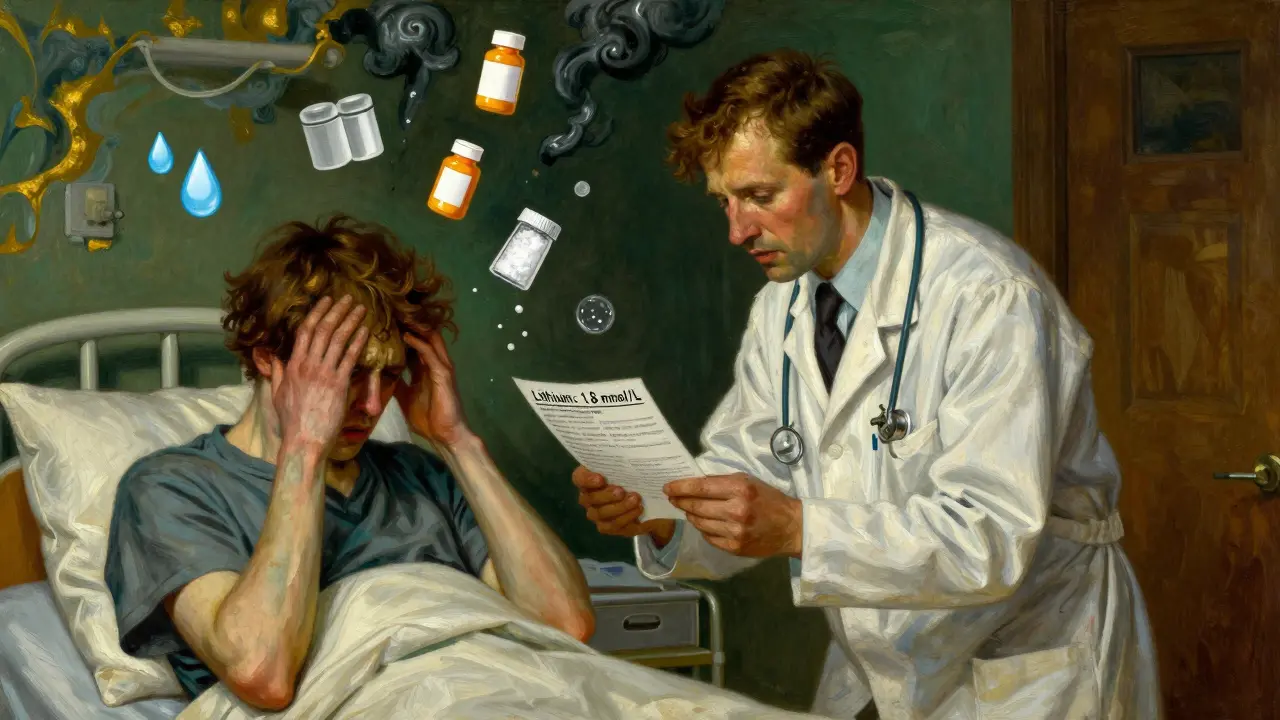
Dehydration: The Hidden Trigger
You don’t need to be parched. Even mild dehydration-losing just 2-3% of your body weight in water-can push lithium levels up by 15-25%. That’s the equivalent of skipping a few drinks after a long walk, not drinking enough on a flight, or sweating through a hot day without replacing fluids.
Travelers are especially at risk. People flying to tropical destinations, hiking in heat, or recovering from stomach bugs are often told to drink more water. But few realize that lithium makes that advice critical. If you get sick with vomiting or diarrhea, your body loses salt and water. Your kidneys respond by holding onto lithium. Levels can spike before you even feel dizzy.
And it’s not just about drinking water. Salt matters too. If you suddenly cut back on salt-maybe you’re trying to eat healthier-your lithium level can rise. Conversely, eating more salt can lower it. A change of 20-30 mmol of sodium per day (about half a teaspoon of salt) can shift lithium levels by 10-20%. That’s enough to push someone from safe to toxic.
What You Should Do
If you’re on lithium, here’s what actually works:
- Avoid NSAIDs if you can. Use acetaminophen (paracetamol) for pain instead. It doesn’t affect lithium.
- Never start a diuretic without telling your doctor. If you need one, your lithium level must be checked before, during, and after.
- Drink water daily. Aim for 1.5-2 liters unless your doctor says otherwise. More if you’re active, sick, or in heat.
- Don’t change your salt intake. Keep it steady. Don’t go low-salt diets without supervision.
- Get your lithium level checked within a week of starting any new medication. Then again at two weeks, and monthly for the first three months.
- Know the warning signs: Diarrhea (68% of early cases), dizziness, drowsiness, trembling hands, blurred vision, or ringing in the ears. These aren’t "just side effects." They’re early signs of toxicity.

What Doctors Should Do
Guidelines from New Zealand, the UK, and the US all agree: if you’re prescribing lithium, you must assume any new drug could interact. That includes antibiotics, antidepressants like SSRIs, and even over-the-counter cold medicines.
Patients over 65, with kidney disease, heart failure, or on multiple medications should be monitored more closely. Some need blood tests every two weeks. Others need referrals to kidney specialists. Electronic health systems now warn doctors about these combinations-but not all systems are turned on, and not all doctors pay attention.
One study found that nearly half of lithium toxicity cases happened because the patient’s doctor didn’t know they were taking an NSAID. The patient didn’t think it mattered. The doctor didn’t ask.
What Happens When Lithium Goes Too High
Early signs: nausea, diarrhea, hand tremors, dizziness. These are often mistaken for the flu. But if you’re on lithium, they’re not.
As levels climb: confusion, slurred speech, muscle weakness, blurred vision, tinnitus. At this point, you’re at risk of seizures, coma, or kidney damage. And here’s the worst part: some kidney damage from lithium toxicity can be permanent, especially in older adults.
There’s no antidote. Treatment is stopping lithium, rehydrating, and sometimes dialysis. But prevention is far easier than recovery.
Final Thoughts
Lithium is still one of the most effective mood stabilizers we have. But it’s not a medication you can treat lightly. It’s like driving a car with a fuel gauge that moves based on weather, traffic, and how much you eat. You need to pay attention.
If you’re on lithium, your routine matters. Your water intake matters. Your salt matters. Even your painkiller choices matter. Don’t assume a doctor will catch every interaction. Ask questions. Track your symptoms. Keep a log of what you take and how you feel. And if you’re ever unsure-get your lithium level checked. It’s a simple blood test. It could save your life.
Can I take ibuprofen if I’m on lithium?
It’s not recommended. Ibuprofen can raise lithium levels by 25-40%, especially in the first week of use. If you must take it, do so only for a few days and get your lithium level checked within 7 days. Always talk to your doctor first. Acetaminophen (paracetamol) is a safer option for pain relief.
Do all diuretics increase lithium levels?
No. Thiazide diuretics like hydrochlorothiazide are the most dangerous-they can raise lithium by 25-50%. Loop diuretics like furosemide have a smaller effect (10-25%). But osmotic diuretics (mannitol) and carbonic anhydrase inhibitors (acetazolamide) actually lower lithium levels. Still, any diuretic should be used with extreme caution and close monitoring if you’re on lithium.
How much water should I drink if I’m on lithium?
Aim for 1.5 to 2 liters of water daily, unless your doctor says otherwise. In hot weather, during illness, or after exercise, drink more. Even mild dehydration (losing 2-3% of your body weight) can increase lithium levels by 15-25%. Don’t wait until you’re thirsty-drink regularly.
Can changing my diet affect my lithium levels?
Yes. Sodium (salt) intake directly affects lithium. Eating less salt can raise lithium levels by 10-20%. Eating more salt can lower them. Don’t start low-salt diets or suddenly increase salt without telling your doctor. Keep your intake steady. A change of half a teaspoon of salt per day can shift your lithium level enough to cause problems.
What are the first signs of lithium toxicity?
The earliest signs are often gastrointestinal: diarrhea (68% of cases), nausea, vomiting. Then come neurological symptoms: dizziness, drowsiness, hand tremors, blurred vision, and ringing in the ears. If you notice these and you’re on lithium, don’t wait. Contact your doctor immediately. Delaying can lead to seizures or permanent kidney damage.
How often should lithium levels be checked?
When starting lithium, levels are checked weekly for the first month. After that, every 3-6 months is typical-unless something changes. If you start a new medication, get sick, travel, or change your salt or fluid intake, get tested within 7-10 days. For people over 65 or with kidney issues, monthly checks may be needed.
Always remember: lithium isn’t dangerous because it’s strong. It’s dangerous because it’s subtle. You won’t feel it building up. But your body does. Stay informed. Stay hydrated. Stay in touch with your care team.



Written by Martha Elena
I'm a pharmaceutical research writer focused on drug safety and pharmacology. I support formulary and pharmacovigilance teams with literature reviews and real‑world evidence analyses. In my off-hours, I write evidence-based articles on medication use, disease management, and dietary supplements. My goal is to turn complex research into clear, practical insights for everyday readers.
All posts: Martha Elena