
It doesn’t take much to spread hepatitis A. A single infected person handling food with unwashed hands can set off an outbreak that affects dozens, sometimes hundreds. The virus doesn’t care if you’re eating at a fancy restaurant or grabbing a sandwich from a street vendor. It only needs a few viral particles - as few as 10 to 100 - to make someone sick. And it can survive for weeks on surfaces, in frozen food, or even on lettuce you just picked up at the grocery store.
How Hepatitis A Moves Through Food
Hepatitis A isn’t spread by air or coughing. It travels through poop - and then onto food, water, or surfaces. When someone infected with the virus doesn’t wash their hands after using the bathroom, they can transfer the virus to anything they touch. In food service, that means cutting boards, knives, salad ingredients, or even the bread you’re about to eat.
Shellfish are a common source because they filter seawater. If that water is contaminated with sewage, the virus gets trapped inside them. Eating raw or undercooked oysters, clams, or mussels from polluted waters is one of the most direct ways to get infected. Produce is another big risk. Lettuce, berries, and herbs are often eaten raw, so there’s no cooking step to kill the virus. Studies show that nearly 10% of the virus on a contaminated finger can transfer to a piece of lettuce with just a light touch.
Food handlers are the hidden link in most outbreaks. Many people with hepatitis A don’t feel sick right away. They might be contagious for up to two weeks before they even notice yellow eyes or dark urine. By then, they’ve already handled food for dozens of customers. One 2025 study found that a single infected worker in a restaurant can trigger an outbreak affecting over 100 people.
Why the Virus Is So Tough to Kill
Hepatitis A is built to survive. It doesn’t break down easily with heat, cold, or cleaning chemicals. It can live on stainless steel surfaces for up to 30 days. It stays infectious in dried form for four weeks. Even freezing doesn’t kill it - the virus can survive in frozen berries or shellfish for years.
It takes real heat to destroy it: 85°C (185°F) for at least one minute. That’s why undercooked food is dangerous. A quick sear on a burger or a light steam on vegetables won’t cut it. The virus can also survive in water with low chlorine levels. The World Health Organization says safe drinking water needs at least 0.2mg/L of free chlorine to stop transmission. Most outbreaks happen where sanitation is weak - but even in rich countries, outbreaks still happen because of contaminated food.
What Happens After You’re Exposed
If you’ve eaten food handled by someone who later tested positive for hepatitis A, you need to act fast. Post-exposure prophylaxis (PEP) can stop you from getting sick - but only if you do it within 14 days of exposure. After that, it’s too late.
There are two options for PEP:
- Hepatitis A vaccine - one shot, for people aged 1 to 40. It gives long-term protection, often for 25 years or more. It’s cheaper, usually $50-$75 per dose.
- Immune globulin (IG) - an injection of antibodies that gives short-term protection for 2-5 months. It’s more expensive, $150-$300 per dose, and used for people outside the vaccine age range, pregnant women, or those with weakened immune systems.
Neither option works like a magic shield. You still need to wash your hands thoroughly and avoid touching food for six weeks after exposure. The virus can still be in your stool and spread to others, even if you don’t feel sick.

Who’s at Risk - and Who Should Be Vaccinated
Most people under 40 in the U.S. were vaccinated as kids since routine childhood vaccination started in 1996. But many adults weren’t. And food workers? Only about 30% are vaccinated, and in fast-food or seasonal jobs, that number drops to 15%.
High-risk groups include:
- Food service workers
- People who use recreational drugs
- Men who have sex with men
- Travelers to countries with high hepatitis A rates
- People with chronic liver disease
Some states are catching on. As of early 2024, 14 U.S. states require hepatitis A vaccination for food handlers. California’s law, passed in 2022, prevented an estimated 120 infections and saved $1.2 million in outbreak costs. But in many places, there’s no rule - and no enforcement.
What Food Businesses Should Be Doing
Most restaurants don’t have the systems to stop this. A 2023 survey in Washington State found that 78% of food establishments still allow bare-hand contact with ready-to-eat food. Only 42% use gloves or utensils as required.
Training helps - but only if it’s hands-on. Studies show that when workers actually practice handwashing or glove use, adherence jumps by 65%. But only 31% of places use this kind of training. Most just hand out a pamphlet.
Other problems:
- Staff turnover hits 150% a year in fast-food places - training gets lost.
- 45% of kitchen workers speak a language other than English - safety instructions don’t stick.
- 22% of inspected places don’t have enough handwashing stations.
Shellfish is a silent threat. Over 90% of shellfish outbreaks come from waters with too much sewage. The FDA says safe shellfish harvesting needs fewer than 14 fecal coliforms per 100mL of water. But monitoring isn’t always done.
What You Can Do to Protect Yourself
You don’t need to avoid restaurants or skip sushi. But you can reduce your risk:
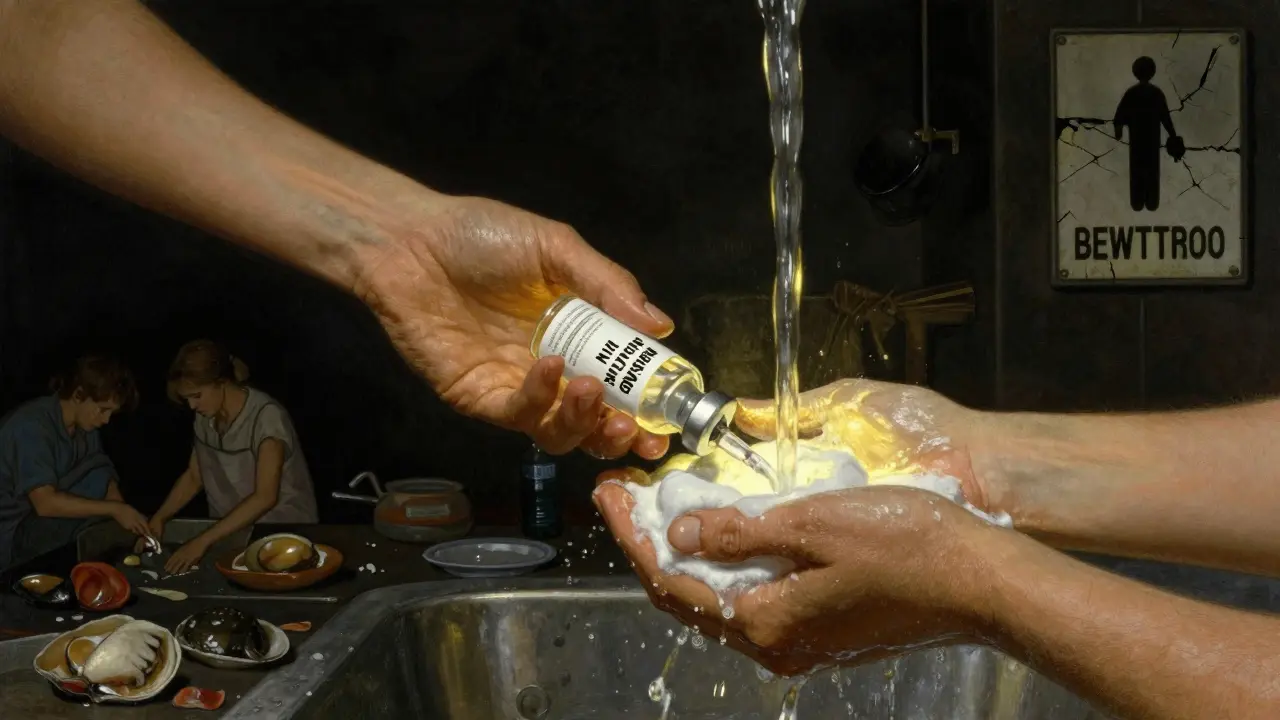
- Wash your hands with soap and water for at least 20 seconds before eating, after using the bathroom, and after touching public surfaces. Water alone cuts risk by only 20%. Soap cuts it by 70%.
- Check the source of raw shellfish or produce. If it’s imported from a country with poor sanitation, think twice.
- Ask about vaccines - if you work with food, get vaccinated. If you’re traveling, get a shot at least two weeks before departure.
- Don’t eat food handled by someone who’s sick - even if they say they’re fine. Symptoms take weeks to show.
There’s new tech coming. Researchers are testing wastewater monitoring in restaurants to detect the virus before anyone gets sick. Early results show 89% accuracy. Point-of-care blood tests are also in trials - they could give results in minutes instead of days.
The Bigger Picture
Hepatitis A isn’t just a health issue - it’s an economic one. A single outbreak can cost $100,000 to $500,000 in investigations, lost work, and public health response. But prevention pays off. Experts say for every dollar spent on vaccinating food workers, you save $3.20 in outbreak costs.
The solution isn’t complicated: vaccinate the people who handle food, enforce handwashing, and make sure restaurants have clean facilities. But it needs leadership, funding, and accountability.
Right now, the system is patchy. Some places are ahead. Others are still waiting for someone to get sick before they act.
You don’t need to fear food. But you should know how it can carry a silent threat - and what steps actually work to stop it.
Can you get hepatitis A from kissing or casual contact?
No, hepatitis A is not spread through kissing, hugging, or sharing utensils unless there’s direct contact with fecal matter - like if someone doesn’t wash their hands after using the bathroom and then touches your food or mouth. The virus spreads through the fecal-oral route, not through saliva or skin contact.
How long does it take to get sick after being exposed?
The incubation period is usually 28 days, but it can range from 15 to 50 days. You can spread the virus to others up to two weeks before you even feel sick, which is why outbreaks are so hard to trace.
Do you need a booster shot after the first hepatitis A vaccine?
Yes, the full vaccine series requires two doses, usually given 6 to 18 months apart. The first dose gives good protection, but the second dose ensures long-term immunity - often lasting 25 years or more. One shot alone isn’t enough for lasting protection.
Can you get hepatitis A more than once?
No. Once you recover from hepatitis A, your body develops lifelong immunity. You won’t get it again. That’s why vaccination is so effective - it tricks your body into thinking it’s had the infection, so it builds the same protection without making you sick.
Is hepatitis A deadly?
Most people recover fully without long-term damage. But in rare cases - especially in adults over 50 or those with existing liver disease - it can cause severe liver failure. About 1 in 250 people with hepatitis A will need hospitalization. Death is uncommon, but it does happen.
Why can’t you just rely on hand sanitizer instead of soap and water?
Hand sanitizer doesn’t kill hepatitis A. The virus has a tough outer shell that alcohol-based sanitizers can’t break down. Only thorough handwashing with soap and running water removes it effectively. That’s why food workers are required to wash with soap - not just use sanitizer.
Should I get tested for hepatitis A if I think I was exposed?
Testing isn’t needed if you get post-exposure prophylaxis within 14 days. But if you develop symptoms like jaundice, dark urine, or nausea, get tested. Doctors look for HAV IgM antibodies - these show up early and confirm a recent infection. Testing after exposure without symptoms won’t help guide treatment.
Are children at risk of getting hepatitis A from food?
Children under 6 often have no symptoms when infected, but they can still spread the virus. That’s why vaccination starts at age 1 in the U.S. - it protects them and prevents them from unknowingly spreading it to others, including vulnerable adults.





Written by Martha Elena
I'm a pharmaceutical research writer focused on drug safety and pharmacology. I support formulary and pharmacovigilance teams with literature reviews and real‑world evidence analyses. In my off-hours, I write evidence-based articles on medication use, disease management, and dietary supplements. My goal is to turn complex research into clear, practical insights for everyday readers.
All posts: Martha Elena