
Most people don’t talk about hemorrhoids-until they have them. Then it’s all you can think about. The itching, the pain, the embarrassment. But here’s the truth: hemorrhoids are incredibly common. About 75% of people will deal with them at some point in their lives. And while they’re uncomfortable, they’re rarely dangerous. The real issue? Knowing whether you’re dealing with internal or external hemorrhoids-and what to do about it.
What Exactly Are Hemorrhoids?
Hemorrhoids aren’t some strange abnormality. They’re normal blood vessels in your rectum and anus that help control stool passage. Think of them like cushions. But when pressure builds up-from straining, pregnancy, sitting too long, or constipation-those cushions swell. That’s when they become a problem. There are two main types: internal and external. They’re not just different in location-they’re different in how they feel, what they do, and how you treat them.Internal Hemorrhoids: Silent But Not Harmless
Internal hemorrhoids form inside the rectum, above a line called the dentate line. This area has no pain nerves. So even when they swell, you often won’t feel pain. That’s why so many people don’t realize they have them until they see bright red blood on the toilet paper or in the bowl after a bowel movement. Doctors grade internal hemorrhoids from I to IV:- Grade I: Just swollen. May bleed, but don’t prolapse (protrude).
- Grade II: Protrude during straining but pop back in on their own.
- Grade III: Protrude and need to be pushed back in by hand.
- Grade IV: Stay outside permanently. Can’t be pushed back.
External Hemorrhoids: Pain You Can’t Ignore
External hemorrhoids form under the skin around the anus. This area is packed with pain nerves. So even a small swelling can feel like a throbbing, burning, or stabbing ache. You’ll likely see a visible lump. It might be skin-colored and soft-or if a blood clot forms inside, it turns purple or blue and feels hard. That’s called a thrombosed external hemorrhoid. It’s the kind that makes sitting unbearable. You might feel it when you wipe, or even when you walk. Unlike internal hemorrhoids, external ones rarely bleed unless they rupture. But the pain? It’s immediate and intense. Many people delay seeing a doctor because they think it’s just a pimple or an infected hair follicle. It’s not. It’s a swollen vein with a clot.Can You Have Both at Once?
Yes. And it’s more common than you think. You might have a Grade II internal hemorrhoid that occasionally bleeds, and a small external one that itches constantly. The mix makes it hard to tell what’s causing what. That’s why self-diagnosis often goes wrong. Many people assume any rectal bleeding is from hemorrhoids. But it could be an anal fissure (a small tear), Crohn’s disease, or even colorectal cancer. Fissures cause sharp, tearing pain during bowel movements-not the dull ache or itching of hemorrhoids. And while hemorrhoids might bleed without pain, fissures hurt without much bleeding. If you’re unsure, don’t guess. See a doctor.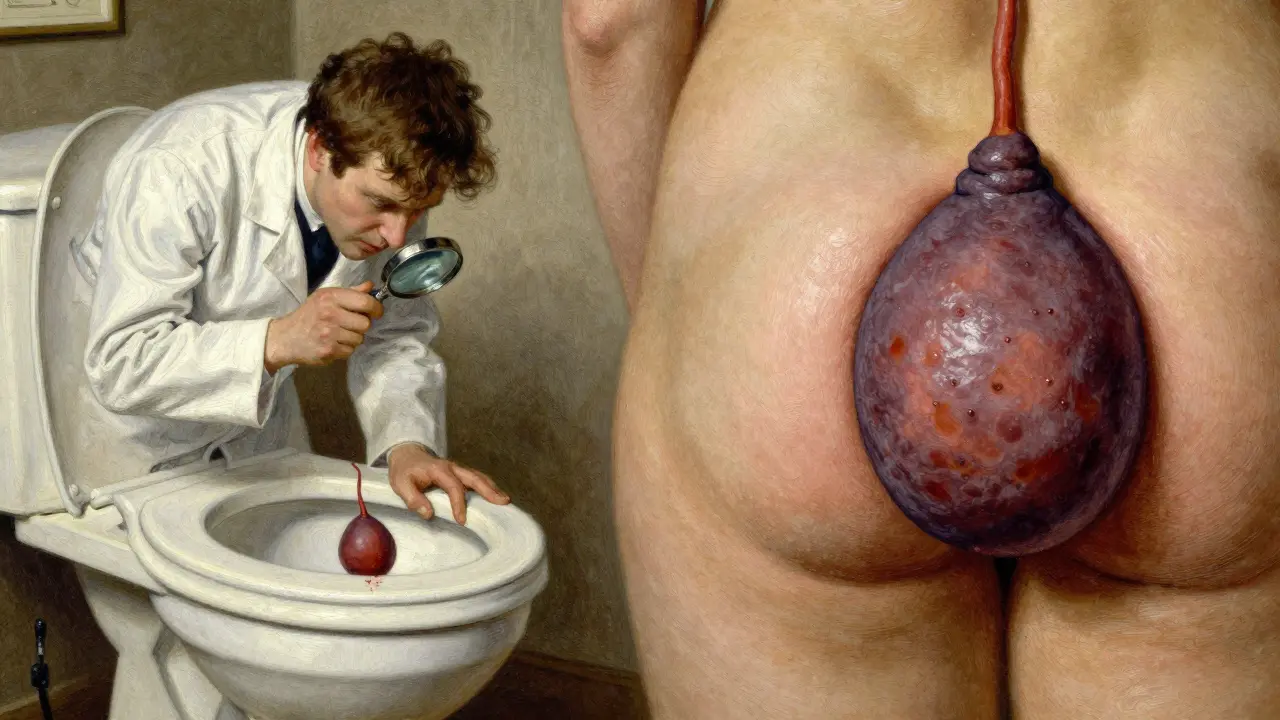
What Causes Hemorrhoids?
It’s not just “eating too little fiber.” Though that’s a big part. Here’s what actually pushes those veins to swell:- Chronic constipation or diarrhea
- Straining during bowel movements
- Sitting for long periods-especially on the toilet
- Pregnancy (up to 35% of pregnant women get them)
- Obesity
- Heavy lifting
- Aging (tissues weaken over time)
Home Treatments That Actually Work
For mild cases, you don’t need surgery. You need lifestyle changes.- Eat 25-30 grams of fiber daily: Oats, beans, lentils, apples, pears, broccoli. If you can’t get enough from food, try psyllium husk (Metamucil). It’s cheap, effective, and gentle.
- Drink 8-10 glasses of water: Fiber pulls water into your stool. Without enough fluid, you’ll just get harder poop.
- Take sitz baths: Sit in warm (not hot) water for 15-20 minutes, 2-3 times a day. It reduces swelling and soothes irritation.
- Use witch hazel pads: They’re cooling and anti-inflammatory. No alcohol-based wipes-they dry out the skin.
- Try hydrocortisone cream (short-term): For itching and swelling. Don’t use it longer than a week without talking to a doctor.
- Avoid straining: If you don’t have a bowel movement in 5 minutes, get up. Try again later.
When You Need More Than Home Care
If home treatments don’t help after a week-or if you’re bleeding heavily, feeling dizzy, or the pain is getting worse-it’s time for medical help. For internal hemorrhoids, doctors have three minimally invasive options:- Rubber band ligation: A tiny band is placed around the base of the hemorrhoid. It cuts off blood flow. The hemorrhoid shrinks and falls off in 5-7 days. It’s 90% effective for Grades I-III. You’ll feel pressure or mild cramping for a day or two.
- Sclerotherapy: A chemical solution is injected into the hemorrhoid. It causes scarring and shrinkage. Less painful than banding, but slightly less effective.
- Infrared coagulation: A brief burst of heat seals off the blood vessels. Good for small hemorrhoids. Usually done in the doctor’s office with no downtime.
Surgery: Last Resort
If you have Grade IV hemorrhoids, recurrent problems, or failed other treatments, surgery might be needed.- Hemorrhoidectomy: The hemorrhoid is completely removed. It’s the most effective option-95% success rate. But recovery takes 2-4 weeks. Pain is significant. You’ll need prescription painkillers.
- Stapled hemorrhoidopexy: The prolapsed tissue is pulled back up and stapled. Less pain than removal, but higher chance of recurrence. Not ideal for bleeding hemorrhoids.

What Doesn’t Work (And Why You Should Avoid It)
The internet is full of “miracle cures”: herbal creams, essential oils, tea tree oil, apple cider vinegar rinses. None of these have solid scientific backing. Some can burn your skin. Others just waste your money. The American Society of Colon and Rectal Surgeons says: Stick to evidence-based treatments. That means fiber, water, sitz baths, and doctor-approved procedures-not Instagram hacks.Prevention: The Real Long-Term Fix
Hemorrhoids come back if you don’t change your habits. Studies show:- People who stick to high-fiber diets and drink enough water have only a 5-10% chance of recurrence.
- Those who go back to poor habits? Up to 50% get them again.
- Start your day with a glass of water and a high-fiber breakfast.
- Take a 10-minute walk after meals-it helps digestion.
- Don’t delay bowel movements. The longer you wait, the harder it gets.
- Use a footstool. It’s simple. It works.
- Stay active. Even light walking helps prevent constipation.
When to See a Doctor
Don’t wait until it’s unbearable. Call a doctor if:- Bleeding continues for more than a week
- You feel lightheaded or dizzy (sign of blood loss)
- Pain doesn’t improve after a week of home care
- You notice changes in bowel habits-like diarrhea or constipation that lasts
- You’re over 50 and have new rectal bleeding
Can hemorrhoids turn into cancer?
No, hemorrhoids do not turn into cancer. But they can mask symptoms of colorectal cancer, like rectal bleeding or changes in bowel habits. That’s why any new or persistent bleeding-especially after age 50-needs evaluation by a doctor. Don’t assume it’s just hemorrhoids.
Are hemorrhoids contagious?
No. Hemorrhoids are not caused by an infection or virus. They’re a result of pressure and swelling in blood vessels. You can’t catch them from someone else, and you can’t spread them to others.
Can I use regular toilet paper?
It’s better to avoid regular toilet paper if you have active hemorrhoids. It can irritate the skin. Use unscented, alcohol-free wipes, or moisten soft tissue with water. A bidet or gentle rinse with a spray bottle works well too. Pat dry-don’t rub.
Will hemorrhoids go away on their own?
Small hemorrhoids often shrink on their own within a few days, especially with proper diet and hydration. But if they’re large, prolapsed, or thrombosed, they won’t disappear without treatment. Home care helps manage symptoms, but doesn’t fix the underlying issue if pressure keeps building.
Is it safe to exercise with hemorrhoids?
Yes-unless you’re doing heavy lifting or intense core workouts that strain the pelvic area. Walking, swimming, yoga, and cycling are all fine. In fact, movement helps prevent constipation. Avoid exercises that involve holding your breath or bearing down. Focus on breathing naturally.
Can diet really fix hemorrhoids?
Diet doesn’t cure them overnight, but it’s the most powerful tool for prevention and long-term relief. Fiber softens stool, so you don’t strain. Water keeps it moving. People who eat 30g of fiber daily and drink enough water report up to 80% fewer symptoms. It’s not magic-it’s basic physiology.





Written by Martha Elena
I'm a pharmaceutical research writer focused on drug safety and pharmacology. I support formulary and pharmacovigilance teams with literature reviews and real‑world evidence analyses. In my off-hours, I write evidence-based articles on medication use, disease management, and dietary supplements. My goal is to turn complex research into clear, practical insights for everyday readers.
All posts: Martha Elena