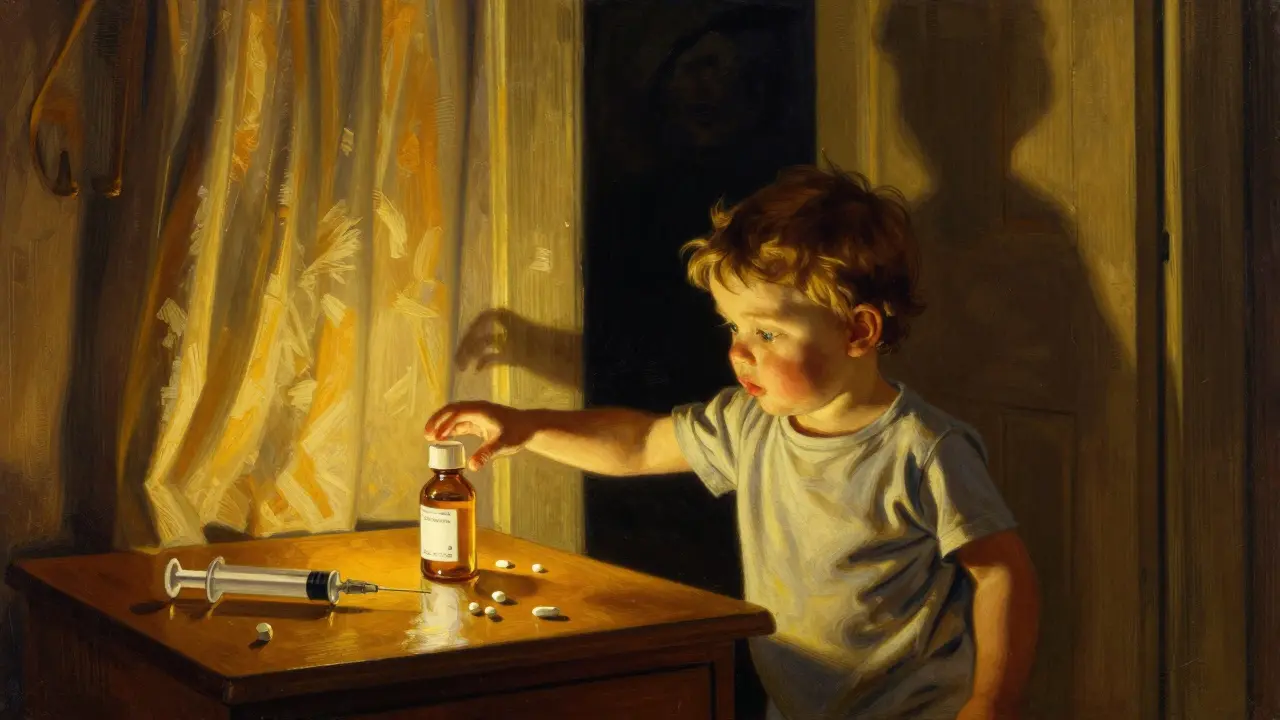
Every year, medication is the number one cause of poisoning in children under five. In the U.S. alone, about 60,000 kids end up in emergency rooms because they got into medicine they weren’t supposed to. And here’s the scary part: in most cases, the medicine wasn’t locked away. It was on a nightstand, in a purse, or left on the counter while you answered the door. It happens fast. One second you’re giving your toddler a drop of fever medicine, the next you’re turning around and it’s gone.
Medicines Are Everywhere - Even Where You Don’t Think
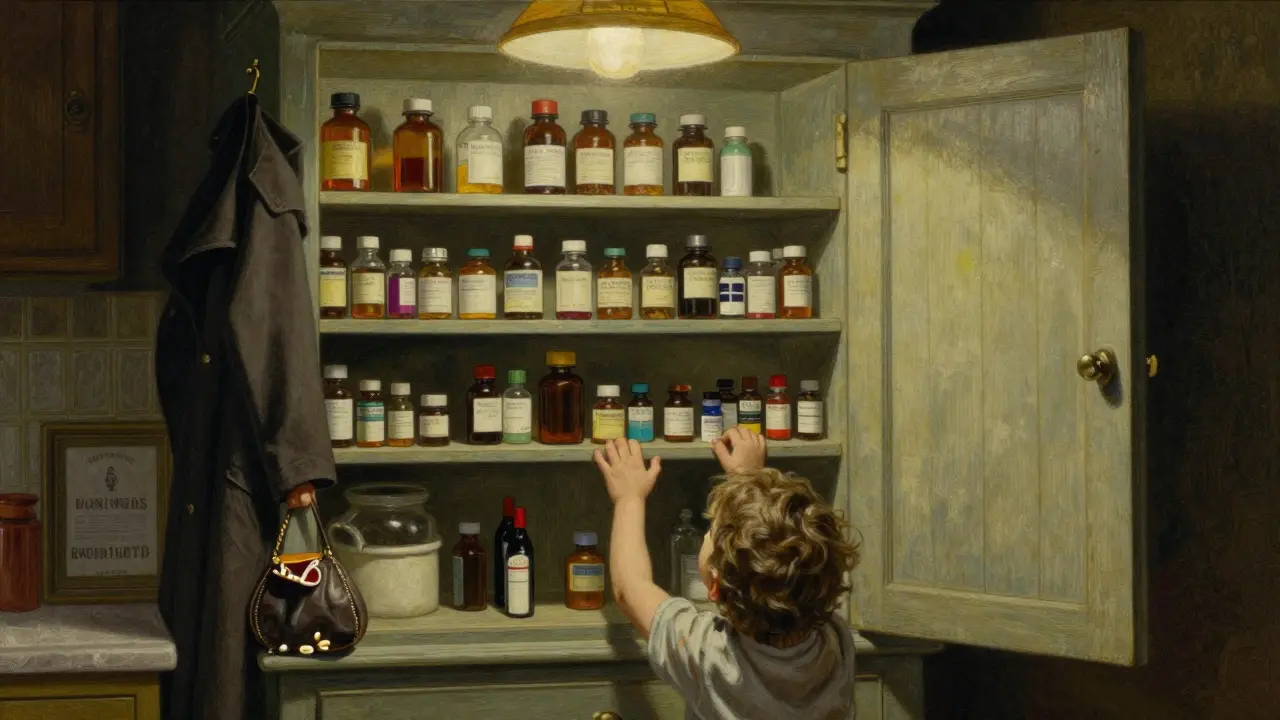
You might think you’re safe because you keep your prescription pills in the bathroom cabinet. But that’s one of the most dangerous places. Kids climb. They pull open drawers. They reach into bags. A 2023 safety report found that 78% of accidental poisonings happen because medicine was left on nightstands, dressers, or side tables. Another 15% come from purses or diaper bags left on the floor. Even kitchen counters - where you might leave a bottle of children’s Tylenol - account for 12% of incidents.And it’s not just prescription drugs. Vitamins, supplements, cough syrups, and even topical creams like hydrocortisone can be toxic if a child swallows them. One gummy vitamin with iron can cause serious harm. A single dose of adult ibuprofen can be deadly for a toddler. The problem isn’t just access - it’s how normal these things look. A bottle of liquid medicine looks like juice. A pill looks like candy.
Stop Relying on Child-Resistant Caps
You’ve probably heard that medicine bottles have “child-resistant” caps. That’s true. But here’s what no one tells you: child-resistant is not childproof. A 2020 study in the JAMA Network found that while these caps slow kids down, they don’t stop them. In fact, half of children under five can open them within minutes - especially if they’ve seen an adult do it. And if you don’t twist the cap all the way closed after each use? It’s practically useless.Don’t mistake convenience for safety. If you’re in a rush and just snap the cap shut without twisting, you’re giving your child an open door. Always make sure the cap clicks or locks. And never leave a bottle sitting out with the cap barely on.
Store Medicines Up, Away, and Out of Sight
The CDC’s “Up and Away and Out of Sight” program isn’t just a slogan - it’s the most effective strategy proven to cut poisoning incidents by nearly 30%. That means:- Store all medicines at least 48 inches off the floor - above counter height, where kids can’t reach or even see them.
- Use locked cabinets, not just latches. Safety latches alone reduce access by only 35%. Locked cabinets with keys or codes cut it to 89%.
- The best spots? Top shelf of a linen closet, a high kitchen cabinet with a lock, or a dedicated medicine safe. These are the places 45-76% of families who’ve successfully prevented accidents use.
Don’t put medicine in the bathroom. Humidity and heat can ruin pills. The ideal temperature is between 68-77°F (20-25°C). A bedroom closet or a locked cabinet in the laundry room works better.
Visitors Are a Hidden Risk
You might think your home is safe - until your sister visits with her asthma inhaler. Or your dad drops off his blood pressure pills in his coat pocket. A 2023 study by Child Care Aware found that 28% of accidental poisonings happen because of medicines brought in by guests.Make it part of your routine: when someone comes over, say, “Can I hang up your coat and bag? I’ve got a little one crawling everywhere.” Keep purses, backpacks, and coats in a closed closet or room away from play areas. If you have a guest room, keep any medicine they bring locked up - even if they say it’s “just for tonight.”
Dosing Mistakes Are Just as Dangerous
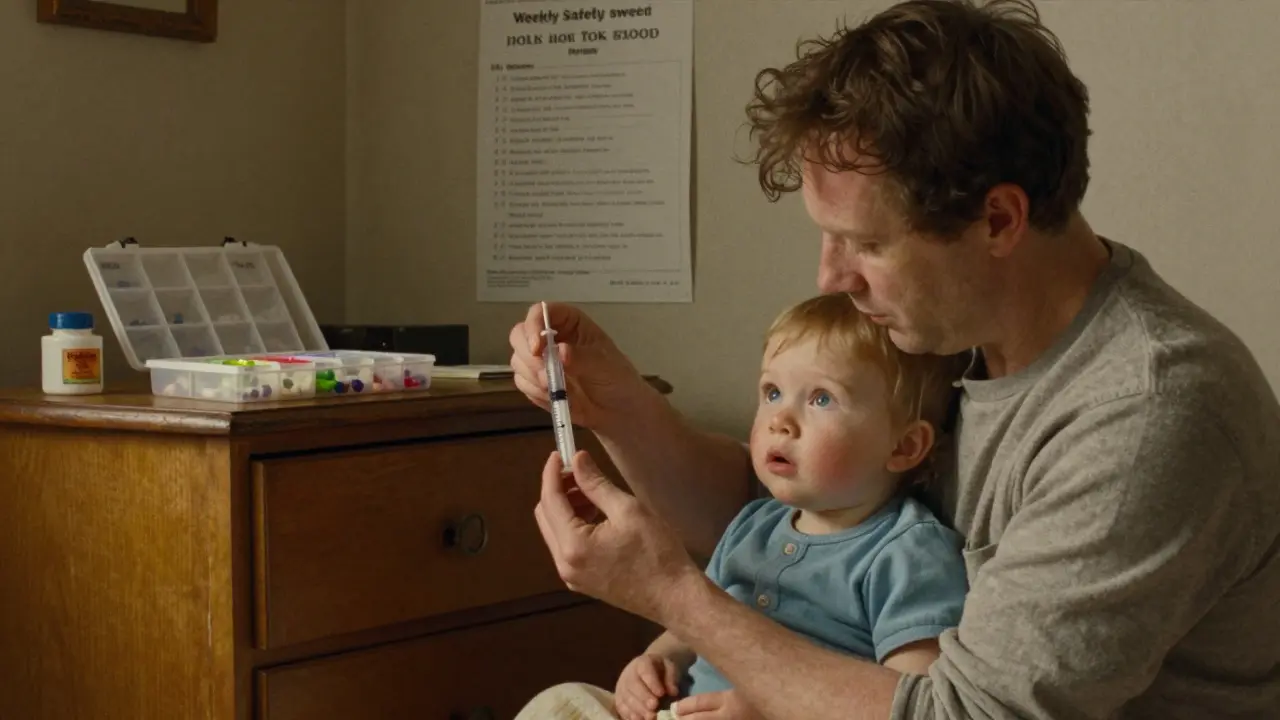
Even if your child never gets into the bottle, wrong dosing can land them in the ER. A 2022 study from the University of Michigan found that kitchen spoons vary wildly in size - from 2.5mL to 7.3mL. That means if you use a regular teaspoon to give medicine, you could be giving 250% too much or too little.Always use the dosing tool that comes with the medicine: a syringe, cup, or dropper. And make sure it’s marked in milliliters (mL) only. No teaspoons, tablespoons, or “shots.” If the label says “5mL,” don’t guess - measure it. Also, check the concentration. Infant ibuprofen is not the same as adult ibuprofen. One can be three to four times stronger. Read the label every single time.
And never, ever call medicine “candy.” That’s not harmless play - it’s a 40% higher risk of accidental ingestion, according to HealthyChildren.org. Kids learn fast. If they hear you say, “Here’s your medicine candy,” they’ll believe it.
Use Pill Organizers Correctly
Pill organizers are great for adults who need to remember doses. But they’re a disaster for kids if left on the counter. If you use one, only fill it for the day you need it. Don’t keep a full week’s supply sitting out. And never store it where a child can reach it - even if it’s in a drawer. A 2023 survey found that 12% of poisonings happened because kids found a pill organizer left on a dresser.Think of it like this: a pill organizer is a tool, not a storage solution. Treat it like a loaded gun - only take it out when you’re ready to use it.
Dispose of Unused Medicine the Right Way
Don’t flush pills down the toilet. Don’t toss them in the trash with the bottle still on. And don’t save “just in case.” The FDA says the safest way to dispose of old or expired medicine is to mix it with something unappetizing - like coffee grounds, kitty litter, or dirt - then seal it in a plastic bag before throwing it away. This method stops kids (and pets) from digging through the trash.If you live in a rural area and there’s no take-back program nearby, this is your best option. A 2022 study showed this method prevents 95% of accidental access during disposal. And if you’ve had opioids in the house - even a single pain pill - proper disposal cuts accidental access by 74%. Don’t wait. Get rid of unused meds as soon as they’re no longer needed.
Talk to Your Child - Early and Often
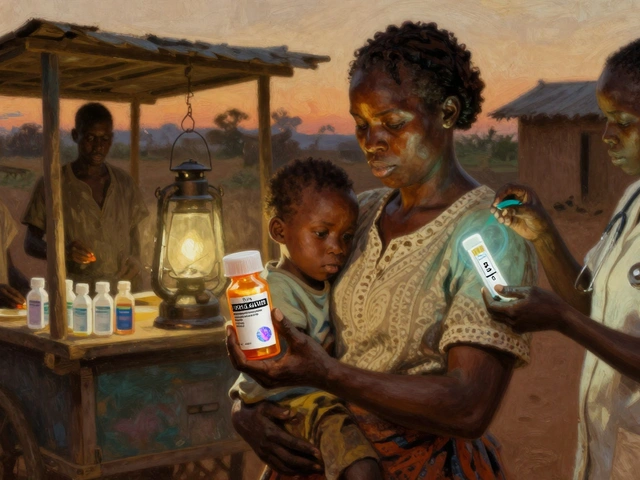
Kids start understanding simple rules by age two. That’s when you can start teaching them about medicine. Say it clearly: “Medicine is not candy. It’s for helping when you’re sick, and only grown-ups know how to use it safely.”Studies show that kids who hear this message regularly from age two to five are 65% better at recognizing medicine as dangerous than those who don’t. It’s not about scaring them - it’s about building a clear boundary. When they see a bottle, they’ll know: “That’s not mine.” And that knowledge can save their life.
Do a Weekly Safety Sweep
Even the most careful households miss things. A pill falls out of a cap. A grandparent brings medicine and forgets. A bottle gets moved during cleaning. That’s why a weekly five-minute safety sweep matters.Walk through every room. Check:
- Under beds and furniture
- On nightstands and dressers
- In diaper bags and purses
- On kitchen counters
- In coat pockets
Look for dropped pills, open bottles, or misplaced syringes. If you find anything out of place, put it away - right then. This habit takes less time than checking your phone. But it’s the difference between safety and a trip to the ER.
What to Do If Your Child Gets Into Medicine
If you suspect your child swallowed medicine - even one pill - don’t wait. Don’t try to make them throw up. Don’t call your doctor first. Call Poison Control immediately. In New Zealand, that’s 0800 764 766. In the U.S., it’s 1-800-222-1222. Have the medicine bottle with you when you call. Tell them what was taken, how much, and when. They’ll tell you exactly what to do.Time matters. Most poisonings can be handled at home if caught early. But every minute counts.
Are child-resistant caps enough to keep kids safe?
No. Child-resistant caps can be opened by many children under five, especially if they’ve seen an adult open them. They slow access but don’t prevent it. Always store medicine in a locked cabinet or high, out-of-reach place - even if the cap is on.
Can I store medicine in the bathroom?
It’s not ideal. Bathrooms are humid and hot, which can damage medicine. Plus, kids can reach sinks and cabinets. Store medicine in a cool, dry place like a locked kitchen cabinet or bedroom closet instead.
Is it safe to use a kitchen spoon to give medicine?
No. Kitchen spoons vary in size by up to 250%. A teaspoon might hold 2.5mL or 7.3mL - that’s a huge difference in medicine dosage. Always use the syringe, dropper, or cup that came with the medicine, and measure in milliliters (mL).
What should I do if my child swallows medicine?
Call Poison Control immediately - don’t wait for symptoms. In New Zealand, dial 0800 764 766. Have the medicine bottle ready. Do not induce vomiting unless instructed. Quick action saves lives.
Should I call medicine “candy” to make my child take it?
Never. Calling medicine candy increases the chance of accidental ingestion by 40%. Kids learn from what you say. Teach them: “Medicine is not candy - only grown-ups give it.”
How often should I check for dropped pills or open bottles?
Once a week. Do a quick safety sweep of every room - under beds, on nightstands, in bags, and on counters. Even one dropped pill can be dangerous. Making this a habit reduces risk significantly.





Written by Martha Elena
I'm a pharmaceutical research writer focused on drug safety and pharmacology. I support formulary and pharmacovigilance teams with literature reviews and real‑world evidence analyses. In my off-hours, I write evidence-based articles on medication use, disease management, and dietary supplements. My goal is to turn complex research into clear, practical insights for everyday readers.
All posts: Martha Elena