
Traveling doesn’t have to wreck your weight management goals. But if you’ve ever stood in an airport terminal staring at a wall of fried chicken sandwiches, sugary smoothies, and oversized burritos, you know how easy it is to blow your diet. The good news? Airports and restaurants have changed. Healthy options aren’t rare anymore-they’re growing fast. In fact, airport food now includes more plant-based, high-protein, and fiber-rich meals than ever before.
Why Airports Are No Longer a Weight Loss Trap
Ten years ago, your only choices at the gate were a greasy burger, a bag of chips, or a soda. Today, major airports like Chicago O’Hare, Los Angeles International, and Dallas Fort Worth have strict nutrition guidelines. Some require at least 25% of food options to meet specific calorie, fat, and sodium limits. California law even forces menus to display calorie counts. And it’s working. According to the Airports Council International, healthy food options now make up nearly 40% of all airport offerings-up from less than 20% in 2018. This shift didn’t happen by accident. Travelers demanded better choices. Business travelers, in particular, pushed for meals that keep energy steady during long flights. Now, you can find grilled chicken salads, protein bowls, and even plant-based tacos at most major hubs. The key isn’t avoiding airports-it’s knowing what to look for.The Protein-Fiber-Fat Formula for Travel Meals
Registered dietitians like Hernandez and Sarah Schlichter agree: the secret to eating well while traveling is balance. Your ideal meal should have three things:- 15-20 grams of protein
- At least 3 grams of fiber
- Controlled carbs-under 25 grams per snack, under 45 grams per meal
- Protein sources: Grilled chicken (25g protein per 4 oz), hard-boiled eggs (6g per egg), Greek yogurt (10-20g per cup), turkey slices, tofu, or lentil bowls.
- Fiber sources: Fresh fruit cups (3-4g fiber), vegetables, whole grains like quinoa or brown rice, beans, and hummus.
- Healthy fats: A small packet of almond butter (16g fat), avocado slices, or a sprinkle of olive oil on your salad.
What to Order (and What to Avoid) at Airports
Not all "healthy" options are created equal. Here’s what actually works-and what’s a trap.Good Choices
- Grilled chicken salad with oil and vinegar (not ranch). Add extra veggies, skip the cheese and croutons. Total: ~350 calories, 30g protein.
- Mod Market burrito bowl (Denver International): Double vegetables, half rice, lean protein. Skip the sour cream and chips. Total: ~550 calories.
- Plain oatmeal with fruit and a sprinkle of nuts (Starbucks). Avoid brown sugar and flavored syrups. Total: ~320 calories, 8g protein, 5g fiber.
- Protein bar with at least 15g protein and under 25g carbs. Brands like GoMacro or RXBAR fit this. Avoid ones with sugar alcohols or candy-like coatings.
- 100-calorie almond packs (Walmart or convenience stores). Perfect for a snack between flights.
Traps to Avoid
- Yogurt parfaits from airport chains: Many have 40-48g of sugar-more than a candy bar. Check labels or skip them.
- "Healthy" smoothies like Jamba Juice’s "Green Greens": 48g of sugar. That’s 13 teaspoons.
- Pre-made grab-and-go salads: Often loaded with sodium (600-900mg per container). You’re eating 40% of your daily salt limit in one meal.
- Trail mix: A handful can be 300 calories. Buy single-serve packs (100-150 calories) or skip it.
- Buffalo Wild Wings "Fiesta Taco Salad": Menu says 590 calories. Reality? Over 1,100. Don’t trust marketing.

How to Plan Ahead (Even If You’re Last-Minute)
The biggest mistake travelers make? Showing up hungry and guessing. The solution? Spend 10 minutes before you leave.- Go to your airport’s official website (e.g., dfwairport.com/food-beverage). Look up restaurants and check menus.
- Find at least two protein-based options you like. Write them down.
- Check if your airline offers pre-order meals. Some do-especially on long-haul flights.
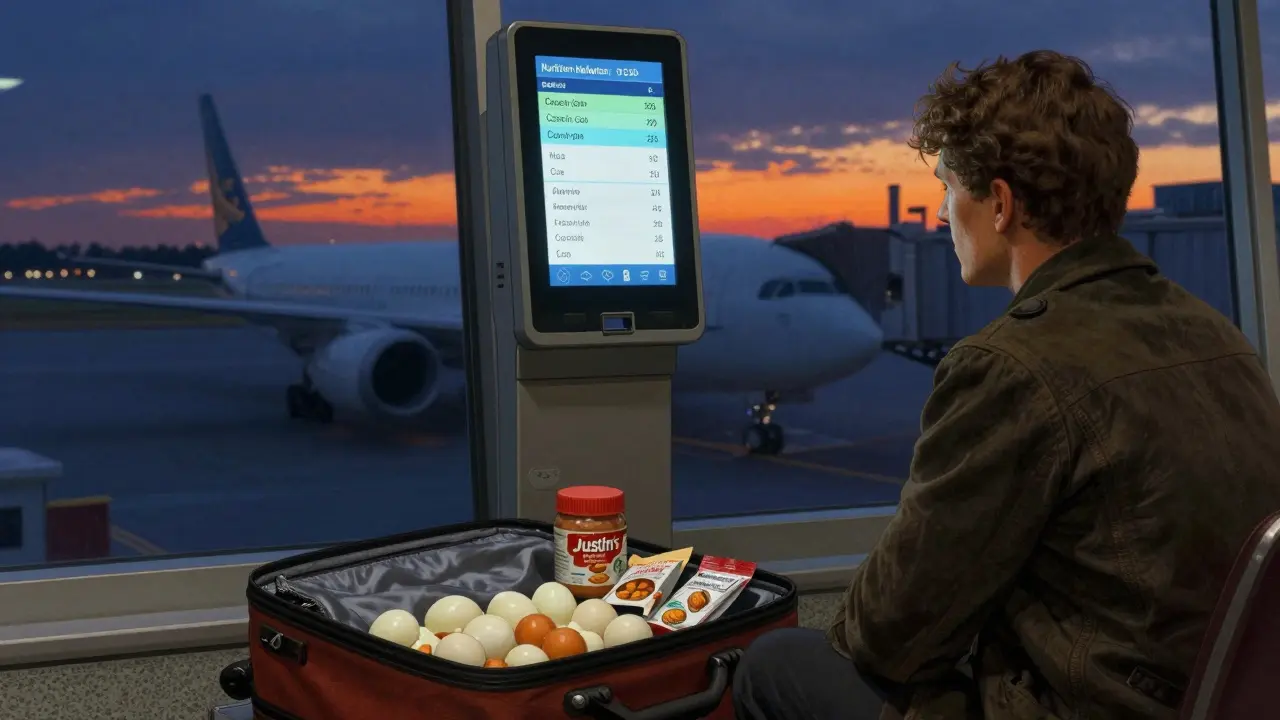
- Pack your own snacks: Hard-boiled eggs (peeled, stored in a container with a splash of water), Justin’s nut butter packets, or a protein bar.
Restaurants on the Road: Same Rules, Different Menu
Eating out at a local restaurant? Use the same formula: protein first, then veggies, then controlled carbs.- Ask for grilled, baked, or steamed-not fried.
- Swap fries for a side salad or steamed veggies.
- Request sauces and dressings on the side.
- Share an entrée or ask for half to be boxed before it’s served.
- Drink water or unsweetened tea. Skip soda, sweet cocktails, and flavored lattes.
Real Traveler Wins (and Fails)
Reddit’s r/HealthyFood community has thousands of posts from travelers who nailed it-and others who got burned.- Win: A Chicago Midway traveler eats Potbelly’s grilled chicken salad 3x a week. 350 calories. 30g protein. No regrets.
- Win: A Denver traveler uses Mod Market’s salad bar every time. Customizes everything. Stays under 600 calories.
- Fail: A New York businesswoman orders a "light" yogurt parfait at JFK. Ends up with 48g sugar. Crashes by 2 p.m.
- Fail: A family buys a "healthy" wrap at an airport kiosk. Later, they find out it has 900 calories and 1,500mg sodium.
Tools That Actually Help
Apps like Lose It! and MyFitnessPal aren’t just for home. Use them at the airport.- Scan the menu. Type in the item. See the calories and macros.
- Set a daily limit (e.g., 1,800 calories) and track what you eat.
- Use the "meal planner" feature to pre-log your airport meal before you even leave home.
What’s Coming Next
The future of airport food is even better. Dallas Fort Worth now has digital kiosks called "Nutrition Navigator" that show real-time nutrition info for every item. United Airlines partnered with Beyond Meat to offer plant-based meals in 87 airport lounges. JetBlue launched a "Evening Well" program with Mediterranean bowls designed for weight management: 450-550 calories, 25-30g protein, 8-10g fiber. This isn’t a trend. It’s a shift. Travelers are demanding better food. And airports are listening.Final Rule: Eat Like You’re Flying First Class
You don’t need to be rich to eat like you are. The best travelers don’t restrict themselves-they make smart choices. They don’t skip meals. They don’t binge. They plan. They read labels. They know what protein and fiber do to their hunger. Your goal isn’t perfection. It’s progress. One airport meal at a time.Can I bring my own food through airport security?
Yes. Solid foods like hard-boiled eggs, protein bars, nuts, fruit, and sandwiches are allowed through TSA checkpoints. Liquids, gels, and creams must follow the 3.4-ounce rule. Nut butter packets under 3.4 ounces are fine. Just keep them in a clear plastic bag with your other liquids.
What’s the best airport snack under 150 calories?
Walmart’s 100-calorie almond packs are ideal. Other good options: a single-serve hummus cup (70 calories), a small apple with 1 tablespoon of peanut butter (160 calories), or a string cheese (80 calories). Avoid trail mix unless it’s pre-portioned.
Are salads always healthy at airports?
No. Many pre-made salads are loaded with sodium, cheese, croutons, and creamy dressing. A salad can easily hit 700+ calories. Always ask for dressing on the side and choose oil and vinegar. Skip bacon, fried chicken, and tortilla strips.
How do I avoid overeating at restaurants while traveling?
Ask for half your meal to be boxed before it’s served. Order an appetizer as your main. Share with a travel partner. Drink water before eating. Wait 20 minutes before going back for seconds. These small habits prevent overeating without feeling deprived.
Should I skip meals to "save calories" for later?
Don’t. Skipping meals leads to extreme hunger, which makes you more likely to overeat later. Eat small, balanced meals every 3-4 hours. A protein-rich snack between meals keeps your blood sugar steady and your cravings in check.







Written by Martha Elena
I'm a pharmaceutical research writer focused on drug safety and pharmacology. I support formulary and pharmacovigilance teams with literature reviews and real‑world evidence analyses. In my off-hours, I write evidence-based articles on medication use, disease management, and dietary supplements. My goal is to turn complex research into clear, practical insights for everyday readers.
All posts: Martha Elena