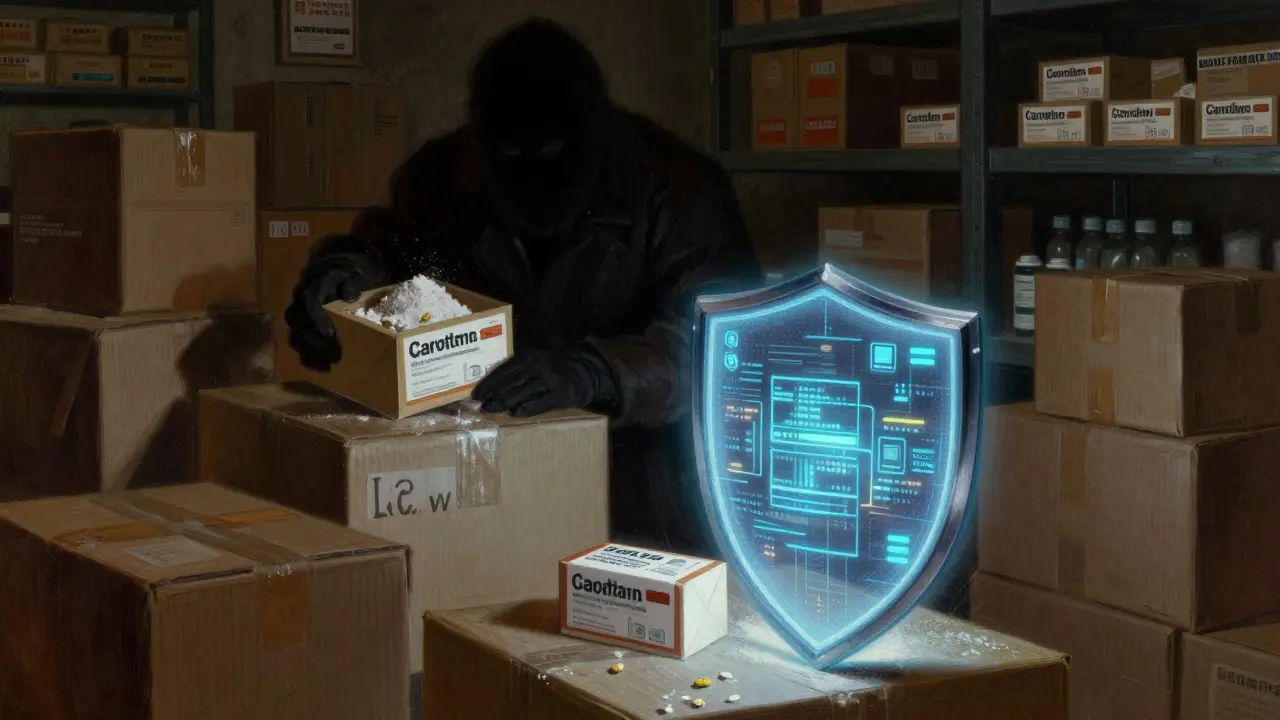
Imagine picking up your prescription for blood pressure medication, only to find out later that the pills inside contain nothing but chalk or worse, dangerous substances like fentanyl. It sounds like a scene from a thriller, but it is a real threat. Every year, billions of dollars worth of counterfeit drugs flood the global market, endangering patients who trust their pharmacists and doctors. You might wonder how we can be sure the medicine in our hands is safe. The answer lies in a massive, invisible digital shield known as pharmaceutical supply chain security.
This system isn't just about locking warehouse doors. It is a sophisticated web of laws, barcodes, and data exchanges designed to track every single box of medicine from the factory floor to your doorstep. If you have ever wondered why your pharmacy scans your prescription multiple times or why some boxes look different than they used to, this guide explains exactly what is happening behind the scenes to keep you safe.
The Legal Backbone: Understanding DSCSA
To understand how legitimate drugs are protected, you first need to know the rules of the game. In the United States, the primary law governing this process is the Drug Supply Chain Security Act (DSCSA), which was signed into law in 2013. Before this act, tracking often stopped at the case level. If a whole pallet of medicine went missing, it was hard to know exactly which individual boxes were stolen or diverted. The DSCSA changed that by requiring package-level tracing.
The goal of the DSCSA is simple: prevent harmful drugs from entering the supply chain, detect them if they do enter, and remove them quickly. This law applies to everyone involved in moving medicine-manufacturers, wholesalers, repackagers, and dispensers (like pharmacies). Over the last decade, the Food and Drug Administration (FDA) has rolled out these requirements in phases. By November 2023, the industry had to move to fully electronic data exchange, meaning no more paper records for tracking transactions. The final milestone, full interoperability between all trading partners, is set for November 2027.
Why does this matter to you? Because this legal framework forces companies to invest heavily in technology that makes it nearly impossible for fake drugs to slip through unnoticed. It creates a digital paper trail that follows your medicine everywhere it goes.
Serialization: Giving Every Box a Digital ID
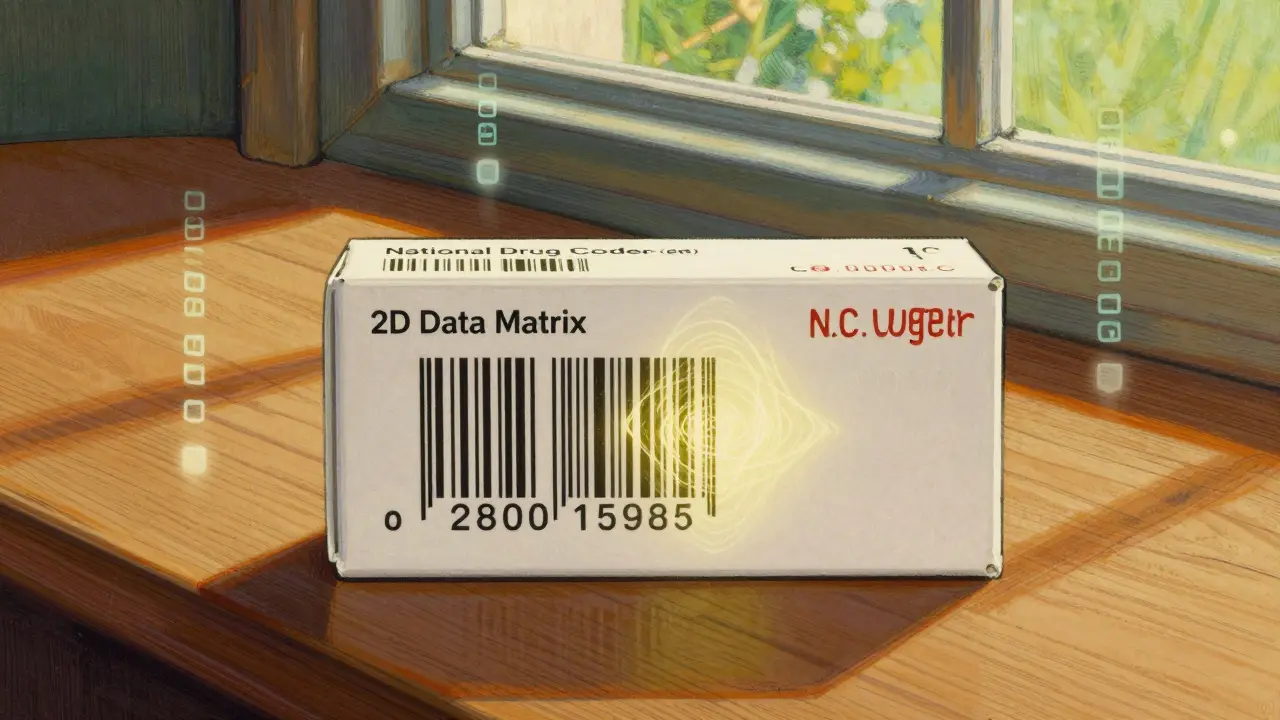
The heart of modern supply chain security is serialization. Think of it like a passport for your medicine. Every single prescription drug package must now carry a Unique Product Identifier (UPI). This UPI is embedded in a 2D Data Matrix barcode on the box. When scanned, this code reveals four critical pieces of information:
- National Drug Code (NDC): Identifies the specific drug, strength, and manufacturer.
- Serial Number: A unique number assigned to that specific package. No two boxes share the same serial number.
- Lot Number: Links the package to a specific manufacturing batch.
- Expiration Date: Ensures the product hasn't expired.
In the U.S. supply chain alone, approximately 1.2 million of these unique identifiers are generated every day. This granularity allows regulators and companies to pinpoint exactly where a problem originated. If a recall happens, instead of pulling every box of a certain drug off the shelves, authorities can identify and remove only the affected batches. This precision saves time, money, and most importantly, protects patients from unnecessary shortages of essential medicines.
How Track-and-Trace Works in Practice
Having a unique ID is useless if no one shares the data. That is where track-and-trace comes in. Under the DSCSA, when a manufacturer sells a shipment to a wholesaler, they must electronically send Transaction Information (TI), Transaction History (TH), and a Transaction Statement (TS). This data travels with the product as it moves down the chain.
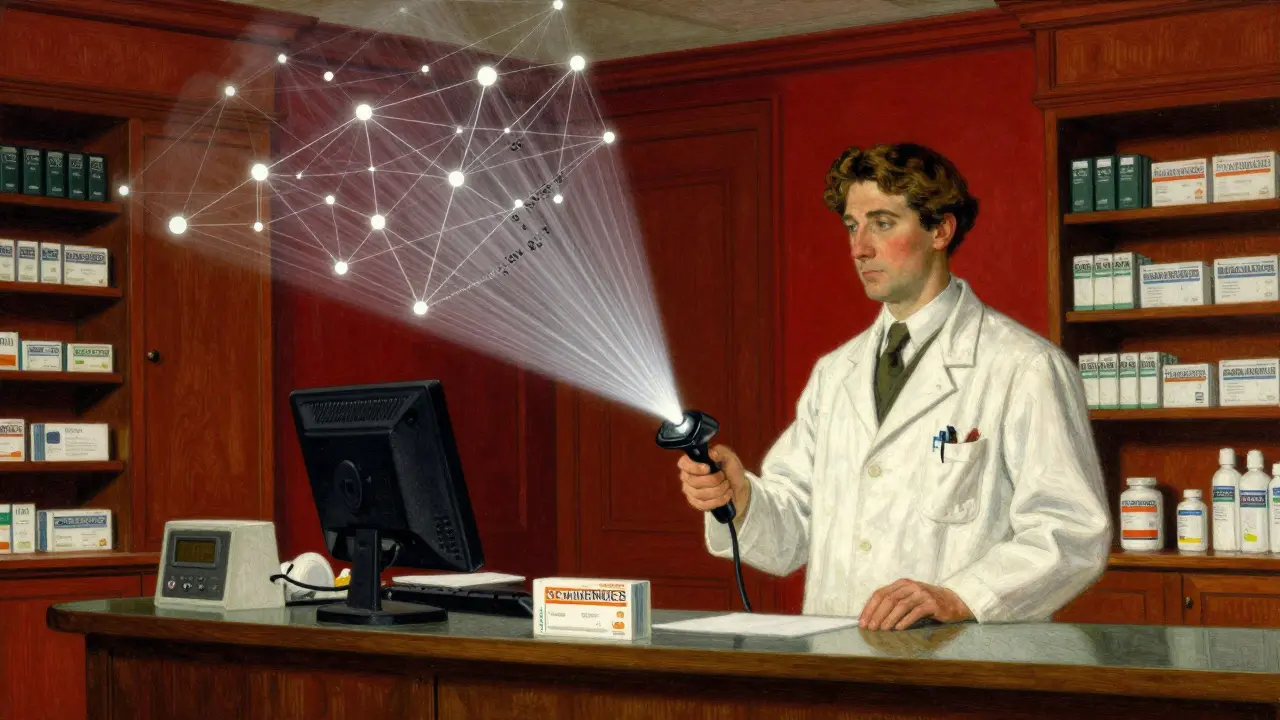
All trading partners use a standardized system called Electronic Product Code Information Services (EPCIS). Developed by GS1, this standard ensures that a database at a major manufacturer can "talk" to the system at a small independent pharmacy. As of recent FDA reports, this system processes over 15 million daily transactions with 99.95% accuracy. When a pharmacy receives a shipment, their software automatically checks the serial numbers against the expected list. If a box shows up that wasn't ordered, or if the serial number has already been marked as sold elsewhere, the system flags it immediately.
This automated verification is crucial because human error is inevitable. Machines don't get tired, and they don't miss details. They catch anomalies in seconds, preventing suspect products from ever reaching the patient.
Verifying Authenticity: What Happens When Something Looks Wrong?
Even with robust tracking, mistakes happen, or bad actors try to cheat the system. The DSCSA requires trading partners to verify the authenticity of suspect products within 24 hours. But what makes a product "suspect"? It could be a broken seal, a damaged label, or a discrepancy in the electronic records.
When a pharmacy or distributor identifies a suspect product, they must quarantine it immediately. They then contact the previous trading partner or the manufacturer to investigate. This investigation might involve checking the serial number against the manufacturer's database or even forensic testing of the pills themselves. According to FDA data, these protocols prevent approximately 12,000 suspect product incidents annually from reaching patients.
Another layer of protection is the Authorized Trading Partner (ATP) requirement. Before doing business, companies must verify that their partners are legally authorized to handle prescription drugs. The FDA maintains an ATP Verification Router Service that processes tens of thousands of requests daily. This stops unauthorized sellers, who are often sources of counterfeit goods, from infiltrating the legitimate supply chain.
Global Differences: US vs. EU Approaches
If you travel abroad, you might notice differences in how medicines are packaged. This is because different regions have different security frameworks. While the U.S. uses the DSCSA, the European Union operates under the Falsified Medicines Directive (FMD).
| Feature | U.S. (DSCSA) | EU (FMD) |
|---|---|---|
| Data Model | Decentralized electronic exchange | Centralized repository (EMVS) |
| Verification Point | Throughout the supply chain | Mandatory decommissioning at pharmacy dispensing |
| Serial Number Format | 20-character alphanumeric | 20-digit numeric |
| Anti-Tampering | Not explicitly mandated on all packages | Mandatory external and internal features |
The EU system is more centralized. All stakeholders connect to national medicine verification organizations, and the unique identifier is permanently deactivated (decommissioned) when the pharmacist hands the drug to the patient. This means if someone tries to resell that specific box, the system will reject it because it is already marked as dispensed. The U.S. model relies more on the integrity of the transaction history between partners. Both systems aim for the same result, but the technical paths differ significantly, creating challenges for multinational companies that must comply with both.
Challenges and Costs for Small Businesses
While these systems protect patients, they are not without drawbacks. The biggest complaint comes from small businesses, particularly independent pharmacies. Compliance is expensive. Implementing the necessary software, hardware scanners, and staff training can cost hundreds of thousands of dollars. For a large corporation, this is a line item in the budget. For a family-owned pharmacy, it can represent a significant percentage of net profit.
According to industry surveys, many independent pharmacies struggle with the complexity of integrating these new systems with their legacy software. False positives are another issue. Sometimes, a valid package gets flagged due to a scanning error or a minor data glitch, causing workflow interruptions. Pharmacists spend valuable time investigating these false alarms, which can delay service to patients. Despite these frustrations, most stakeholders agree that the security benefits outweigh the costs, especially given the rise of sophisticated cyberattacks targeting healthcare data, such as the 2023 Change Healthcare incident.
The Future of Drug Security
We are currently in a transition period. The next big step is the November 2027 deadline for full interoperability. Until then, many companies still use older formats or manual workarounds. Once fully implemented, the entire U.S. supply chain will operate on a unified, secure digital network. Looking further ahead, experts predict the integration of blockchain technology and artificial intelligence. Blockchain could provide an immutable ledger that is even harder to tamper with, while AI could analyze patterns to predict potential diversion risks before they happen. The goal remains the same: ensuring that when you take a pill, you are taking exactly what your doctor prescribed.
What is the main purpose of the Drug Supply Chain Security Act (DSCSA)?
The primary purpose of the DSCSA is to protect consumers from counterfeit, stolen, contaminated, or otherwise harmful drugs by establishing a secure, electronic track-and-trace system for prescription medications throughout the U.S. supply chain.
How can I tell if my medication has been serialized?
Look for a 2D Data Matrix barcode on the packaging. Unlike traditional barcodes, this square-looking code contains the National Drug Code, a unique serial number, lot number, and expiration date. Most prescription drugs sold in the U.S. now feature this code.
Why does my pharmacy scan my prescription so many times?
Pharmacies scan prescriptions to verify the authenticity of the drug using its unique serial number. This ensures the medication matches the order, hasn't been previously sold, and is part of the legitimate supply chain, complying with DSCSA regulations.
What happens if a pharmacy finds a suspect drug?
If a pharmacy identifies a suspect product, they must quarantine it immediately and notify the supplier or manufacturer within 24 hours. An investigation is launched to verify the product's authenticity before it can be released or destroyed.
Is the U.S. drug tracking system better than Europe's?
Both systems are effective but function differently. The U.S. system (DSCSA) relies on decentralized data exchange between trading partners, while the EU system (FMD) uses a centralized database and requires deactivation of the drug code upon dispensing. Neither is definitively "better," but they reflect different regulatory philosophies.
When will full electronic interoperability be required?
Full interoperability, where all trading partners must exchange product tracing information electronically in a secure, interoperable format, is mandated by November 2027 under the DSCSA.





Written by Martha Elena
I'm a pharmaceutical research writer focused on drug safety and pharmacology. I support formulary and pharmacovigilance teams with literature reviews and real‑world evidence analyses. In my off-hours, I write evidence-based articles on medication use, disease management, and dietary supplements. My goal is to turn complex research into clear, practical insights for everyday readers.
All posts: Martha Elena