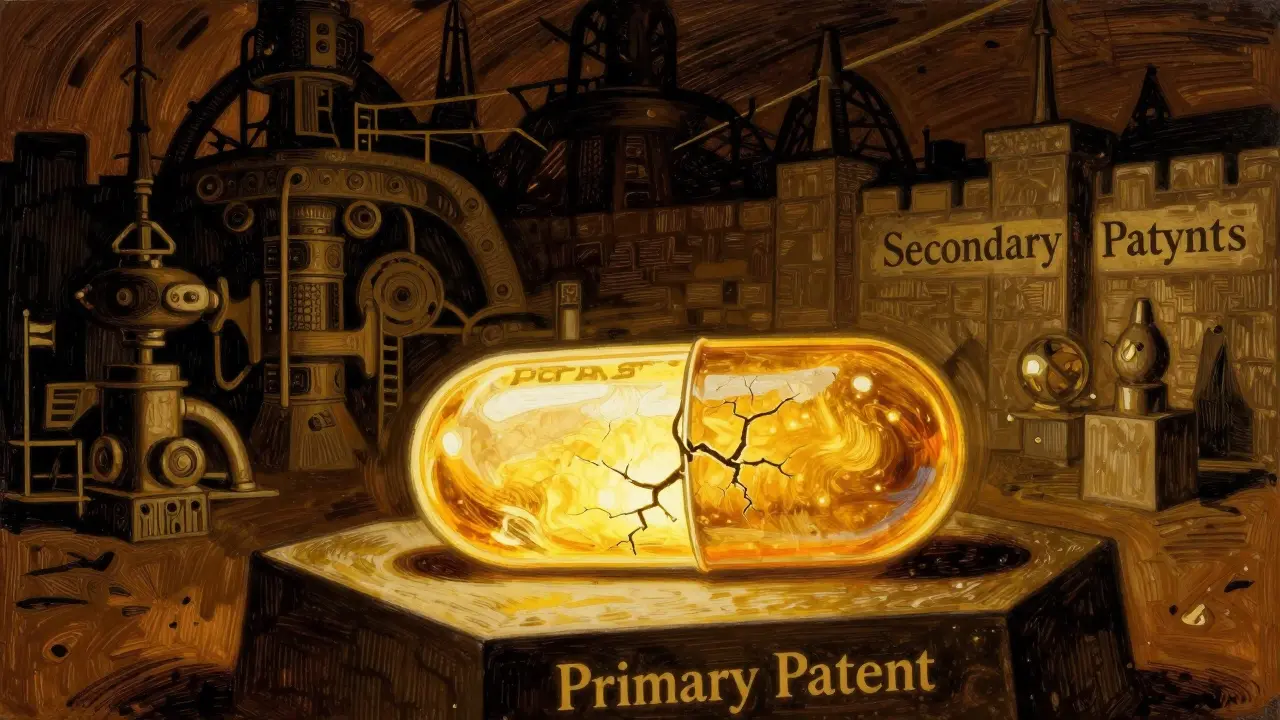
Imagine a blockbuster drug that saves millions of lives. The core chemical formula is protected by a primary patent, which typically expires after twenty years. You’d expect cheap generic versions to flood the market immediately, right? Not so fast. In the real world, brand-name pharmaceutical companies rarely let go of their monopoly easily. They use a strategy known as secondary patents to keep generics at bay for years-or even decades-after the original patent has expired.
This isn't just about protecting innovation; it's a calculated business tactic called Pharmaceutical Lifecycle Management (LCM). By filing dozens or even hundreds of additional patents covering everything from the pill’s shape to how you take it, companies create what experts call "patent thickets." These legal barriers make it incredibly difficult and expensive for generic manufacturers to enter the market. Understanding this system is crucial for anyone trying to make sense of why some medications remain exorbitantly expensive long after they should have become affordable.
What Exactly Are Secondary Patents?
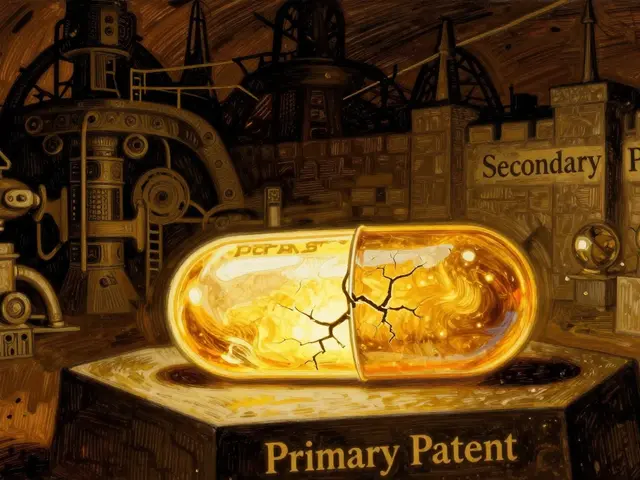
To understand secondary patents, we first need to look at the primary patent. A Primary Patent protects the active pharmaceutical ingredient (API)-the actual chemical compound that treats the disease. This is the big one. It usually lasts for twenty years from the filing date. But once that clock runs out, anyone can legally copy the molecule.
Secondary Patents, on the other hand, protect specific aspects of the drug beyond the core molecule. They cover the delivery mechanism, the manufacturing process, the dosage form, or even new medical uses for an old drug. Think of it like buying a house. The primary patent is the land itself. Secondary patents are the fence, the garden layout, the special paint used on the exterior, and the unique way the plumbing works. Even if someone else owns the land next door, they can’t build the exact same house with those specific features without your permission.
This strategy gained massive traction in the United States following the Hatch-Waxman Act of 1984. This law created the modern framework for generic drug approval but also linked patent expiration to FDA approval. It gave brands a powerful tool: if you file a secondary patent and list it with the FDA, any generic company wanting to launch must challenge that patent in court. This automatically triggers a 30-month stay on generic approval, giving the brand more time to earn revenue while the lawsuit plays out.
The Anatomy of a Patent Thicket
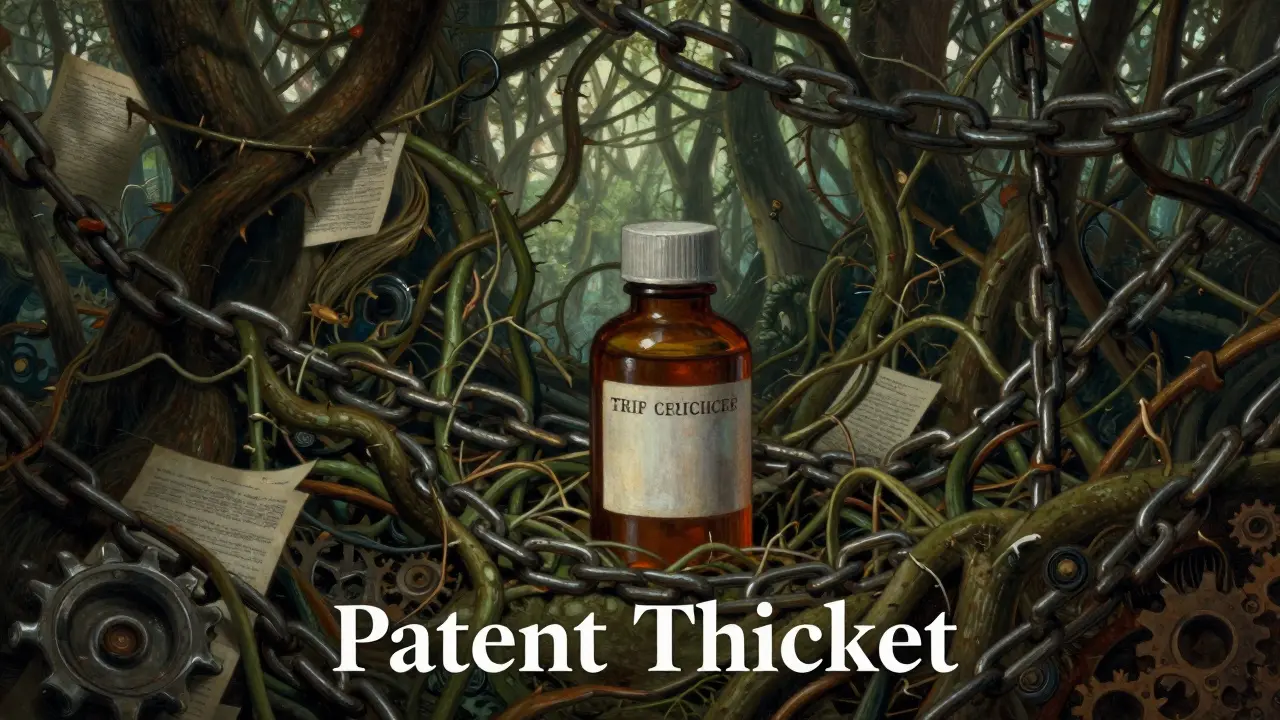
Companies don't just file one or two secondary patents. They build walls. According to data from Drug Patent Watch in 2023, a single pharmaceutical product can be covered by more than 100 patents. This cluster of overlapping intellectual property rights is known as a Patent Thicket.
Here are the most common types of secondary patents you’ll encounter:
- Formulation Patents: These protect how the drug is delivered. For example, converting a standard tablet into a sustained-release capsule that only needs to be taken once a day instead of three times. AstraZeneca famously used this with Nexium, switching from the racemic mixture of Prilosec to a single enantiomer, extending exclusivity by about eight years.
- Method-of-Use Patents: These cover new ways to treat diseases with an existing drug. Thalidomide, originally patented as a sedative in the 1950s, later received secondary patents for treating leprosy and multiple myeloma.
- Polymorph Patents: Drugs can crystallize in different shapes. GlaxoSmithKline protected a specific crystalline form of Paxil (Form G), delaying generic entry until 2005 despite the primary patent expiring in 2001.
- Dosage Regimen Patents: These protect specific dosing schedules, such as taking a certain amount every morning versus evening.
- Combination Patents: Protecting the use of the drug alongside another specific medication.
A study published in the Journal of Intellectual Property Law & Practice in 2020 found that formulation patents make up about 22% of all secondary filings, while polymorphs account for 18%. Method-of-use patents represent another 15%. Together, these categories create a dense web that generic manufacturers must navigate.
| Feature | Primary Patent | Secondary Patent |
|---|---|---|
| Protects | Active Pharmaceutical Ingredient (API) | Formulation, Use, Manufacturing, Dosage |
| Typical Duration | 20 years from filing | Varies; filed throughout lifecycle |
| Filing Timing | Early R&D stage | Any stage, often post-approval |
| Impact on Generics | Blocks all generic versions of the molecule | Blocks specific versions or uses |
| Regulatory Listing | Listed in FDA Orange Book | Selectively listed (e.g., method-of-use) |
The Economic Impact: Why It Matters to You
The stakes are incredibly high. The global pharmaceutical market was valued at $1.57 trillion in 2023. According to Evaluate Pharma, top-selling drugs generate an average of 58% of their lifetime revenue during the period protected by secondary patents. That means nearly six out of every ten dollars earned by a blockbuster drug come from this extended exclusivity phase.
For patients and healthcare systems, this translates to higher costs. When a drug like Humira faced competition, AbbVie had built a fortress of 264 secondary patents. Although the primary patent expired in 2016, these secondary protections kept generics out until 2023. During that seven-year window, annual costs reached $20 billion. Advocacy groups argue that generic competition could have reduced those costs by 80%.
Generic manufacturers face a brutal reality. Navigating these patent thickets increases their time-to-market by an average of 3.2 years and raises legal costs by $15-20 million per product, according to the Generic Pharmaceutical Association. While they file "Paragraph IV certifications" to challenge these patents, only 38% of these challenges succeed in court, as reported by Lex Machina in 2023. This asymmetry favors the incumbent brand.
Innovation or Evergreening? The Debate
Is this practice fair? The answer depends on who you ask. The debate centers on whether secondary patents drive genuine innovation or simply serve as "evergreening" tactics to delay competition.
On one side, industry advocates like the Pharmaceutical Research and Manufacturers of America (PhRMA) argue that secondary patents incentivize valuable improvements. CEO Stephen Ubl stated in 2022 that follow-on innovations lead to better safety profiles and improved dosing regimens. Dr. Tomas Philipson, former FDA chief economist, testified to Congress that secondary patents contribute approximately $14.7 billion annually to pharmaceutical R&D funding.
On the other side, public health researchers see a different picture. Dr. Aaron Kesselheim of Harvard Medical School argued in 2016 that only 12% of secondary patents correspond to clinically meaningful improvements. He described many as routine tweaks designed solely to extend monopolies. The UN Development Programme’s 2015 Guidelines went further, stating that many forms of pharmaceutical innovation protected by secondary patents are "inherently routine" and should be treated as obvious or non-inventive unless exceptional circumstances exist.
This divide highlights a fundamental tension: balancing the reward for innovation against the public's need for affordable access to medicines.
Global Differences in Patent Enforcement
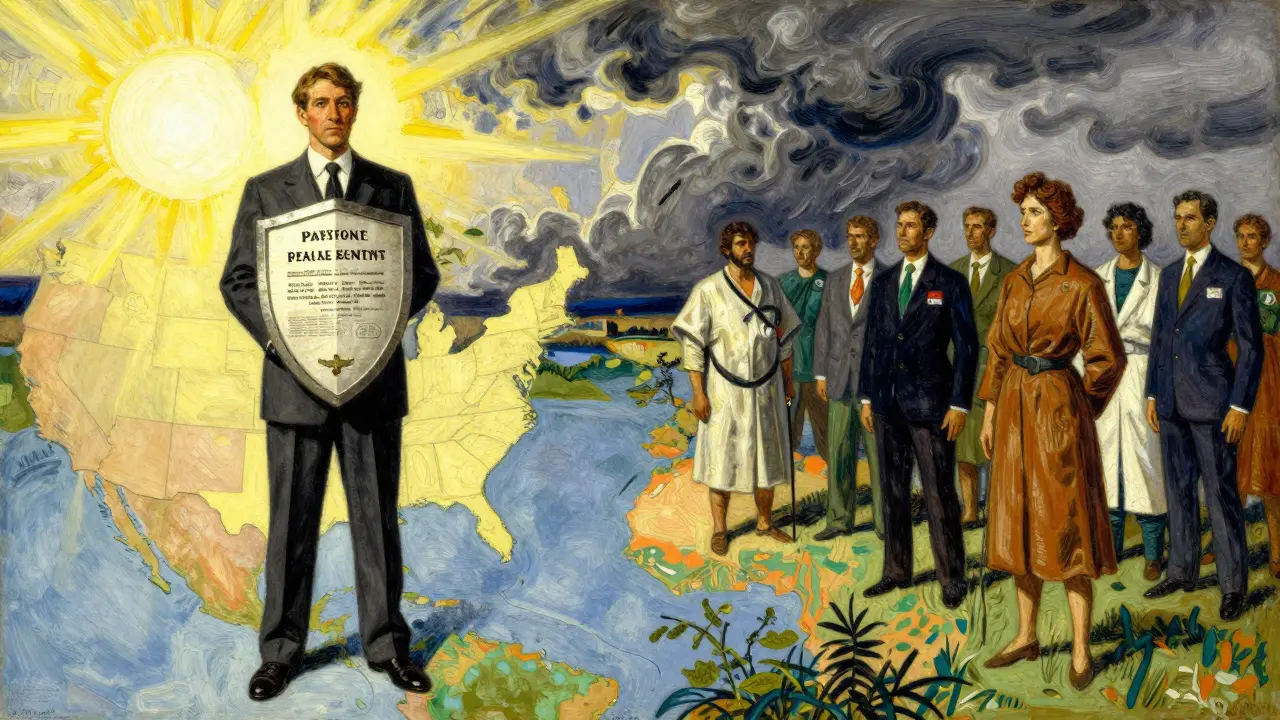
Not every country allows this level of extension. The effectiveness of secondary patents varies significantly depending on local laws.
In the United States, the Hatch-Waxman framework permits broad secondary patenting. However, other nations have erected barriers. India’s Section 3(d) of the Patents Act (2005) specifically prohibits patenting new forms of known substances unless they demonstrate enhanced efficacy. This clause prevented Novartis from obtaining a secondary patent for Gleevec’s beta-crystalline form in 2013, allowing cheaper generics to enter the Indian market much earlier.
Brazil requires additional approval from its health ministry for pharmaceutical patents, creating another hurdle for enforcement. Meanwhile, the European Medicines Agency often demands demonstration of "significant clinical benefit" for certain secondary patents. These regional differences mean that a drug might be under heavy patent protection in the US while being available as a generic in India or Brazil within a few years of the primary patent's expiry.
The Future of Secondary Patents
The landscape is shifting. Regulatory scrutiny is intensifying globally. The US Inflation Reduction Act of 2022 introduced provisions allowing Medicare to negotiate prices and potentially challenge certain secondary patents. The European Commission’s 2023 Pharmaceutical Strategy explicitly targets "patent thickets" as barriers to generic entry.
Furthermore, courts are applying stricter standards. The 2023 Federal Circuit decision in Amgen v. Sanofi limited the scope of antibody patents, signaling a potential tightening of what qualifies as inventive step. Industry analysts predict that while secondary patent filings will continue to grow at 5.8% annually through 2028, they will face increasing legal hurdles.
Dr. Roger Longman of Windhover Information predicts that by 2027, successful pharmaceutical companies will need to demonstrate that secondary patents correspond to meaningful clinical improvements to maintain public and regulatory support. The era of easy evergreening may be coming to an end, replaced by a demand for substantive innovation.
How do secondary patents differ from primary patents?
A primary patent protects the core chemical compound (active ingredient) of a drug, typically lasting 20 years from filing. Secondary patents protect specific aspects of the drug beyond the molecule, such as its formulation, method of use, dosage regimen, or manufacturing process. They are filed throughout the drug's lifecycle to extend market exclusivity after the primary patent expires.
What is a "patent thicket" in pharmaceuticals?
A patent thicket is a dense network of overlapping intellectual property rights surrounding a single product. In pharma, this involves filing dozens or hundreds of secondary patents around a blockbuster drug. This makes it legally complex and financially risky for generic manufacturers to enter the market, as they must navigate or challenge each individual patent.
Do secondary patents actually improve patient care?
This is highly debated. Industry proponents argue they incentivize improvements like better dosing or reduced side effects. However, critics point out that only a small percentage (around 12% in some studies) offer clinically meaningful benefits. Many are viewed as "evergreening" tactics designed primarily to delay generic competition rather than enhance therapeutic value.
Why are secondary patents less effective in countries like India?
India’s Patents Act includes Section 3(d), which prevents the patenting of new forms of known substances unless they show significantly enhanced efficacy. This strict standard blocks many secondary patents that would be approved in the US or Europe, allowing generic versions to enter the market sooner and keeping drug prices lower.
How does the Hatch-Waxman Act relate to secondary patents?
The Hatch-Waxman Act of 1984 created the current system for generic drug approval in the US. It links patent expiration to FDA approval via the Orange Book. If a brand lists a secondary patent in the Orange Book, any generic applicant challenging it triggers a 30-month automatic stay on approval, giving the brand extra time to defend its market share in court.
Written by Martha Elena
I'm a pharmaceutical research writer focused on drug safety and pharmacology. I support formulary and pharmacovigilance teams with literature reviews and real‑world evidence analyses. In my off-hours, I write evidence-based articles on medication use, disease management, and dietary supplements. My goal is to turn complex research into clear, practical insights for everyday readers.
All posts: Martha Elena