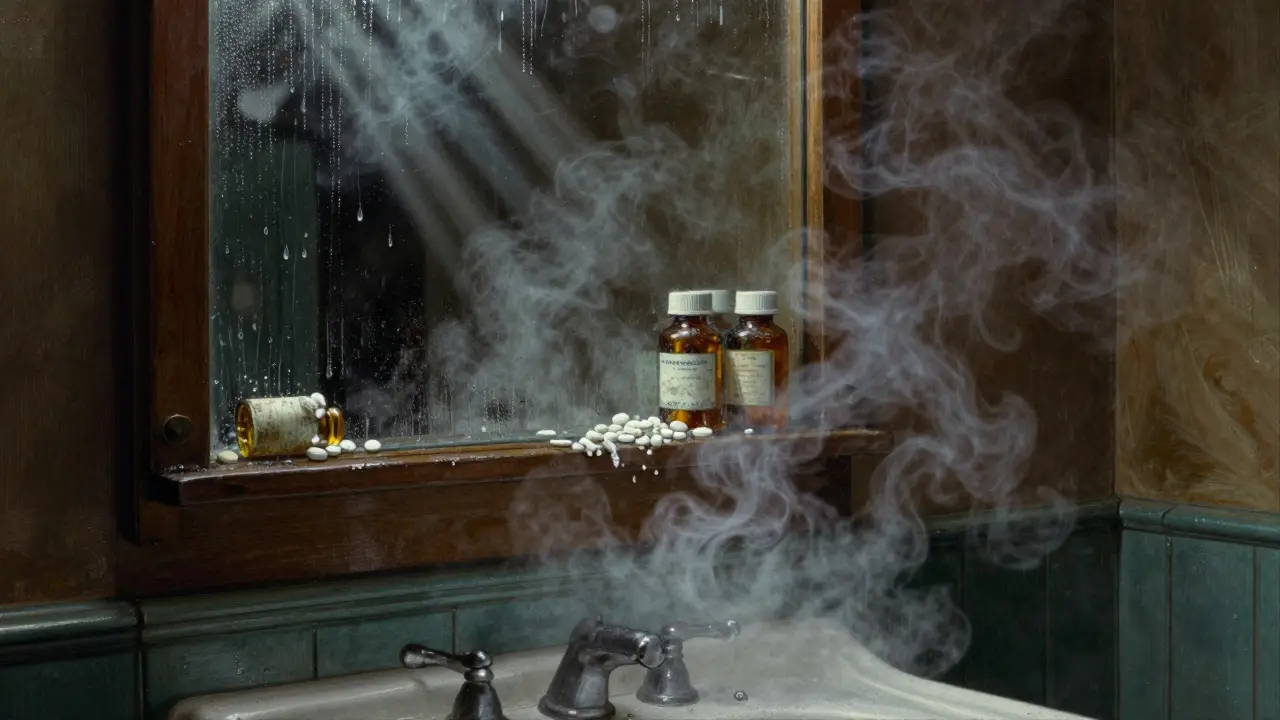
Is your bathroom cabinet actually the safest place for your pills? Most of us toss our prescriptions into that mirrored box above the sink without thinking twice. But here is the hard truth: heat and humidity from showers can destroy the potency of your drugs faster than you realize. In fact, home medication storage errors contribute to nearly 70% of accidental poisonings in children under six, according to EPA data. Creating a proper checklist isn't just about being tidy; it is about keeping your family safe and ensuring your treatments actually work.
You might think a simple list is overkill, but consider this: studies show that 68% of medication errors at home are traced back to improper storage conditions. Whether you are managing insulin for diabetes, painkillers for chronic issues, or simple cold remedies, how you store them matters. This guide will walk you through building a robust, practical checklist that covers environment, security, organization, and disposal. Let’s get your medicine cabinet right.
Why Your Bathroom Cabinet Is Probably Failing You
We need to address the elephant in the room first: the bathroom. It feels convenient because that’s where you wash up and take meds in the morning. However, Dr. Jennifer Gans from the Children's Hospital of Philadelphia points out that bathrooms are one of the worst places for medicines. Why? Temperature swings. When you shower, the temperature in that small room can jump by 10-15 degrees Fahrenheit, and humidity spikes to 80-90%.
Most medications degrade 30-50% faster when exposed to humidity levels above 60%. If your pills are turning chalky or your creams are separating, the bathroom environment is likely the culprit. For best results, move your stash to a central location like a linen closet or a powder room that stays cool and dry. Aim for a consistent temperature between 68-77°F (20-25°C) and humidity around 40-50%. This simple shift protects the chemical stability of your drugs.
| Location | Average Humidity | Temp Fluctuation | Safety Rating |
|---|---|---|---|
| Bathroom Cabinet | 80-90% (during showers) | High (10-15°F swings) | Poor |
| Kitchen Counter | Variable | High (near oven/stove) | Fair |
| Linen Closet / Bedroom Drawer | 40-50% | Low (Stable) | Excellent |
| Refrigerator (Med Zone) | Controlled | Stable (36-46°F) | Essential for specific drugs |
Security First: Locking Up Access
If you have kids, teens, or even curious pets, "out of sight" is not enough. The American Association of Poison Control Centers documented nearly 60,000 medication exposure incidents among young children in 2021 alone. Standard medicine cabinets with glass doors or simple latches stop only about 12% of child access attempts. That is a scary statistic.
Your checklist needs a strict security protocol. Invest in a dedicated medicine lockbox. A 2023 study in *Pediatrics* found that households using these boxes saw a 92% drop in medication exposure incidents. Combination locks are often better than key locks because you don’t lose the key, and they force a moment of pause before access. Keep these boxes high up-at least four feet off the ground-and ideally behind three closed doors if possible. This strategy reduces child access by 88%.
Don’t forget about teenagers. Thirty percent of teens who misuse prescription drugs get them from their own home’s medicine cabinet. Secure storage isn’t just about preventing accidents; it’s about preventing abuse. Label any high-alert medications-like opioids, benzodiazepines, or strong painkillers-with clear warnings. Some families use a "double-lock" system for controlled substances, storing the locked box inside another locked cabinet.
Organization: Preventing Mix-Ups
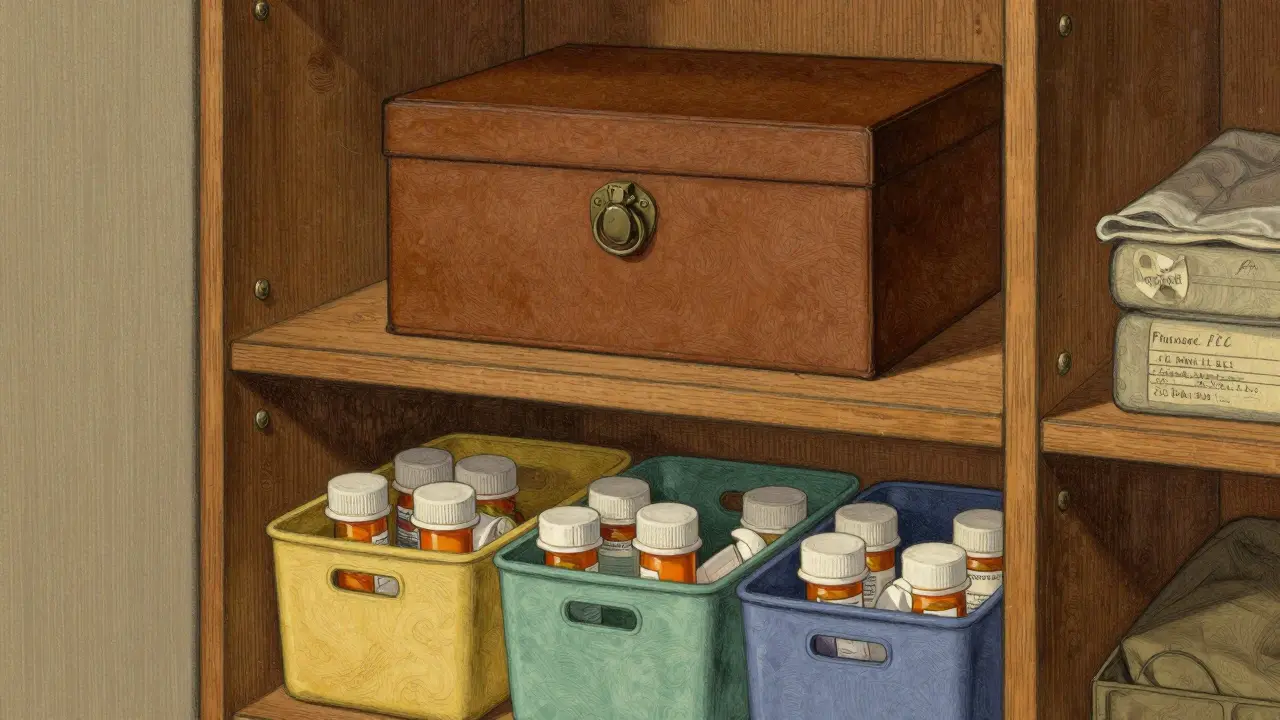
Clutter kills clarity. When everyone’s meds are thrown together in a jumble, mistakes happen. The BeMedWise organization notes that separating household members’ medications can reduce wrong-medication ingestion by 63%. Here is how to structure your storage space:
- Separate by Person: Use distinct shelves or bins for each family member. Color-coded containers can help visually impaired seniors distinguish their pills from others.
- Group by Type: Keep oral meds separate from topicals (creams, ointments) and injectables. In 2021, the FDA warned of adverse events where topical gels were accidentally ingested because they were stored alongside oral pills.
- Keep Original Containers: Never transfer meds to unlabeled jars. The pharmacy label has critical info: dosage, expiration date, and warnings. A UNC Chapel Hill study showed that keeping original labels reduced medication errors by 72%.
- Light Protection: Sunlight breaks down many drugs. Store light-sensitive medications in amber bottles or opaque boxes. Direct sunlight can reduce potency by up to 40% in just 30 days.
The Refrigerator Rules: Cold Chain Management
Some meds demand the cold. Insulin, certain antibiotics, and eye drops often require refrigeration. But throwing everything into the fridge isn’t smart. The Senior Care Consultant Group mandates that refrigerated meds stay between 36-46°F. Do not put them in the door, where temperatures fluctuate every time you open it. Place them on a middle shelf instead.
Crucially, keep meds away from food. Cross-contamination is a real risk. Store them in a dedicated bin or drawer within the fridge. Also, remember that once you open some medications (like insulin vials), they may no longer need refrigeration. Check the manufacturer’s instructions. An American Diabetes Association study found that 38% of insulin users ruin their in-use vials by refrigerating them unnecessarily, which can cause pain upon injection and reduce efficacy.
Track your fridge temp. Buy a cheap digital thermometer and check it daily. Log the temps for 30 days to ensure consistency. If your fridge breaks down, you need to know immediately so you can relocate sensitive drugs before they spoil.
Expiration Dates: The Silent Threat
Expired meds aren’t just ineffective; they can be dangerous. BeMedWise reports that 70% of households have at least one expired med lying around. While some drugs retain potency for years past their date, others degrade quickly. A 2021 FDA study showed that while 82% of meds kept 90% potency after one year, that dropped to 42% after three years.
Add this to your checklist: Inspect every six months. Tie this task to daylight saving time changes-it’s a natural reminder. Look for:
- Color changes (e.g., white pills turning yellow)
- Texture alterations (crumbling tablets or separated liquids)
- Unusual odors
- Cloudiness in liquids
If you see any of these, toss them. For multi-dose vials (like eye drops or flushes), mark the "date opened" with a sharpie. These often expire 28 days after opening, regardless of the printed date on the bottle. Using them after this window increases infection risks significantly.
Disposal: Don’t Flush It
When it’s time to throw meds away, do not flush them unless the label explicitly says so. Flushing pharmaceuticals into water systems contaminates local waterways. A USGS study found drug residues in 80% of U.S. waterways. Instead, use drug take-back programs. The DEA’s National Prescription Drug Take Back Day events collected over a million pounds of meds in 2022 alone.
If no take-back program is nearby, follow the EPA’s home disposal method:
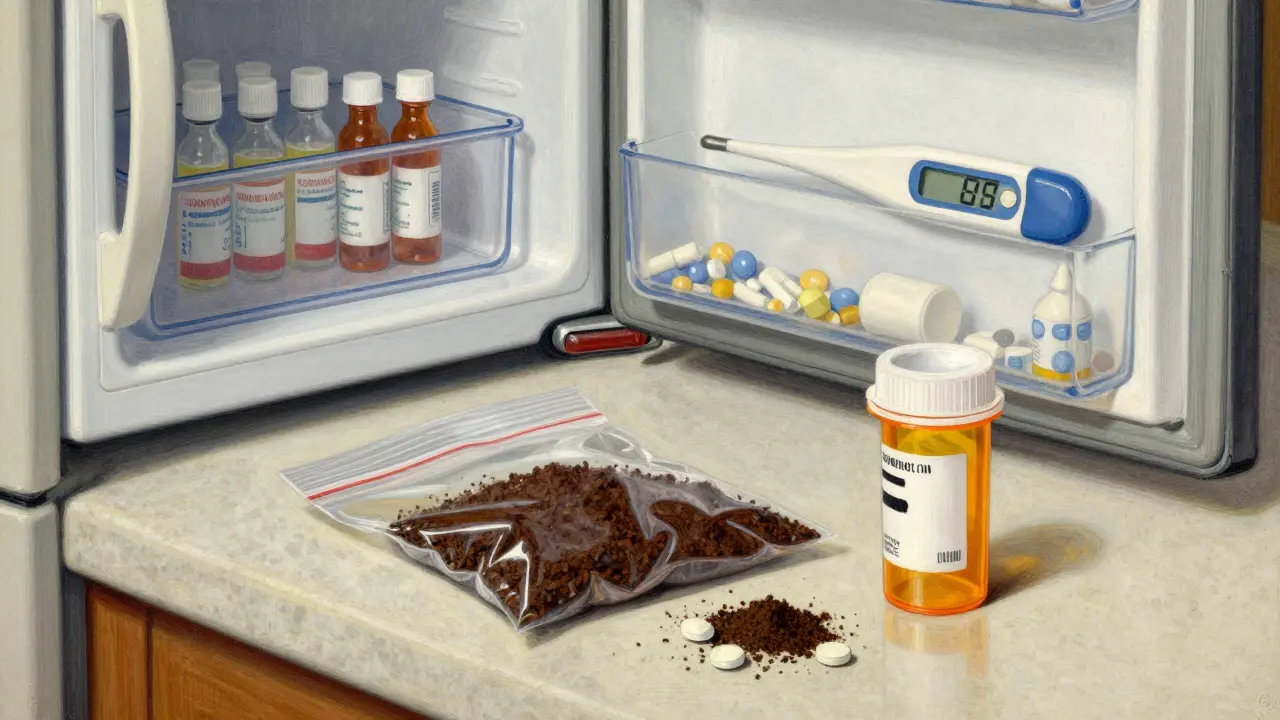
- Mix the meds (do not crush tablets or capsules) with an unappealing substance like dirt, cat litter, or used coffee grounds.
- Place the mixture in a sealed container or plastic bag.
- Throw the container in your household trash.
- Scratch out all personal information on the empty prescription bottles before recycling or discarding them.
This method prevents accidental ingestion by humans or animals and minimizes environmental harm. Schedule a quarterly "disposal day" as part of your checklist routine to keep your stash clean and safe.
Where is the best place to store medication at home?
The best place is a cool, dry, dark location like a linen closet or bedroom drawer. Avoid bathrooms due to humidity and temperature fluctuations, and avoid kitchens near stoves or sinks. Ideally, store meds in a locked box at least 4 feet off the ground.
Can I store my medication in the freezer?
Generally, no. Unless the manufacturer specifically instructs freezing, most medications should only be refrigerated (36-46°F). Freezing can break down the chemical structure of many drugs, rendering them ineffective or unsafe.
How often should I check my medication expiration dates?
You should conduct a full inventory and check expiration dates every six months. A good trick is to do this when clocks change for daylight saving time. Also, check multi-dose containers monthly for signs of contamination or degradation.
Is it safe to flush unused medications down the toilet?
Only if the medication label or patient insert specifically instructs you to flush it. These are usually highly addictive or dangerous drugs. For most other medications, mix them with coffee grounds or cat litter and dispose of them in the trash to prevent water contamination.
What should I do if my medication changes color or smell?
Discard it immediately. Changes in color, texture, or odor indicate chemical degradation. Even if the expiration date hasn't passed, the drug may no longer be effective or could produce harmful byproducts. Do not attempt to use compromised medication.

Written by Martha Elena
I'm a pharmaceutical research writer focused on drug safety and pharmacology. I support formulary and pharmacovigilance teams with literature reviews and real‑world evidence analyses. In my off-hours, I write evidence-based articles on medication use, disease management, and dietary supplements. My goal is to turn complex research into clear, practical insights for everyday readers.
All posts: Martha Elena