
Imagine standing backstage, heart pounding, hands shaking, voice trembling-just before you have to speak in front of a room. You’ve practiced. You know your material. But your body is betraying you. This isn’t just nerves. For over 12% of adults in the U.S., this is the daily reality of social anxiety disorder (SAD). It’s not about being shy. It’s a deep, persistent fear of being judged, embarrassed, or humiliated in everyday social situations-whether it’s a job interview, a classroom presentation, or even ordering coffee. Most people assume treatment means long-term therapy or daily pills. But there’s another path-one that doesn’t fix your thoughts, but calms your body. That’s where beta-blockers come in. And they don’t work alone. They work best when paired with behavioral therapy. Here’s how the two fit together-and why one without the other often falls short.
What Beta-Blockers Actually Do (And Don’t Do)
Beta-blockers like propranolol aren’t antidepressants. They don’t change how you think. They don’t make you feel less afraid. What they do is quiet the physical storm inside your body. When you’re anxious, your nervous system floods your bloodstream with adrenaline. Your heart races. Your palms sweat. Your voice shakes. Your hands tremble. Beta-blockers block the receptors that respond to adrenaline. Think of them like a mute button for your body’s panic response. A 2023 review found that propranolol, the most commonly used beta-blocker for anxiety, reduces heart rate by 15 to 25 beats per minute and cuts hand tremors by 30 to 40%. In a study of professional musicians, 65% reported a noticeable drop in physical symptoms after taking 20-40mg about 90 minutes before performing. One violinist, after three failed auditions, finally passed after using propranolol-her hands stopped shaking enough to play cleanly.
But here’s the catch: beta-blockers don’t touch the fear itself. If you’re thinking, “Everyone will think I’m stupid,” or “I’m going to embarrass myself,” that voice stays loud. Studies show beta-blockers have no measurable effect on cognitive anxiety. They’re not a cure. They’re a tool. A very specific one.
When Beta-Blockers Shine (And When They Don’t)
Beta-blockers aren’t for everyone. They’re not meant for constant, all-day social anxiety. If you avoid parties, dread meetings, or panic at small talk, beta-blockers won’t help much. A 2023 meta-analysis found no significant difference between propranolol and placebo for people with generalized social phobia.
But for predictable, time-limited events? They’re powerful. Public speaking. Job interviews. Musical performances. First dates. These are moments you can prepare for. You know when they’re coming. You can plan to take a pill 60-90 minutes before. That’s when beta-blockers deliver real results. Data shows 65-70% of people with performance anxiety see major improvement in physical symptoms. On Reddit, 78% of users using propranolol for events like TEDx talks or wedding speeches said their tremors and sweating dropped significantly. One user wrote: “40mg before my talk turned my shaking hands into steady ones. I finished without running offstage.”
That’s the sweet spot: predictable, short-term pressure. Not chronic, all-consuming fear.
How Beta-Blockers Compare to Other Treatments
Let’s put beta-blockers next to other common options.
| Treatment | Best For | Onset Time | Effect on Physical Symptoms | Effect on Thoughts | Risk of Dependence |
|---|---|---|---|---|---|
| Propranolol (beta-blocker) | Performance anxiety | 30-60 minutes | High (30-40% reduction) | None | Zero |
| SSRIs (e.g., sertraline) | Chronic social anxiety | 4-6 weeks | Moderate | Yes | Low |
| Benzodiazepines (e.g., alprazolam) | Acute panic | 15-30 minutes | High (72% reduction) | Yes | High (23-34%) |
| Cognitive Behavioral Therapy (CBT) | All forms of SAD | 12-16 weeks | Gradual reduction | Yes (60% remission) | None |
SSRIs are the first-line treatment for ongoing social anxiety. But they take weeks to work. Benzodiazepines act fast and help with both body and mind-but they’re addictive. Beta-blockers sit in the middle: fast, non-addictive, and powerful for physical symptoms. But they’re useless if you’re trying to fix your fear of being judged.
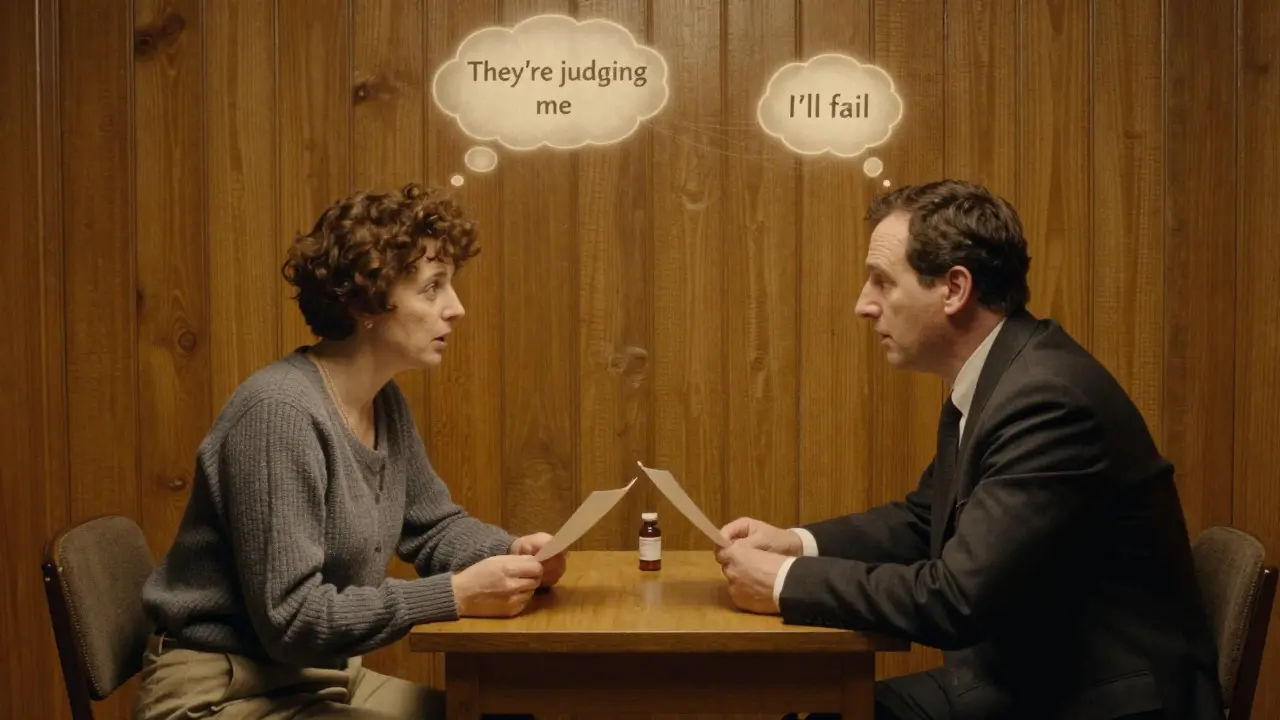
Why Behavioral Therapy Is the Missing Piece
Here’s the truth most people miss: beta-blockers don’t cure social anxiety. They just make it easier to face it. That’s where behavioral therapy, especially CBT, comes in. CBT doesn’t just teach you to relax. It rewires how you think. You learn to challenge thoughts like “I’ll look stupid” or “They’re all watching me.” You practice speaking up, making eye contact, handling awkward silences-gradually, safely.
Studies show CBT leads to 50-60% remission rates after 12-16 sessions. But many people can’t get there because the fear is too intense. They avoid therapy. They cancel sessions. They feel too physically overwhelmed to even try.
This is where beta-blockers become a bridge. A 2023 case study from a psychiatrist in Toronto followed a patient who avoided public speaking for 12 years. She started CBT but couldn’t attend role-play exercises because her hands shook so badly she couldn’t hold the paper. Her doctor prescribed 20mg propranolol before sessions. Within three weeks, she was able to speak in front of the group. By week eight, she didn’t need the pill anymore. The therapy had done its job.
Dr. Ellen Vora, a psychiatrist, puts it simply: “Beta-blockers give you the physical stability to attend feared situations. That’s when real change happens-in therapy.”
Practical Tips: How to Use Beta-Blockers Right
If you’re considering propranolol, here’s what you need to know:
- Dose: 10-40mg, taken 60-90 minutes before the event. Start low. Most people find 20mg is enough.
- Timing: Don’t take it daily. Use it only for planned events. Taking it too often can reduce its effectiveness.
- Side effects: Fatigue (35%), dizziness (28%), cold hands (22%). If you’re a musician, test it before a performance-you need fine motor control.
- Contraindications: Don’t use if you have asthma, uncontrolled heart failure, or diabetes (it can hide low blood sugar symptoms).
- Cost: Generic propranolol costs $4-$10 per dose. Most insurance covers it.
It’s not a magic pill. It’s a tool. Like wearing earplugs before a loud concert. You’re not fixing the noise-you’re protecting yourself so you can still enjoy the music.

Why This Treatment Isn’t More Common
You’d think this combo would be standard. But it’s not. Why?
- Access to therapy: Only 43% of U.S. counties have enough mental health providers. Many people can’t afford $100-$200 per therapy session.
- Off-label use: Beta-blockers aren’t FDA-approved for anxiety. Doctors prescribe them anyway, but many aren’t trained in how to use them with therapy.
- Stigma: Some clinicians still see beta-blockers as “cheating.” They’re not. They’re a medical tool, like insulin for diabetes.
Meanwhile, digital CBT apps like Woebot Health are making therapy more accessible, with one 2023 study showing 52% remission rates. That’s changing the game. As therapy becomes easier to reach, the need for beta-blockers as a bridge will grow-not fade.
The Bottom Line
There’s no single fix for social anxiety disorder. But there’s a powerful combination: beta-blockers for the body, and behavioral therapy for the mind.
If you struggle with performance anxiety-public speaking, interviews, auditions-beta-blockers can give you back control of your body. But if you want to heal the fear itself, you need therapy. One without the other leaves half the problem untouched.
This isn’t about taking pills to avoid discomfort. It’s about using a tool to walk into the room you’ve been avoiding-so you can finally start healing.







Written by Martha Elena
I'm a pharmaceutical research writer focused on drug safety and pharmacology. I support formulary and pharmacovigilance teams with literature reviews and real‑world evidence analyses. In my off-hours, I write evidence-based articles on medication use, disease management, and dietary supplements. My goal is to turn complex research into clear, practical insights for everyday readers.
All posts: Martha Elena