Minoxidil & Hair Dye Timing Calculator
Calculate Safe Application Window
Follow FDA-recommended timing guidelines to avoid scalp irritation and maintain treatment effectiveness.
Many people using minoxidil topical for hair loss wonder if they can still color their hair without ruining the treatment. The short answer: you can, but you need to follow a few practical steps to keep both the medication and the dye working as intended. Below we break down what minoxidil does, how hair dye works, where the two can clash, and a clear routine you can adopt to stay safe and get the best results.
Key Takeaways
- Apply minoxidil to a clean, dry scalp and let it dry completely before any coloring.
- Wait at least 4 hours after minoxidil before using hair dye, or apply dye on a different day.
- Choose low‑pH, ammonia‑free dyes to minimize scalp irritation.
- Monitor for redness, itching, or increased shedding; stop the combination if symptoms appear.
- Consult a dermatologist if you have sensitive skin or a history of allergic reactions.
What Is Minoxidil?
Minoxidil is a topical vasodilator originally developed for high blood pressure that was later repurposed to stimulate hair growth. It works by widening blood vessels around hair follicles, delivering more oxygen and nutrients, which can prolong the anagen (growth) phase of the hair cycle. In most countries, the FDA-approved strengths are 2% for women and 5% for men, though off‑label use of higher concentrations exists.
How Does Hair Coloring Work?
Hair dye is a chemical formulation that penetrates the hair shaft to deposit or remove pigment. Most permanent dyes contain ammonia, an oxidizing agent (hydrogen peroxide), and color‑developing molecules that react with the natural melanin in hair. The process opens the cuticle, allows color to enter, and then reseals the shaft after the developer evaporates.
Why the Interaction Concern?
Both minoxidil and dye contain ingredients that can irritate the scalp. Minoxidil solutions often include propylene glycol and alcohol to improve absorption. These solvents can make the skin more permeable, potentially heightening the scalp’s reaction to the harsh chemicals in dye. In practice, the main issues are:
- Irritation - redness, itching, or burning sensation.
- Reduced absorption - if the cuticle is open from dye, minoxidil may not reach the follicle as effectively.
- Increased shedding - a stressed scalp can push hairs out of the growth phase.
These effects are not guaranteed, but they are documented anecdotally by dermatologists and supported by a handful of small studies that observed higher irritation scores when minoxidil was applied within 24 hours of a chemical treatment.
Safe Routine: Timing and Technique
- Plan your calendar: Choose separate days for each activity whenever possible. If you dye once a month, apply minoxidil on the other weeks.
- Clean the scalp: Wash your hair with a gentle, sulfate‑free shampoo 24 hours before dyeing. This removes residual minoxidil and reduces solvent buildup.
- Apply minoxidil: Use the recommended 1 mL dose, spreading it evenly across the affected area. Allow it to dry completely (about 2-3 minutes) before styling.
- Wait before dyeing: If you must color on the same day, wait at least 4 hours after minoxidil application. This window lets the medication penetrate the follicle and the scalp surface return to a neutral pH.
- Choose the right dye: Opt for ammonia‑free, low‑pH formulations (often marketed as “gentle” or “natural”). These reduce cuticle swelling and lower irritation risk.
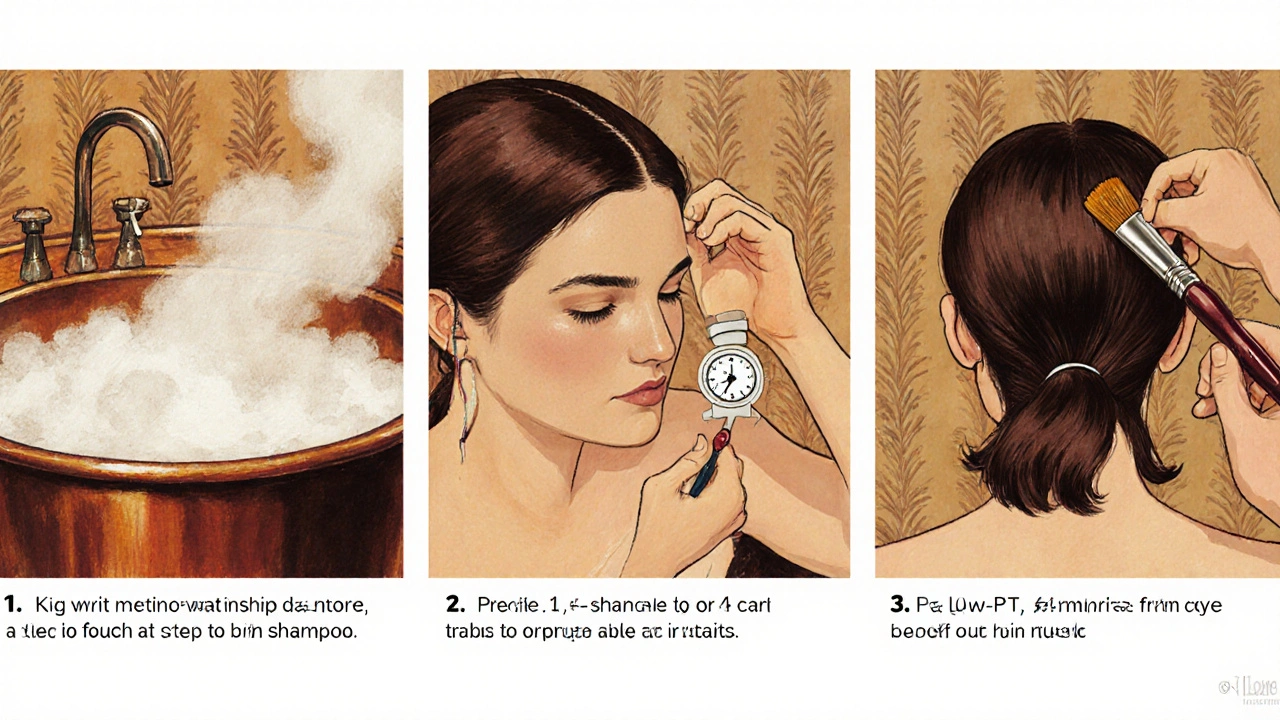
- Apply dye carefully: Follow the product’s instructions, avoiding direct contact with the scalp. Use a brush to coat the hair shaft only, leaving the roots untouched if possible.
- Rinse thoroughly: After the processing time, rinse with lukewarm water until the runoff is clear. Finish with a cool‑water rinse to close the cuticle.
- Resume minoxidil: Wait another 4-6 hours after dyeing before re‑applying minoxidil. Some professionals recommend waiting 24 hours if the dye caused any tingling or redness.
By spacing the two treatments and using scalp‑friendly products, you keep the hair follicle environment stable and avoid the common pitfalls.
Common Mistakes and How to Avoid Them
- Applying dye directly to the scalp - this increases the chance of irritation and can wash away minoxidil before it acts.
- Skipping the drying period - a wet minoxidil layer can dilute dye chemicals, leading to uneven color.
- Using high‑strength minoxidil with aggressive dyes - the combination magnifies solvent effects; stick to the FDA‑approved 5% or lower.
- Neglecting a patch test - always test a small hair strand and a tiny scalp area 48 hours before full application.
- Over‑washing after dye - frequent shampooing removes both dye and minoxidil residues, diminishing results.
Quick Comparison Table
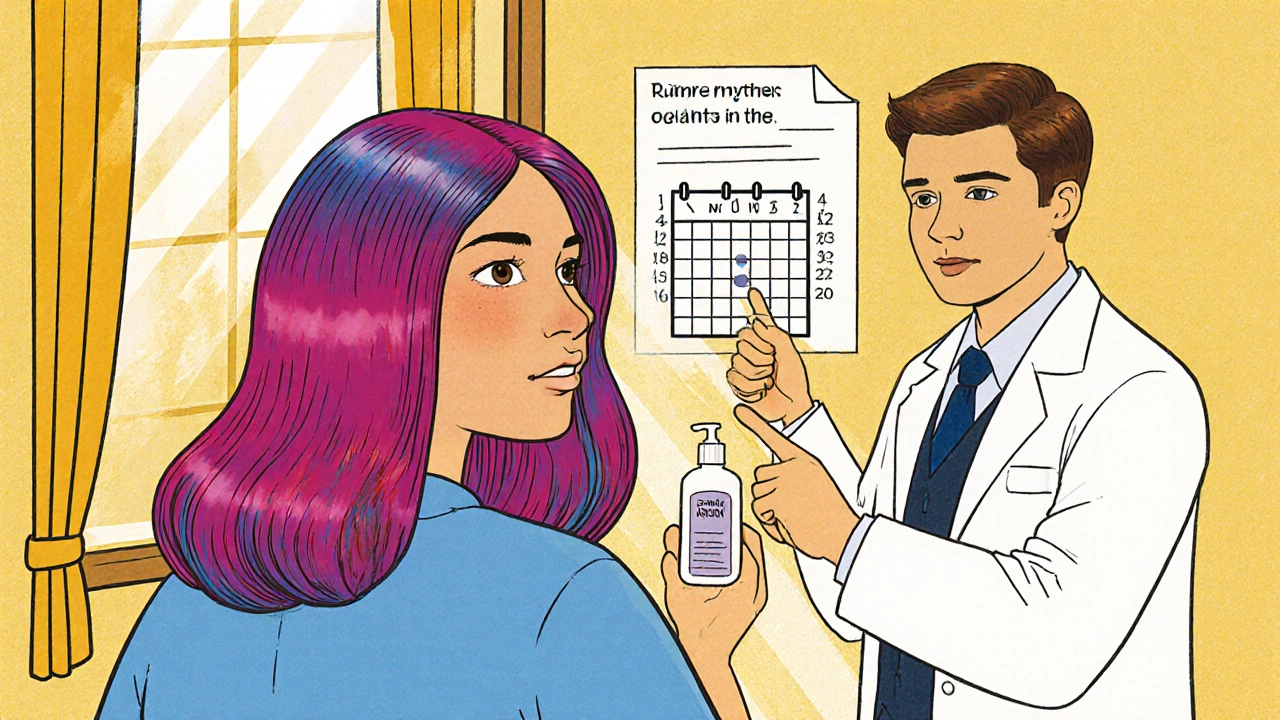
| Scenario | Recommended Waiting Time | Key Precautions |
|---|---|---|
| Minoxidil first, dye same day | ≥4 hours | Use low‑pH dye, avoid scalp contact |
| Dye first, minoxidil same day | ≥4 hours after rinse | Ensure scalp is completely dry, no residual chemicals |
| Separate days (ideal) | 24 hours between treatments | Standard application, no extra steps needed |
When to Seek Professional Help
If you notice persistent redness, swelling, or a sudden increase in shedding after combining the two, stop the routine and book an appointment with a dermatologist. They may recommend a patch test with a lower concentration of minoxidil or suggest an alternative hair‑coloring method such as semi‑permanent dyes, which use gentler pigments.
Frequently Asked Questions
Can I apply minoxidil over dyed hair?
Yes, but only after the dye has fully set and the hair is dry. Wait at least 4 hours after rinsing the dye to let the cuticle close before applying minoxidil.
Does minoxidil affect hair color?
Minoxidil itself does not change pigment, but if it causes irritation that leads to hair loss, you might notice a lighter appearance where hair thins.
Are there specific dyes that are safer with minoxidil?
Ammonia‑free, low‑pH, and semi‑permanent dyes are generally gentler on the scalp and reduce the risk of irritation when used alongside minoxidil.
How often can I repeat this routine?
Most dermatologists suggest spacing minoxidil and dye applications by at least one week if you color monthly, ensuring the scalp has time to recover between chemical exposures.
What should I do if I experience itching after dye?
Rinse the scalp with cool water, apply a fragrance‑free soothing lotion, and pause minoxidil for 24 hours. If the reaction persists, consult a healthcare professional.
Combining a hair‑loss treatment with a beauty routine can feel tricky, but with a few timing tweaks and the right product choices, you can keep both your follicles and your color looking great. Remember: clean scalp, proper waiting periods, and listening to any irritation signals are the three pillars of a smooth, safe experience.







Written by Martha Elena
I'm a pharmaceutical research writer focused on drug safety and pharmacology. I support formulary and pharmacovigilance teams with literature reviews and real‑world evidence analyses. In my off-hours, I write evidence-based articles on medication use, disease management, and dietary supplements. My goal is to turn complex research into clear, practical insights for everyday readers.
All posts: Martha Elena