What You’re Really Eating
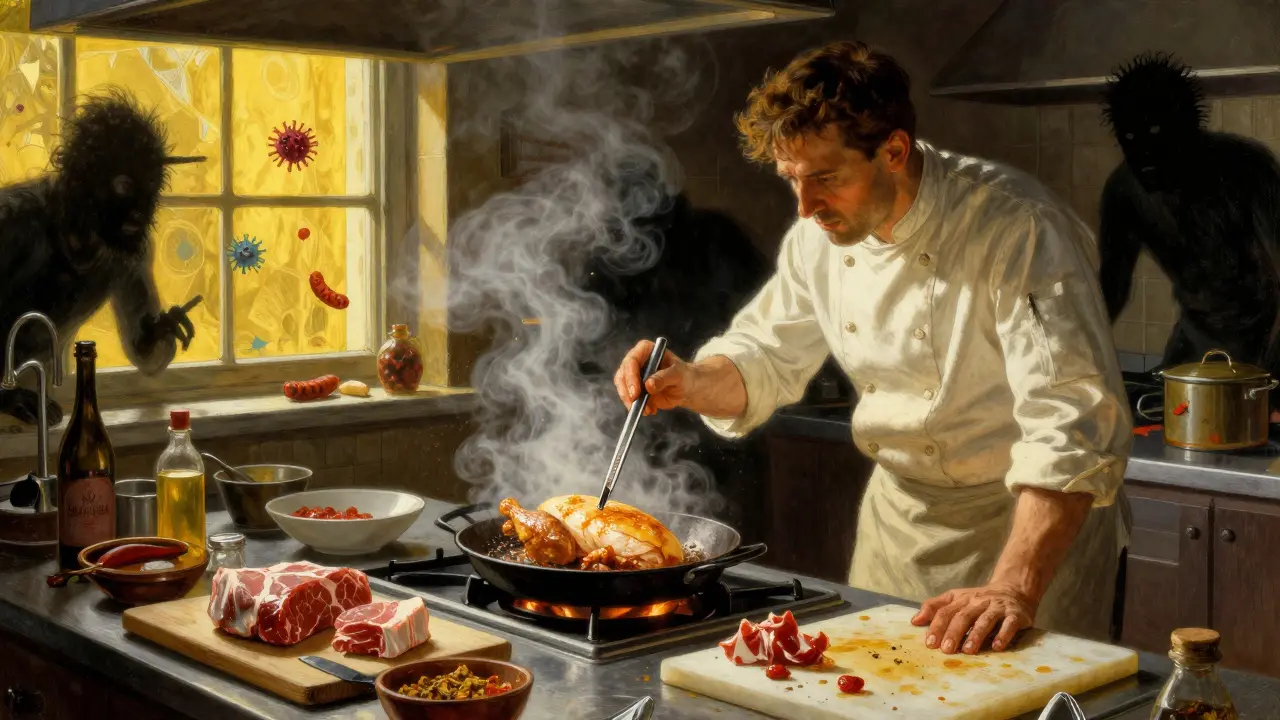
Every year, foodborne illness makes 48 million Americans sick. That’s one in six people. Most don’t even realize the cause was their last meal. It could’ve been the undercooked chicken at the BBQ, the pre-washed spinach from the grocery, or the deli meat you ate straight from the fridge. These aren’t rare accidents-they’re predictable, preventable, and happening right now.
The real danger isn’t just feeling bad for a day. Some pathogens don’t just cause vomiting and diarrhea. They can lead to kidney failure, brain damage, stillbirths, or death. And the worst part? Many people think they’re safe because they ‘always cook meat well’ or ‘never eat raw eggs.’ But food safety isn’t about one good habit. It’s about a system of habits, all working together.
The Top Five Killers in Your Kitchen
Not all germs are created equal. Some make you miserable. Others change your life-or end it.
- Norovirus is the most common. It causes 19 to 21 million illnesses a year in the U.S. It spreads fast-from a sick cook’s hands to your salad. Symptoms hit within hours. You’ll feel awful for 1-3 days, but most people recover without hospitalization. Still, it’s behind half of all foodborne outbreaks.
- Salmonella is the top cause of hospitalizations. Found in eggs, poultry, and even peanut butter, it sickens 1.35 million people yearly. It doesn’t just cause fever and diarrhea. In some cases, it triggers reactive arthritis that lasts months. And it’s not going away: Salmonella in poultry has dropped 41% since 2011, but outbreaks still happen because of dirty surfaces, cross-contamination, or undercooked meat.
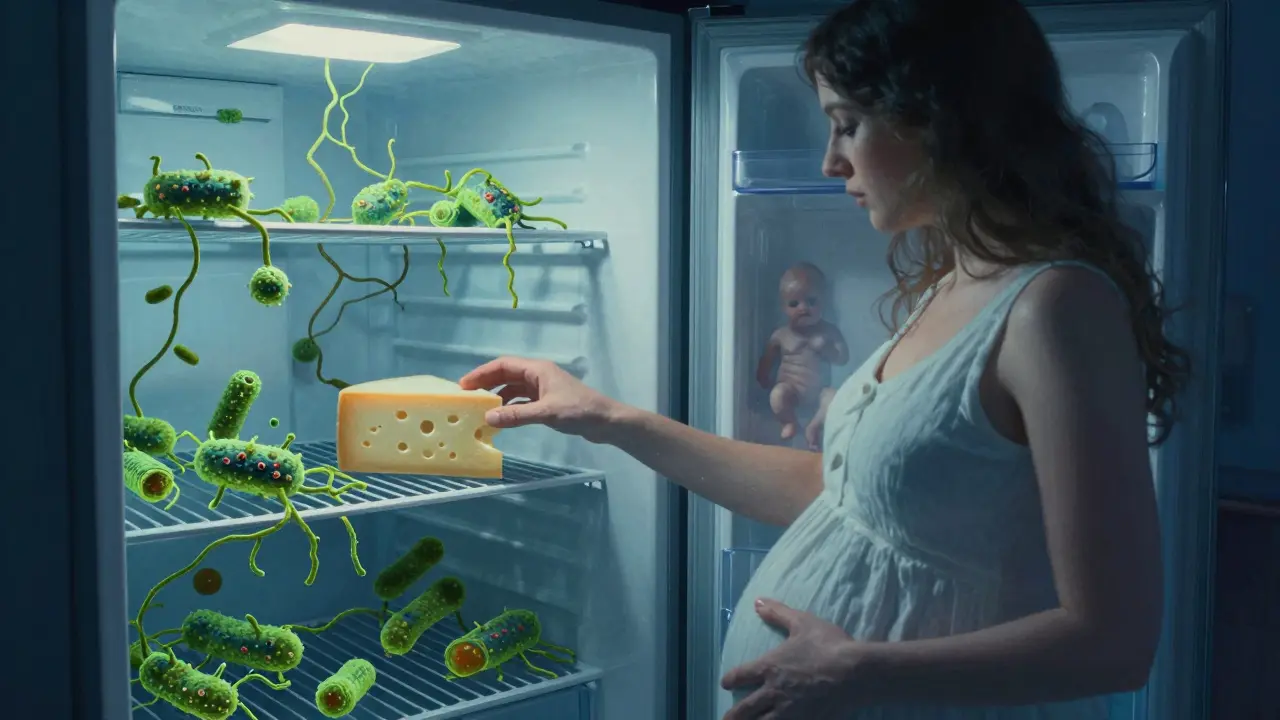
- Listeria monocytogenes is the quiet killer. It grows in your fridge. It doesn’t make food smell or look bad. But for pregnant women, it can cause miscarriage or stillbirth in 20-30% of cases. It causes only 1,600 illnesses a year, but 260 deaths. That’s a 19% share of all foodborne deaths. Soft cheeses, deli meats, and smoked seafood are the usual suspects.
- Escherichia coli O157:H7 is the one that turns stomach cramps into kidney failure. It’s found in undercooked ground beef, raw milk, and contaminated water. One in five kids who get it develop hemolytic uremic syndrome-a life-threatening condition. It’s rare, but devastating.
- Campylobacter is the most common bacterial cause of diarrhea in the U.S. It’s in raw chicken, unpasteurized milk, and untreated water. About 850,000 cases a year. And it’s getting harder to treat: antibiotic resistance has doubled since 1997.
Here’s the twist: Norovirus makes the most people sick, but Listeria kills the most. Salmonella sends the most to the hospital. So if you think ‘I’m fine because I didn’t get food poisoning last time,’ you’re playing Russian roulette with your health.
Where the Germs Hide
Pathogens don’t show up out of nowhere. They come from places we ignore.
- Raw poultry is the #1 source of Campylobacter and Salmonella. But it’s not just the meat-it’s the cutting board, the sink, the towel you used to wipe your hands.
- Refrigerators aren’t germ-free zones. Listeria thrives at 4°C (39°F). It grows in drip pans, on shelves, and in old produce drawers. If you haven’t cleaned yours in six months, you’re growing bacteria.
- Pre-washed greens are a major problem. Leafy greens cause 22% of E. coli outbreaks. Yet only 40% of farms are inspected annually. Washing at home doesn’t always help-some bacteria cling to the leaves.
- Deli meats and soft cheeses are risky for pregnant women. Listeria doesn’t care if it’s labeled ‘ready to eat.’ If it’s been sitting in the fridge too long, it’s a threat.
- Tap water isn’t always safe. In rural areas or after heavy rain, water can carry E. coli or Cryptosporidium. Boiling it for a minute kills these germs.
And don’t forget: people are the biggest source of contamination. A single infected food worker can spread Norovirus to hundreds. That’s why handwashing isn’t optional-it’s your last line of defense.
The 5 Rules That Actually Work
Forget ‘clean your kitchen.’ That’s vague. Here’s what works, backed by science and real-world data.
- Use a food thermometer. Guessing doneness by color is wrong 48% of the time. Chicken must hit 165°F (74°C). Ground beef? 160°F (71°C). Steak? 145°F (63°C) with a 3-minute rest. Thermometers cut undercooking by 58%.
- Keep hot hot and cold cold. The danger zone is 41°F to 135°F. Bacteria double every 20 minutes in this range. Keep hot food above 135°F. Keep cold food below 41°F. Don’t leave food out for more than two hours-one hour if it’s over 90°F.
- Separate raw and ready-to-eat. Use red cutting boards for meat, green for veggies. Wash hands for 20 seconds with soap and water at 100°F. That one habit reduces germs by 70%.
- Thaw safely. Never leave meat on the counter. Thaw in the fridge, under cold running water, or in the microwave. Room temperature thawing lets Listeria and Salmonella grow while the inside stays frozen.
- Clean your fridge. Wipe shelves and drip pans every two weeks. Listeria hides in the corners. Use hot soapy water. Don’t use bleach unless the manufacturer says it’s safe.
These aren’t tips. They’re rules. And they’re the difference between a stomach ache and a hospital stay.
Why Your ‘Common Sense’ Isn’t Enough
Most people think they’re safe because they’ve never gotten sick. But foodborne illness doesn’t care about your experience. It cares about your habits.
Here’s what most people get wrong:
- ‘I eat raw cookie dough all the time-I’m fine.’ But raw eggs can carry Salmonella. One outbreak in 2022 sickened 50 people from store-bought cookie dough.
- ‘I rinse chicken before cooking.’ That spreads germs around your sink. The CDC says don’t do it. Cooking kills the bacteria. Rinsing doesn’t.
- ‘I only eat organic.’ Organic doesn’t mean pathogen-free. E. coli outbreaks have hit organic spinach, sprouts, and apples.
- ‘I’m healthy-I can handle it.’ Healthy people can get sick. But the real risk is to kids under 5, pregnant women, the elderly, and anyone with a weak immune system. You might survive. Someone you love might not.
Food safety isn’t about fear. It’s about control. You can’t control where your food comes from. But you can control how you handle it.
What’s Changing-and What’s Coming
Technology is catching up. Whole genome sequencing now lets health officials trace an outbreak back to a single farm in days, not weeks. The FDA’s new ‘Smarter Food Safety’ plan uses sensors and blockchain to track food from field to table.
By 2025, mandatory safety plans for leafy greens will be in place. That’s huge. Leafy greens have caused more E. coli outbreaks than any other food in the last decade.
But climate change is making things worse. Warmer oceans mean more Vibrio bacteria in seafood. Heavy rains wash manure into fields where lettuce grows. By 2050, foodborne illness risk from produce could rise 20-30%.
And antimicrobial resistance? It’s growing. More than 20% of Salmonella strains now resist antibiotics. That means even if you get sick, treatment might not work.
These aren’t distant threats. They’re here. And they’re growing.
What You Can Do Today
You don’t need to overhaul your life. Start small.
- Buy a $10 food thermometer. Use it every time you cook meat.
- Buy color-coded cutting boards. Use them. Wash them.
- Clean your fridge this week. Wipe down the shelves and drip pan.
- Check your fridge temperature. It should be 40°F or below.
- When in doubt, throw it out. If you’re not sure how long something’s been in the fridge, toss it. It’s cheaper than a hospital bill.
Foodborne illness isn’t a mystery. It’s a failure of basic habits. And those habits can be fixed.



Written by Martha Elena
I'm a pharmaceutical research writer focused on drug safety and pharmacology. I support formulary and pharmacovigilance teams with literature reviews and real‑world evidence analyses. In my off-hours, I write evidence-based articles on medication use, disease management, and dietary supplements. My goal is to turn complex research into clear, practical insights for everyday readers.
All posts: Martha Elena