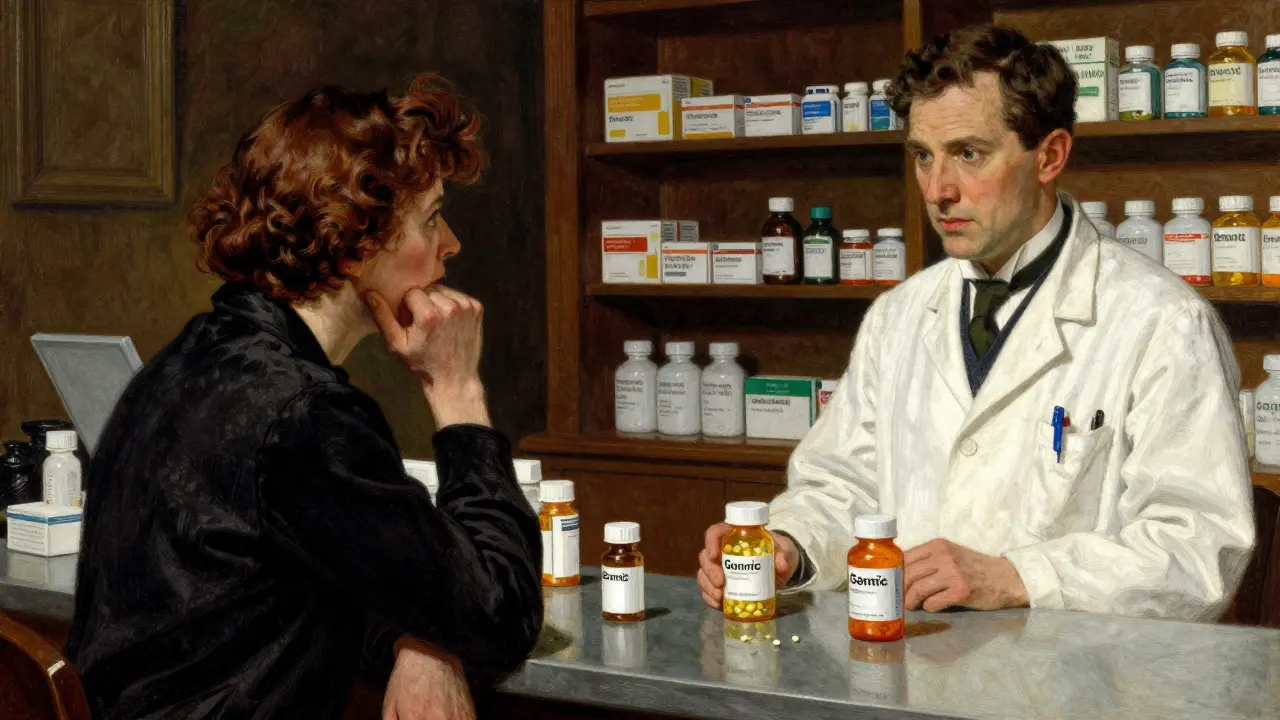
When you pick up a bottle of pills at the pharmacy, you focus on the active ingredient. You know that's what treats your condition. But have you ever stopped to think about the other stuff in those pills? The fillers, binders, and coatings are called excipients, also known as inactive ingredients. For decades, we assumed they were just harmless carriers. Recent science suggests that assumption might be dangerously wrong.
The term "inactive" is a misnomer. These compounds make up 60% to 99% of the mass of an oral solid dosage form. They aren't just there for show; they stabilize the drug, help it dissolve, and mask bad tastes. However, new research indicates that some of these substances interact with biological targets in ways regulators didn't fully anticipate. This raises a critical question for patients and prescribers alike: can differences in these inactive ingredients affect the safety or efficacy of your medication?
Why Excipients Matter More Than You Think
Excipients serve specific mechanical functions in a drug product. Without them, many medications would degrade before reaching you, or they might be impossible to swallow. Common categories include fillers like lactose or microcrystalline cellulose, binders like polyvinylpyrrolidone, and lubricants like magnesium stearate.
The problem arises when manufacturers switch these components. Generic drug makers often use different excipients than the brand-name Reference Listed Drug (RLD). While this is legal under certain conditions, it introduces variables. A 2020 study published in Science by Reker et al. tested 314 common excipients against human proteins. They found that 38 of them showed activity against 44 biological targets. This means nearly 12% of tested "inactive" ingredients actually bound to proteins in the body, potentially altering how the drug works or causing side effects.
Consider sodium benzoate, a common preservative. The study found it inhibits monoamine oxidase B at concentrations achievable in the body during normal therapeutic use. If you are taking a medication that relies on monoamine oxidase pathways, this "inactive" ingredient could theoretically interfere with the intended effect. This challenges the long-held belief that excipients are biologically inert.
Regulatory Standards: What Is Allowed?
The U.S. Food and Drug Administration (FDA) sets the rules for what can go into your medicine. Under 21 CFR 314.94(a)(9), generic manufacturers must demonstrate that their product is bioequivalent to the brand-name version. Bioequivalence primarily measures the rate and extent of absorption of the active pharmaceutical ingredient (API).
However, the rules for excipients vary by route of administration:
- Parenteral, Ophthalmic, and Otic Products: The FDA requires qualitative sameness (Q1) and quantitative sameness (Q2). This means the generic must contain identical excipients at identical concentrations as the RLD. No substitutions are allowed here due to the high risk of irritation or systemic exposure.
- Oral and Other Routes: Different inactive ingredients are permitted, provided the manufacturer proves they do not impact safety or efficacy. This flexibility allows generics to be cheaper and faster to produce but introduces variability.
The European Medicines Agency (EMA) takes a similar approach but requires justification through its Quality Overall Summary (QOS) document. The EDQM database lists approximately 1,200 excipients approved in Europe, slightly fewer than the FDA’s Inactive Ingredient Database (IID), which contains roughly 1,500 entries across 20 routes of administration.
Safety Risks and Biological Activity
The biggest concern isn't just whether an excipient is "safe" in isolation, but how it behaves in combination with the API and other excipients. Dr. Giovanni Traverso, lead author of the Science study, stated that the blanket classification of excipients as "inactive" is scientifically inaccurate for a meaningful subset of compounds.
Here are some specific examples from recent data:
| Excipient | Target Protein | In Vitro IC50 | Potential Impact |
|---|---|---|---|
| Aspartame | Glucagon Receptor | 8.5 μM | Metabolic interference |
| Sodium Benzoate | Monoamine Oxidase B | 320 nM | Neurotransmitter modulation |
| Propylene Glycol | Monoamine Oxidase A | 210 nM | Enzyme inhibition |
These interactions matter most for patients with sensitive conditions or those taking multiple medications. For instance, if an excipient inhibits an enzyme that metabolizes the active drug, it could lead to higher-than-expected blood levels of the API, increasing toxicity risk. Conversely, if it accelerates metabolism, the drug might become less effective.

Impact on Efficacy and Dissolution
Efficacy isn't just about chemical interaction; it's also about physical delivery. Excipients control how quickly a tablet disintegrates and dissolves in the stomach. A change in the disintegrant can significantly alter the dissolution profile.
A notable case involved Aurobindo’s 2020 application for a generic version of Entresto (sacubitril/valsartan). The manufacturer replaced magnesium stearate with sodium stearyl fumarate. The FDA rejected the application because in vitro testing showed a 15% difference in release rate at pH 6.8. Even though the active ingredient was the same, the altered excipient changed how fast the drug entered the bloodstream. For narrow therapeutic index drugs, where small changes in concentration can cause harm, this difference is unacceptable.
In contrast, Teva successfully launched a generic Jardiance in 2021 by replacing sodium starch glycolate with croscarmellose sodium. They supported this switch with robust bioequivalence studies showing identical peak concentrations (Cmax) and area under the curve (AUC) values. This demonstrates that excipient substitution *can* work safely, but only with rigorous testing.
Who Is Most at Risk?
Not everyone needs to worry about every excipient. For most healthy individuals taking standard doses, the current regulatory framework provides adequate protection. However, certain groups face higher risks:
- Patients with Allergies or Intolerances: Lactose intolerance is common. If a generic switches from a lactose-free filler to one containing lactose, it could cause gastrointestinal distress, even if the drug itself is safe.
- Those on Narrow Therapeutic Index Drugs: Medications like warfarin, levothyroxine, or anticonvulsants require precise dosing. Small changes in absorption caused by excipient differences can lead to subtherapeutic or toxic levels.
- Children and Elderly: These populations may have different metabolic rates or sensitivities to additives like dyes (e.g., tartrazine) or preservatives.
The FDA’s Adverse Event Reporting System (FAERS) shows that only 0.03% of adverse events are definitively linked to excipients. However, this number likely underreports issues because causality is hard to prove. Patients often attribute side effects to the active drug, masking the role of the inactive ingredient.
Future Directions and Regulatory Changes
The landscape is shifting. The FDA issued 14 guidance documents on excipients between 2018 and 2023, compared to just three in the previous decade. This surge reflects growing awareness of the issue. In December 2023, the agency launched a pilot program requiring additional safety data for 12 high-risk excipients in orally disintegrating tablets, including aspartame and saccharin, following reports of hypersensitivity reactions.
Looking ahead, the FDA proposes updating the IID with predicted tissue concentrations for each excipient. This would address the gap identified by Reker et al., where in vitro activity overlaps with in vivo concentrations. Additionally, a proposed amendment to 21 CFR 314.94 would require in vitro screening for all novel excipients against a panel of 50 high-risk targets. While this could add $500,000 to $1 million to development costs per new excipient, it aims to prevent future safety surprises.
The International Pharmaceutical Excipients Council (IPEC) Foundation is working on establishing concentration thresholds below which excipients can be presumed inert. This concept supports 78% of industry respondents but faces criticism from academics who argue that individual genetic variability makes universal thresholds impossible.
What Should Patients Do?
You don’t need to become a pharmacist to stay safe, but being informed helps. Here are practical steps:
- Stick to One Manufacturer: If you tolerate a generic well, try to get the same manufacturer’s version consistently. Switching brands frequently exposes you to different excipient profiles.
- Check for Allergens: If you have known allergies (lactose, gluten, dyes), ask your pharmacist to check the inactive ingredient list. The package insert usually contains this information.
- Monitor for Changes: If you switch from brand to generic or between generic manufacturers, watch for new side effects or reduced efficacy. Report any unusual reactions to your doctor.
- Ask Questions: Pharmacists can explain why a specific formulation was chosen. Don’t hesitate to ask if a change in appearance or taste is due to excipient differences.
While excipients play a vital role in making medicines accessible and affordable, their "inactive" label should no longer guarantee blind trust. As science advances, so too must our understanding of how every component in a pill affects our bodies.
Are generic drugs safer than brand-name drugs regarding excipients?
Generic drugs are required to be bioequivalent to brand-name drugs, meaning the active ingredient works the same way. However, generics may contain different excipients. While generally safe, these differences can occasionally affect tolerance or absorption, especially in sensitive individuals. Brand-name drugs have consistent formulations, while generics may vary by manufacturer.
Can I request a specific brand of generic medication?
Yes, you can ask your pharmacist for a specific manufacturer’s generic. However, insurance plans may not cover that specific brand, leading to higher out-of-pocket costs. Always discuss potential excipient sensitivities with your healthcare provider first.
What are the most common excipients in pills?
Common excipients include lactose (filler), microcrystalline cellulose (binder/filler), magnesium stearate (lubricant), croscarmellose sodium (disintegrant), and various coloring agents like titanium dioxide or iron oxides. Each serves a specific function in manufacturing and stability.
Do liquid medications have different excipient risks?
Liquid medications often contain preservatives like benzyl alcohol or propylene glycol, which can pose higher risks in large volumes or for infants. The FDA has stricter requirements for parenteral and ophthalmic liquids, requiring identical excipients to the reference drug.
How does the FDA monitor excipient safety?
The FDA maintains the Inactive Ingredient Database (IID) and reviews adverse event reports via FAERS. They also issue guidance documents and require safety justifications for novel excipients or significant concentration changes in generic applications. Recent initiatives aim to predict biological interactions more accurately.




Written by Martha Elena
I'm a pharmaceutical research writer focused on drug safety and pharmacology. I support formulary and pharmacovigilance teams with literature reviews and real‑world evidence analyses. In my off-hours, I write evidence-based articles on medication use, disease management, and dietary supplements. My goal is to turn complex research into clear, practical insights for everyday readers.
All posts: Martha Elena