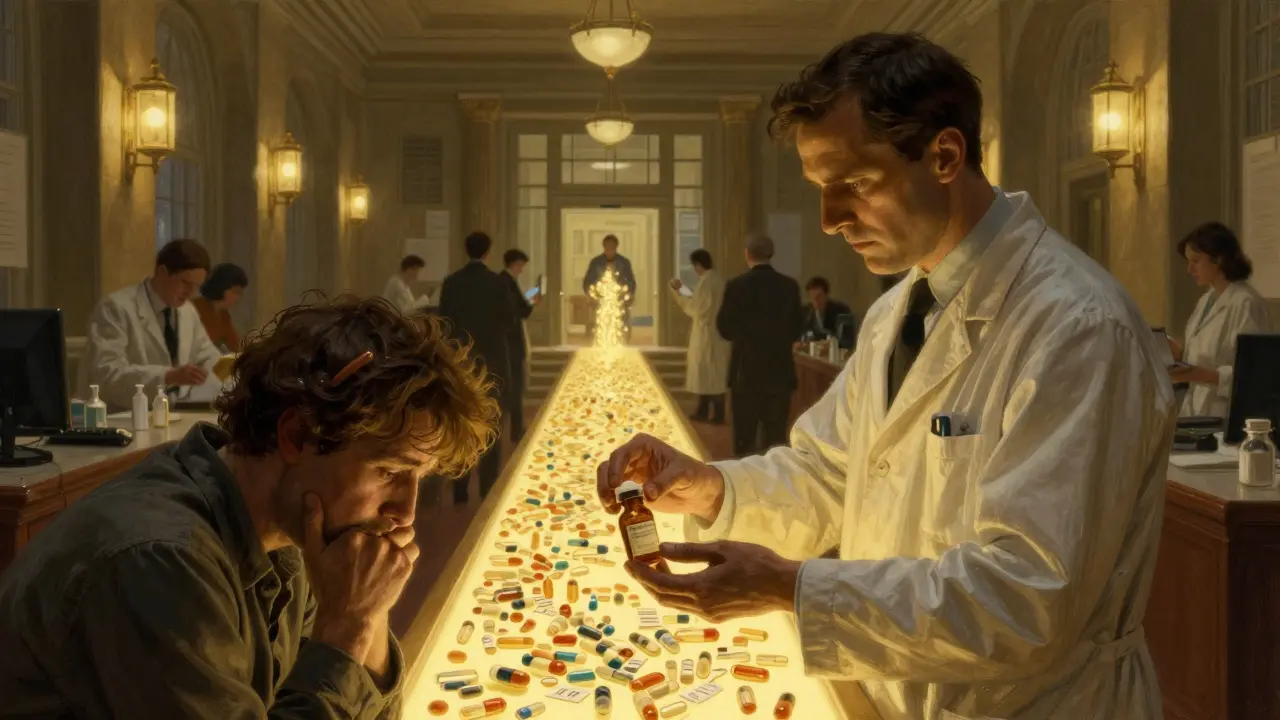
When you pick up a generic pill at the pharmacy for $4 instead of $400, you're not just saving money-you're benefiting from a quiet but powerful system that keeps the FDA running. This system is called Generic Drug User Fee Amendments (GDUFA), and it’s the reason generic drugs get approved faster than ever before. Without it, the FDA wouldn’t have the resources to review thousands of applications each year. Here’s how it works, who pays, and why it matters to your health wallet.
How GDUFA Keeps Generic Drugs Moving
In 2012, Congress created GDUFA to fix a broken system. Before then, the FDA took an average of 30 to 36 months to review a generic drug application. That meant patients waited years for cheaper alternatives to brand-name drugs. The problem? The FDA was underfunded. It had to rely mostly on congressional appropriations, which didn’t keep up with the volume of applications. So, in 2012, lawmakers agreed: drug makers would pay fees to help fund the review process. It wasn’t a tax-it was a performance-based partnership.
Today, GDUFA funds about 75% of the Office of Generic Drugs’ budget. That means the FDA can hire more scientists, upgrade its tech systems, and reduce backlogs. In 2022 alone, the agency received over 1,100 applications for generic drugs. Without user fees, that would have been impossible to handle in a reasonable time.
The Four Types of Fees
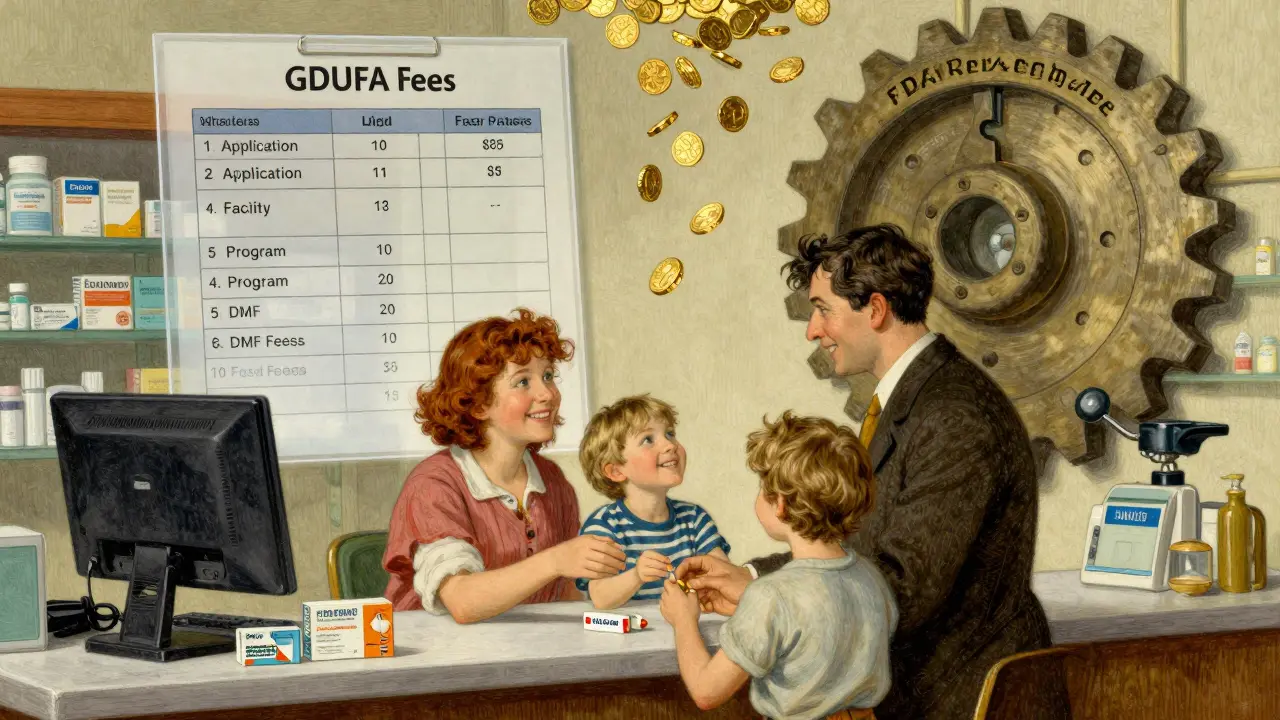
GDUFA doesn’t charge one flat fee. It has four distinct fees, each targeting a different part of the drug development process:
- Application fees: Every time a company submits an Abbreviated New Drug Application (ANDA), it pays $124,680 (as of 2023). This covers the FDA’s review of the drug’s safety, effectiveness, and manufacturing.
- Program fees: Companies with approved generic drugs pay $385,400 annually. This helps fund ongoing oversight, not just initial reviews.
- Facility fees: If a factory makes active ingredients or finished pills for a generic drug, it pays $25,850 per facility. This ensures manufacturing sites meet quality standards.
- Drug Master File (DMF) fees: When a company submits technical data about how it produces a drug ingredient, it pays $25,850 per file. This helps the FDA check supply chains before approving the final product.
These fees aren’t optional. If you don’t pay, your application doesn’t move forward. The FDA doesn’t approve drugs faster because you paid-it approves them faster because you paid and the agency got the resources to handle more applications.
Why This Matters More Than You Think
Generic drugs make up 90% of all prescriptions filled in the U.S. But they only cost 23% of total drug spending. That’s a $125 billion savings every year. GDUFA directly supports that. Before GDUFA, many generic drugs took over two years to get approved. Now, the goal is to approve 60% of new applications within 15 months. In 2021, the FDA hit 52%-close, but not quite there. Still, that’s a huge improvement from the 30-month wait times of the past.
Consider this: a generic version of a heart medication might hit the market six months faster because of GDUFA. That’s six months of savings for millions of patients. According to the Federal Trade Commission, GDUFA has helped increase timely generic entries by 15% after brand-name patents expire. Over the past decade, that’s saved consumers an estimated $1.7 trillion.
Who Pays? And Who Struggles?
You might think big pharma companies are the only ones paying these fees. But that’s not the full story. The top 10 generic manufacturers control 60% of the market. Teva alone has 17% of it. These companies can absorb fees easily. But what about small manufacturers?
A small company with one facility and three approved drugs might pay $400,000 a year in fees. For them, that’s 15% of their entire regulatory budget. One manufacturer told the Regulatory Affairs Professionals Society that the facility fee forced them to delay expanding production-even though demand was growing. The FDA offers a 75% fee reduction for small businesses, but only 18 such certifications were processed in 2022. That suggests many eligible companies don’t know about it-or find the paperwork too complex.
There’s also the issue of affiliated companies. If two companies share ownership over 50%, the FDA treats them as one entity for fee purposes. That can create confusion. In 2022, the FDA received 147 requests from companies disputing their fee assessments. It’s not just about money-it’s about clarity.
How GDUFA Compares to Brand-Name Drug Fees
There’s another user fee program for brand-name drugs called PDUFA. It’s similar in structure, but the numbers are wildly different. In 2023, a single brand-name drug application fee was $3.4 million-nearly 27 times higher than a generic drug fee. Why? Brand-name drugs require massive clinical trials. Generic drugs don’t. They just need to prove they’re the same as the brand-name version.
Even so, the FDA reviews over 1,100 generic applications each year. It only reviews about 70 brand-name ones. So while the fees are lower, the volume is much higher. That’s why GDUFA is so critical-it handles the bulk of the work.
What’s Still Missing?
GDUFA doesn’t cover over-the-counter (OTC) drugs. That’s a big gap. Think of pain relievers, antacids, or allergy meds you buy without a prescription. The OTC market is worth $117 billion a year. But these drugs follow different rules, and the FDA lacks funding to review them efficiently. Experts say expanding GDUFA to include OTC monographs could bring in $150-200 million more annually. It’s a logical next step.
Another issue: the backlog. Even after 12 years of GDUFA, about 1,500 generic drug applications from before 2012 are still sitting in the queue. The FDA has pledged to clear all of them by September 2024. If they don’t, patients will keep waiting for cheaper options that should’ve been available years ago.
What’s Next?
GDUFA was renewed in 2022 and runs through 2027. But discussions are already underway for GDUFA IV, likely to start in 2027. One idea? Using real-world evidence-like data from electronic health records-to speed up post-market safety checks. Another? Making fee structures more flexible for small businesses.
For now, GDUFA works. It’s not perfect, but it’s the reason you can get your diabetes medication for $10 instead of $1,000. It’s the reason pharmacies can stock multiple generic versions of the same drug, keeping prices low through competition. And it’s the reason the FDA can keep up with demand instead of drowning in paperwork.
What You Should Know
- If you take a generic drug, GDUFA helped make it available faster and cheaper.
- The fees paid by drug companies don’t affect whether your drug gets approved-they fund the system that reviews it.
- Small manufacturers struggle with fees, which can limit competition and keep prices higher than they need to be.
- OTC drugs are still stuck in a funding gap, meaning some common medicines may not get reviewed as quickly as they should.
There’s no magic trick here. Affordable medicine doesn’t happen by accident. It happens because smart policy, industry cooperation, and user fees work together. GDUFA isn’t flashy. But it’s one of the most effective tools we have for keeping prescription drugs within reach.
Do generic drug user fees increase the cost of medications for patients?
No. The fees are paid by drug manufacturers, not patients. These fees fund the FDA’s review process, which helps bring generic drugs to market faster. Faster approvals mean more competition, which drives prices down. Without GDUFA, generic drugs would take much longer to arrive, and prices would stay higher.
Why do some generic drugs still take a long time to get approved?
Even with GDUFA, some applications are complex-especially if the drug has multiple ingredients, unusual delivery methods, or unclear manufacturing processes. The FDA also faces staffing gaps and occasional delays from pandemic backlogs. In 2021, only 52% of applications were approved within the 15-month goal. The agency is working to clear the remaining pre-GDUFA backlog by 2024.
Can small generic drug companies afford GDUFA fees?
It’s tough. For small companies with just one facility and a few approved drugs, annual fees can equal 10-15% of their entire regulatory budget. The FDA offers a 75% fee reduction for qualifying small businesses, but few apply-only 18 were certified in 2022. Many don’t know how to qualify or find the paperwork overwhelming.
Does GDUFA cover over-the-counter (OTC) drugs like ibuprofen or antacids?
No. GDUFA only applies to prescription generic drugs. OTC drugs follow a different, slower review process under the OTC monograph system. This creates a gap: while prescription generics are reviewed faster, many common non-prescription drugs aren’t. Experts are pushing to expand GDUFA to include OTCs, which could improve safety and speed.
How does GDUFA compare to the system before 2012?
Before GDUFA, the FDA reviewed generic applications with minimal funding. Average review times were 30-36 months. There was no predictability, no clear timelines, and little communication with manufacturers. Since GDUFA started, review times have dropped by more than half. The FDA now communicates deficiencies clearly, sets firm deadlines, and has a dedicated budget. It’s a completely different system-and patients are the beneficiaries.
Generic drugs are the backbone of affordable healthcare. GDUFA isn’t perfect, but it’s the reason we can count on them being there when we need them. Without it, the system would collapse under its own weight.




Written by Martha Elena
I'm a pharmaceutical research writer focused on drug safety and pharmacology. I support formulary and pharmacovigilance teams with literature reviews and real‑world evidence analyses. In my off-hours, I write evidence-based articles on medication use, disease management, and dietary supplements. My goal is to turn complex research into clear, practical insights for everyday readers.
All posts: Martha Elena